The peacock chair traces its roots to Old Bilibid Prison at the time of the American colonial period.
A Hollywood photographer is setting up a celebrity portrait. The lights are ready. The camera is in position. Then comes the one piece of furniture that can instantly make any star look larger than life: a peacock chair.
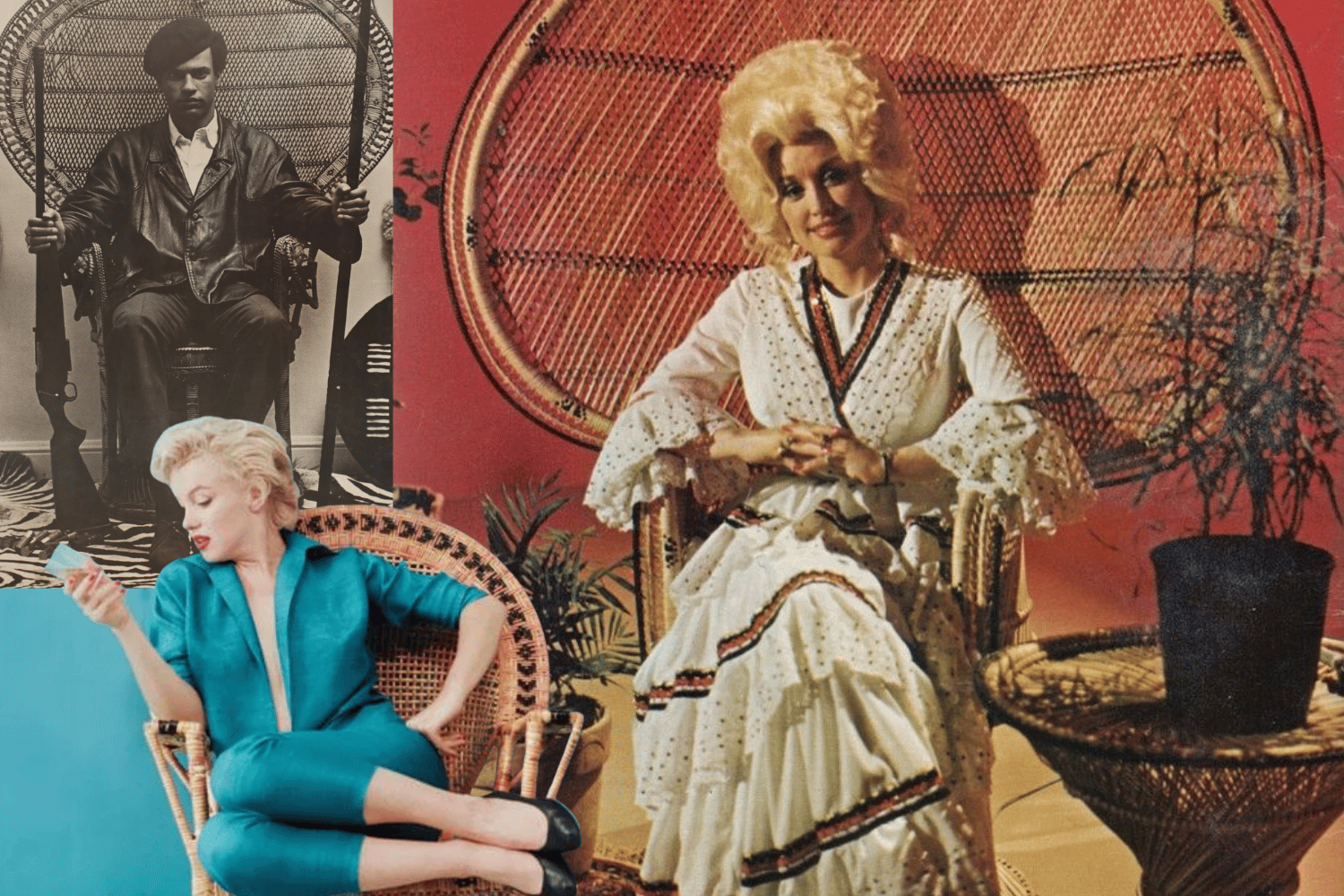
For decades, the dramatic rattan chair with its towering fan-shaped back has appeared in countless celebrity portraits, album covers, fashion editorials, and movie publicity photos. Marilyn Monroe, Elizabeth Taylor, Brigitte Bardot, Cher, Dolly Parton, Al Green, Donna Summer, and Funkadelic are just some of the famous names photographed sitting on one.
Its unmistakable silhouette became shorthand for glamour, confidence, and power.
Yet few people realize that this iconic piece of furniture was not born inside an exclusive design studio or a luxury furniture workshop.
It was born inside a prison in Manila.
The peacock chair traces its roots to Old Bilibid Prison during the American colonial period. Beginning in the early 1900s, the prison operated a large industrial program where inmates handcrafted furniture from Philippine rattan, bamboo, and cane. The products were sold locally and exported abroad as examples of Filipino craftsmanship.
Among the prison’s most successful creations was the peacock chair, then often called the “Bilibid Chair.” A 1912 Bilibid catalog even described it as one of the institution’s best-known products, with hundreds already being shipped overseas.
Its design proved irresistible. The oversized fan-shaped back naturally framed the person seated on it, almost like a halo, making anyone—from ordinary customers to presidents—appear regal. It was lightweight enough to move around photography studios yet dramatic enough to dominate every picture.
As exports grew, so did the chair’s popularity. It found its way into American homes, photography studios, and eventually Hollywood, where photographers discovered it could transform a simple portrait into an unforgettable image.
Then the chair took on an entirely different meaning.
In 1967, Black Panther Party co-founder Huey P. Newton posed in a peacock chair while holding a rifle and a spear. The now-historic photograph transformed the Filipino-made chair into an international symbol of Black pride, resistance, and political power. The image became so influential that an empty peacock chair was sometimes placed on stage during Black Panther events to symbolize Newton’s presence.
By the 1970s, the chair had become a pop culture phenomenon.
Musicians including Cher, Dolly Parton, Al Green, Donna Summer, Julio Iglesias, and Funkadelic all used it in album covers or promotional photographs. Across Europe, it became known as the “Emmanuelle chair” after its memorable appearance in the 1974 French film “Emmanuelle.”
Today, the peacock chair remains a favorite in weddings, fashion shoots, luxury resorts, and bohemian interiors around the world. Designers continue to reinterpret its unmistakable silhouette, including acclaimed Filipino furniture designer Kenneth Cobonpue.
It is one of the rare Filipino creations whose history stretches across colonial Manila, prison workshops, civil rights movements, Hollywood, and global pop culture.
Not bad for a chair woven by prisoners more than a century ago.
READ: