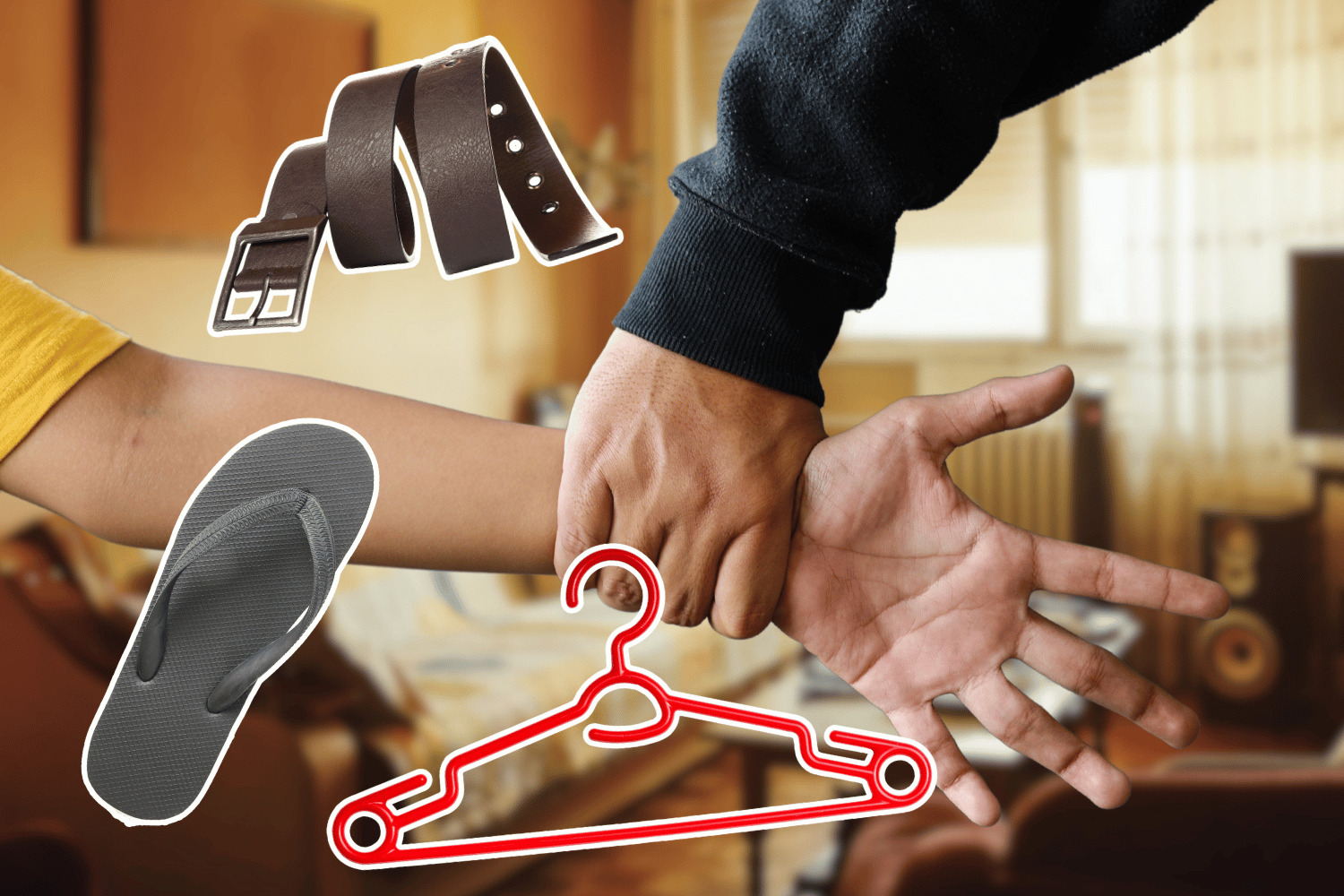
The data on corporal punishment in the Philippines tells an uncomfortable story
Open the comments section of almost any viral video involving a misbehaving child and you’ll probably find the same familiar line: “Kulang lang ’yan sa palo.” It’s become one of the internet’s favorite punchlines whenever kids throw tantrums, answer back, or disrespect adults.
The comment carries a common belief—that today’s generation simply isn’t disciplined enough because parents no longer hit their children.
But here’s the uncomfortable truth: Filipino parents never really stopped.
In 2024, UNICEF reported that three out of five Filipino aged 1 to 14—or about 20 million or 59%—have experienced violent discipline at home.
Earlier estimates released by the organization in 2022 also found that 11.6 million Filipino children—more than half of all children in the age group studied—experienced physical aggression. Among them, 9.1 million (39%) were subjected to physical punishment, while 800,000 (3.4%) endured severe forms of physical punishment.
These included being spanked with objects, pinched, or having their ears twisted, as well as being punched, slapped in the face, choked, or repeatedly beaten.
Those numbers echo the findings of the 2016 National Baseline Study on Violence Against Children by UNICEF and the Philippine Council for the Welfare of Children. The study found that eight in 10 Filipino children suffer some form of violence. Among the 3,866 respondents, aged 13 to 24, 60% of them had experienced physical violence and 38% psychological.
After nearly a decade of campaigns promoting positive parenting, the national figure has barely moved.
In other words, despite the growing perception online that children today are being “babied,” violent discipline remains a reality in millions of Filipino households.
The 2025 National Demographic and Health Survey by the Philippine Statistics Authority, published last March, showed that 54.7% of children aged 1 to 14 experienced at least one form of violent discipline—with 43% experiencing psychological aggression, 36.1% physical punishment, and 2% severe physical punishment.
By region, violent discipline was highest in Davao Region at 70.9%, followed by Cagayan Valley (66.8%) and Bicol and Caraga (66.4%). It was lowest in BARMM at 32.7%.
The effects also don’t necessarily stay at home. A 2025 study by Save the Children found that children who experience or witness violence at home often channel their aggression through bullying.
For generations, many Filipinos have defended pamamalo as a necessary way to teach respect, obedience, and good manners. But child development experts here and abroad have consistently argued that while hitting a child may stop unwanted behavior in the moment, it does little to build self-discipline and is associated with higher risks of aggression, anxiety, depression, and poor emotional regulation later in life.
So the next time someone comments “Kulang lang ’yan sa palo,” it’s worth remembering what the country’s own data has been saying for years: corporal punishment isn’t disappearing in the Philippines. It never really did.
READ: