Rana said he was originally photographing birds when he captured distant images of two flowering plants perched high on a giant tree. Curious social media users asked him to identify the orchids after his post generated more than 620,000 views in just three days.
Because the original photographs were too blurry for proper identification, Rana enlisted the help of neighbor Gabe Chapman, who used a drone to capture close-up images of the flowers.
The images were then sent to Dr. Raymond Lo, a renowned Filipino orchid expert, newspaper columnist, and pathologist at St. Luke’s Medical Center.
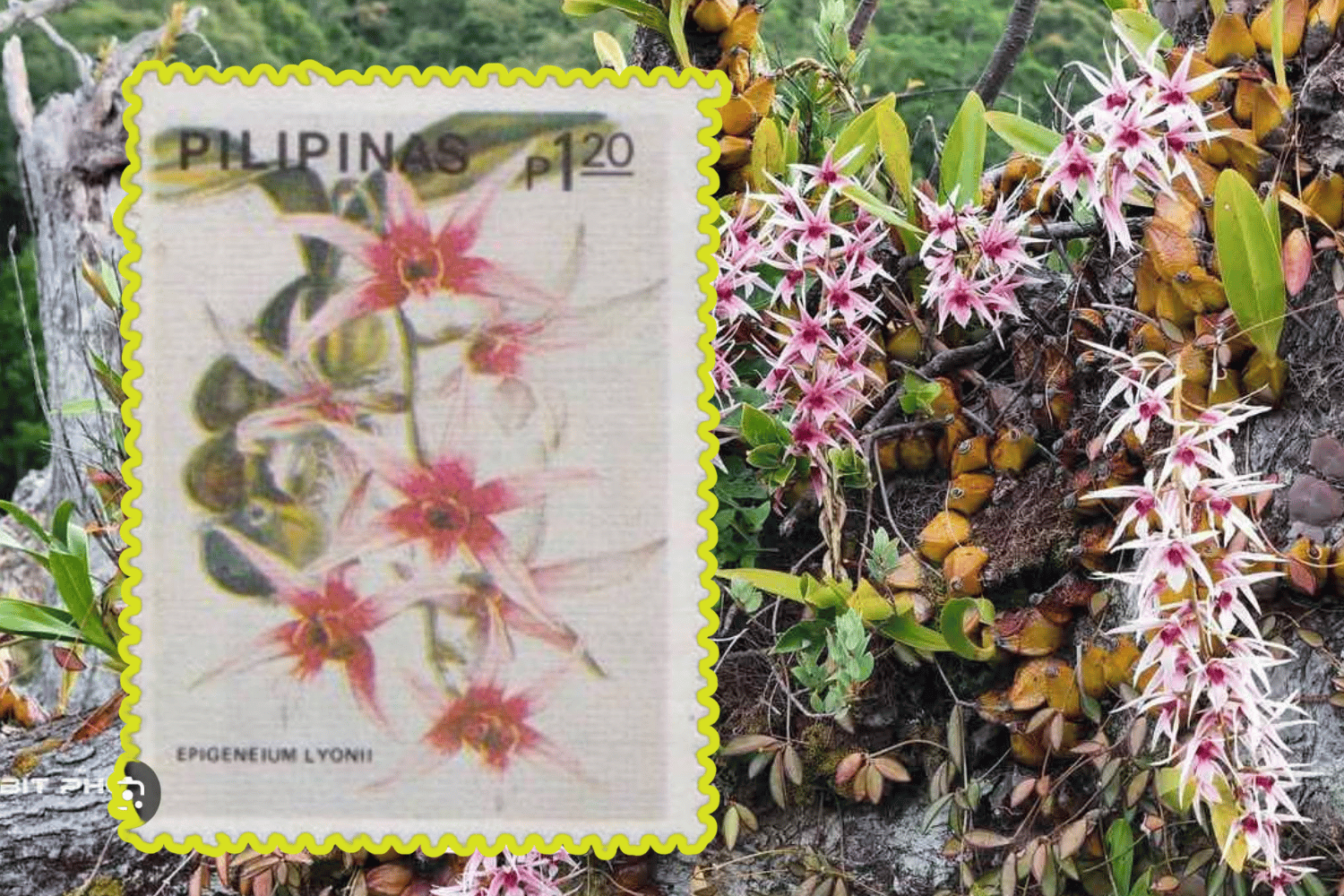
According to Rana, Lo identified the orchid as Epigeneium lyonii, commonly known as the Lyons epigium, a rare, fragrant, and endangered species. Under current botanical classification, the species is now recognized by its accepted scientific name, Dendrobium treacherianum.
Because of its rarity and striking beauty, the orchid was featured on Philippine postage stamps in 1986, 2003, and 2004, and has also received recognition from the American Orchid Society.
Rana said the orchids were found growing about 1,500 meters above sea level on a massive tree deep within a virgin forest inside Mt. Balatukan Range Natural Park.
To protect the fragile population from illegal collectors and habitat disturbance, he stressed that the exact location will not be disclosed.
Native to the Philippines and parts of Borneo, the orchid naturally grows as an epiphyte attached to large forest trees. It is prized for its cascading clusters of star-shaped pink and wine-colored flowers, as well as its distinctive fragrance, which has been described as resembling dried coconut. The species thrives in undisturbed primary forests with high humidity and filtered sunlight.
The rediscovery highlights the ecological importance of the country’s remaining old-growth forests, many of which continue to harbor rare plant species that have become increasingly difficult to find in the wild.
READ: