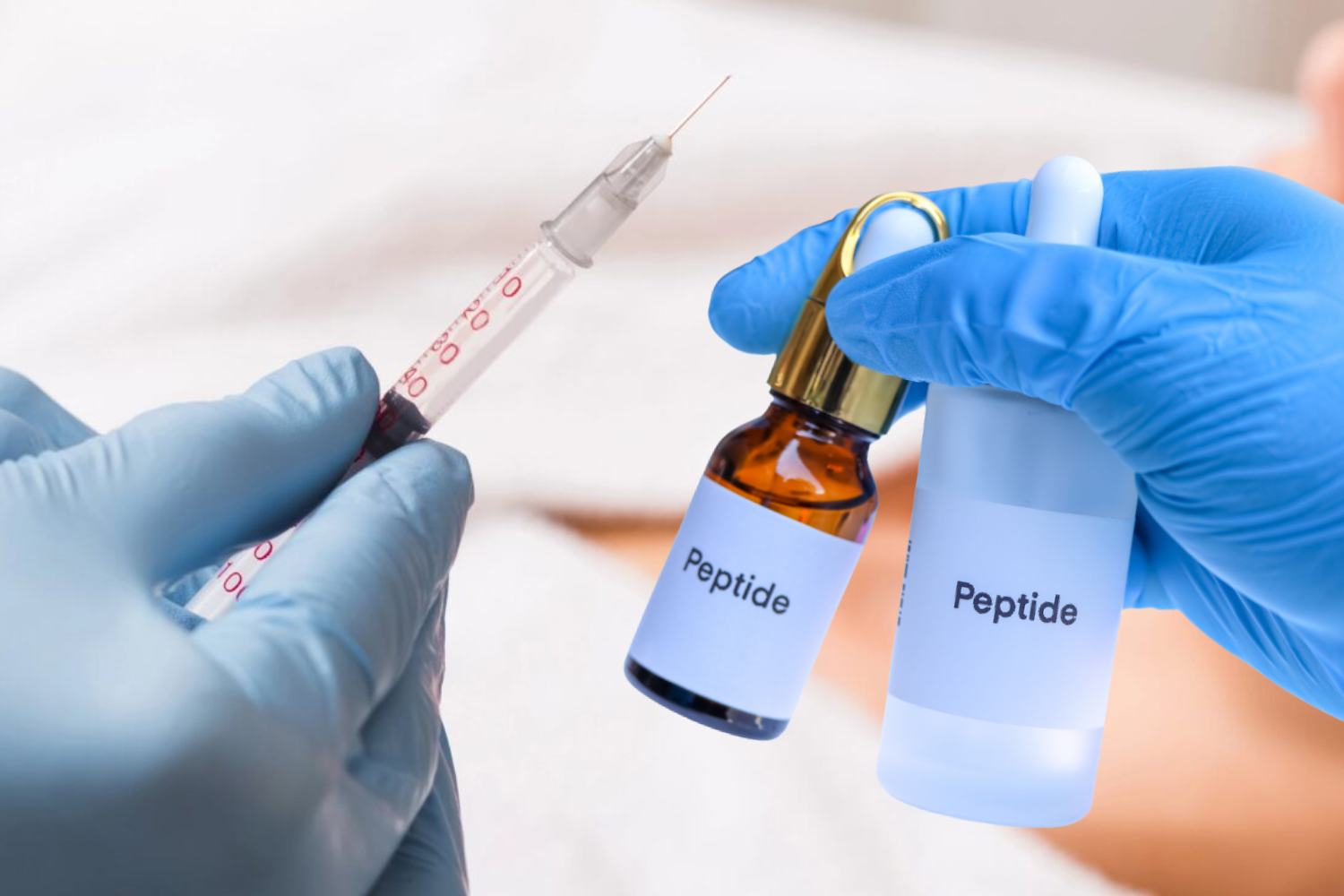
Peptide therapy is having a moment.
For years, peptides occupied a niche corner of medicine. Some, such as insulin and GLP-1 receptor agonists, became established therapies. But many other peptides remained largely confined to research laboratories, specialized clinics, and scientific journals.
That is beginning to change.
Peptides are small chains of amino acids that act as messengers in the body, helping regulate different biological processes. Today, researchers are studying their possible roles in areas such as tissue repair, inflammation, metabolism, neurological health, and healthy aging.
They have also gained attention outside traditional medical settings, with various products and claims circulating online. As interest grows, so does the need to understand which uses are supported by science and which still require further study.
One reason the conversation has intensified is a recent regulatory discussion in the United States. On July 23 and 24, the U.S. Food and Drug Administration’s Pharmacy Compounding Advisory Committee met to review seven peptides: BPC-157, KPV, TB-500, MOTS-C, Emideltide (DSIP), Epitalon, and Semax.
The committee was not approving these peptides as medicines. Instead, it considered whether they may be appropriate for use by certain compounding pharmacies under specific conditions. After two days of discussion, the committee recommended six of the seven peptides for inclusion on the FDA’s 503A Bulks List. Emideltide was the only peptide that did not receive a favorable recommendation.
This distinction is important. The committee’s vote was advisory and does not mean these peptides have been proven safe and effective for specific medical conditions. Drug approval remains a separate process requiring substantial evidence from clinical studies.
Drug approval remains a separate process, including substantial evidence from clinical studies demonstrating safety, effectiveness, quality, and consistency.
The committee’s vote was limited to whether these substances may be appropriate for pharmacy compounding. Its recommendations are advisory rather than binding, and the FDA must still determine what regulatory action, if any, it will take. Drug approval remains an entirely separate process that requires substantial evidence demonstrating safety and effectiveness for a specific medical indication.
What made the hearing significant was not simply the outcome, but the questions raised during the discussion. FDA reviewers highlighted concerns about limited human clinical evidence, dosing, long-term safety, manufacturing consistency, purity, and other issues that must be addressed before emerging therapies become widely used.
At the same time, the discussion reflects a broader shift in how peptide therapies are being studied. The focus is moving toward more practical questions: How should they be researched? How should they be manufactured? When does the evidence justify clinical use? How can patients be protected while the science continues to evolve?
None of this means that every peptide works. It does not validate every claim circulating online, nor does it justify treating experimental therapies as established medicine.
What it does suggest is that peptide therapy deserves serious scientific attention.
For Filipino physicians and patients, the FDA’s actions do not change Philippine law or automatically authorize the use of these compounds locally. However, developments in the United States matter because FDA regulatory decisions often influence pharmaceutical manufacturing, research priorities, clinical standards, and discussions around the world.
Peptides are already part of the healthcare conversation. Patients are asking about them, seeking them online, and in some cases using them without medical supervision. Ignoring the field will not make it disappear, nor will it make patients safer.
A better approach is to bring peptide therapy closer to mainstream medicine through physician oversight, pharmaceutical-quality sourcing, careful patient selection, informed consent, appropriate monitoring, and rigorous scientific research.
We should be equally cautious of two extremes. Experimental peptides should not be marketed as miracle drugs, but neither should an entire therapeutic platform be dismissed simply because much of the evidence is still developing.
Medicine has followed this path many times before. New therapeutic technologies begin as experimental ideas, evidence gradually accumulates, standards are established, and some eventually become part of routine medical practice while others are abandoned because they fail to demonstrate meaningful benefit.
Peptide therapy will be no different. The future is not that every peptide becomes a medicine. The future is discovering which ones deserve to become medicines.
READ:

Hara Clinic pushes regenerative medicine forward with a leading expert at its helm
radar Lifestyle
December 9, 2025

Hacking health, rewriting aging: Peptides, biohacking, and the reality of longevity medicine
radar Lifestyle
February 19, 2026
Doctors warn vs online trend of mixing diabetes and weight loss drugs
Kiara Gorrospe
July 4, 2026