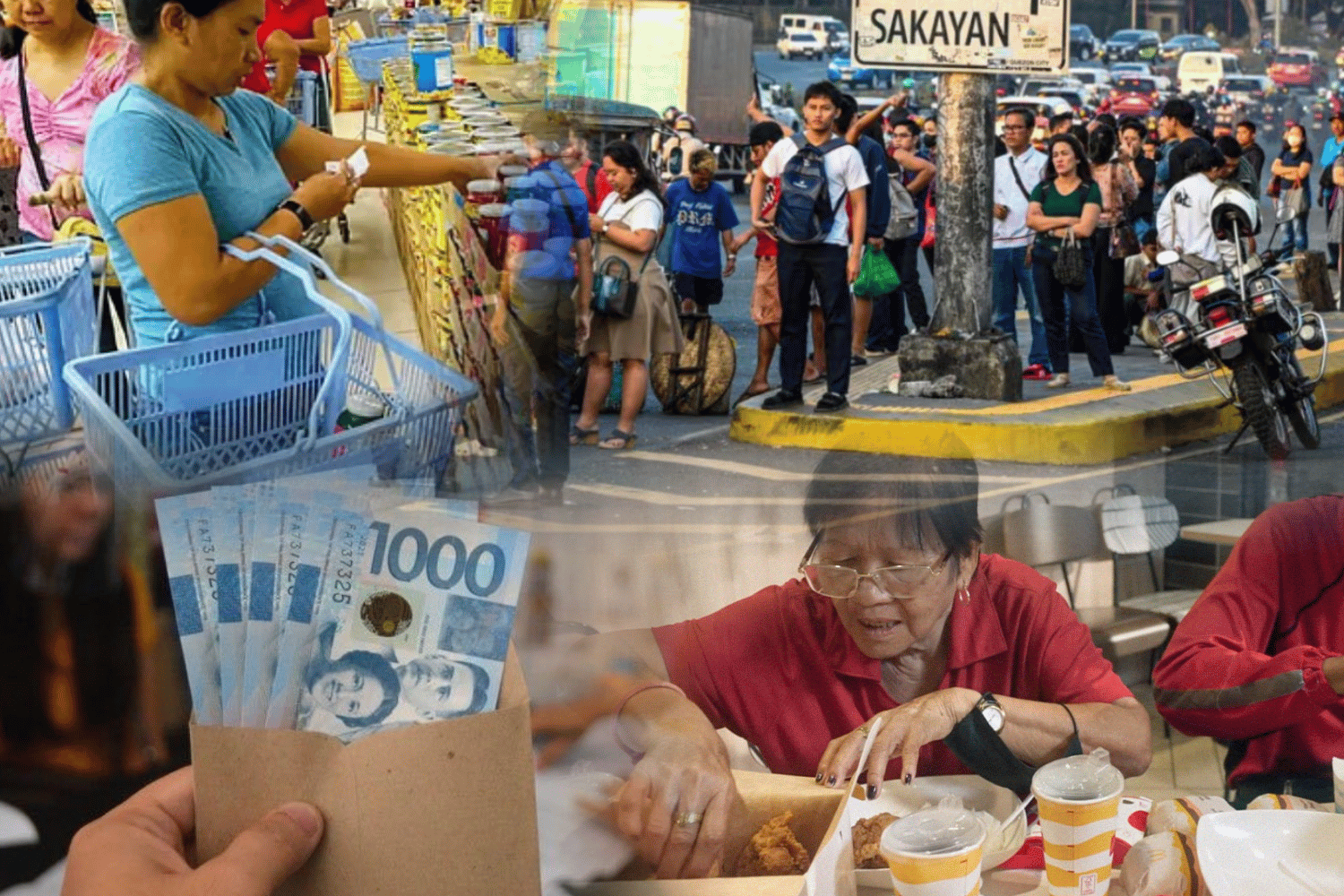
A single peso can be taxed several times throughout its journey.
Picture payday. Your salary finally lands in your bank account, but before you even see the full amount, a portion has already gone to the government through withholding tax. Then you head to the grocery, pay your Meralco bill, fill up your gas tank, or buy a bottle of soft drinks—and once again, taxes quietly take another bite out of your money.
For many Filipinos, taxation doesn’t happen just once. It follows nearly every step of daily life.
From income taxes deducted from salaries to the 12% Value-Added Tax (VAT) on most purchases, and excise taxes built into fuel, electricity, and even sugary drinks, the Philippine tax system is designed so that government collections continue long after payday.
The paycheck shrinks before you receive it
Under the Tax Reform for Acceleration and Inclusion (TRAIN) Law, workers earning less than ₱250,000 annually are exempt from income tax. Beyond that threshold, however, salaries are subject to progressive tax rates that can reach as high as 35% for top earners.
For employees, this means income tax is automatically withheld before their salaries are released. The deduction happens whether or not they immediately spend their money.
Then comes the 12% VAT
The next layer arrives the moment that salary is spent.
Most goods and services purchased in the Philippines are subject to a 12% Value-Added Tax, one of the highest standard VAT rates among major ASEAN economies.
Whether it’s eating at a restaurant, buying appliances, paying for many services, or purchasing everyday consumer products, VAT is already embedded in the final selling price.
The result is that money already reduced by income tax is taxed again during consumption.
Where does your ₱70,000 salary go?
Take a Metro Manila professional earning a gross monthly salary of ₱70,000.
Under current withholding tax schedules, roughly ₱7,500 may already be deducted for income tax, leaving around ₱62,500 before mandatory contributions such as SSS or PhilHealth.
If that worker spends ₱30,000 on VAT-covered expenses like groceries, dining out, utilities, and household purchases, about ₱3,214 of that amount represents VAT already collected by the government.
Combined, that’s approximately ₱10,714 collected through income tax and VAT alone—before considering other taxes embedded in daily expenses.
The hidden taxes inside everyday necessities
The taxes many Filipinos notice least are often the ones paid most frequently.
Every time motorists fill up their tanks, fuel prices already include excise taxes imposed under the TRAIN Law—₱10 per liter for premium gasoline and ₱6 per liter for diesel. VAT is then applied on top of the final selling price, effectively taxing a price that already includes excise tax.
Even commuters who don’t own vehicles feel the impact because higher fuel costs eventually translate into increased transport and delivery expenses.
The same layered approach applies to sweetened beverages.
A liter of soft drinks or iced tea carries an excise tax ranging from ₱6 to ₱12 depending on the type of sweetener used. By the time it reaches supermarket shelves or sari-sari stores, consumers pay not only the excise tax but also VAT on the final retail price.
Electricity follows a similar pattern.
Coal, which still supplies a significant portion of the country’s electricity, is subject to excise taxes. These costs are passed on by power producers and distributors before consumers eventually pay VAT on their monthly electric bills.
Why it feels heavier today
Economists have long pointed out that income tax and VAT serve different purposes.
Income tax is based on a person’s ability to earn, while VAT is designed as a consumption tax that broadens government revenue by collecting from spending rather than income alone.
Excise taxes, meanwhile, are often justified as “sin taxes” or environmental measures meant to discourage certain products or offset their social costs.
Still, for ordinary Filipinos facing rising prices, the distinction is often academic.
What they experience is that a single peso can be taxed several times throughout its journey—from paycheck, to purchase, to transportation, to electricity, and beyond.
That explains why many workers feel that their salary disappears faster than expected. It’s not simply inflation at work. It’s also a tax system where collections occur not only when income is earned, but repeatedly as that income moves through everyday life.
READ:

Travel tax is a Filipino invention that must be abolished
Mianne Cudal
January 14, 2026
Excise tax on LPG and kerosene is back as oil prices fall below trigger level
radar Business
July 9, 2026
Higher taxes proposed to fund income tax cuts under DOF tax package
Kenneth M. del Rosario
August 4, 2026