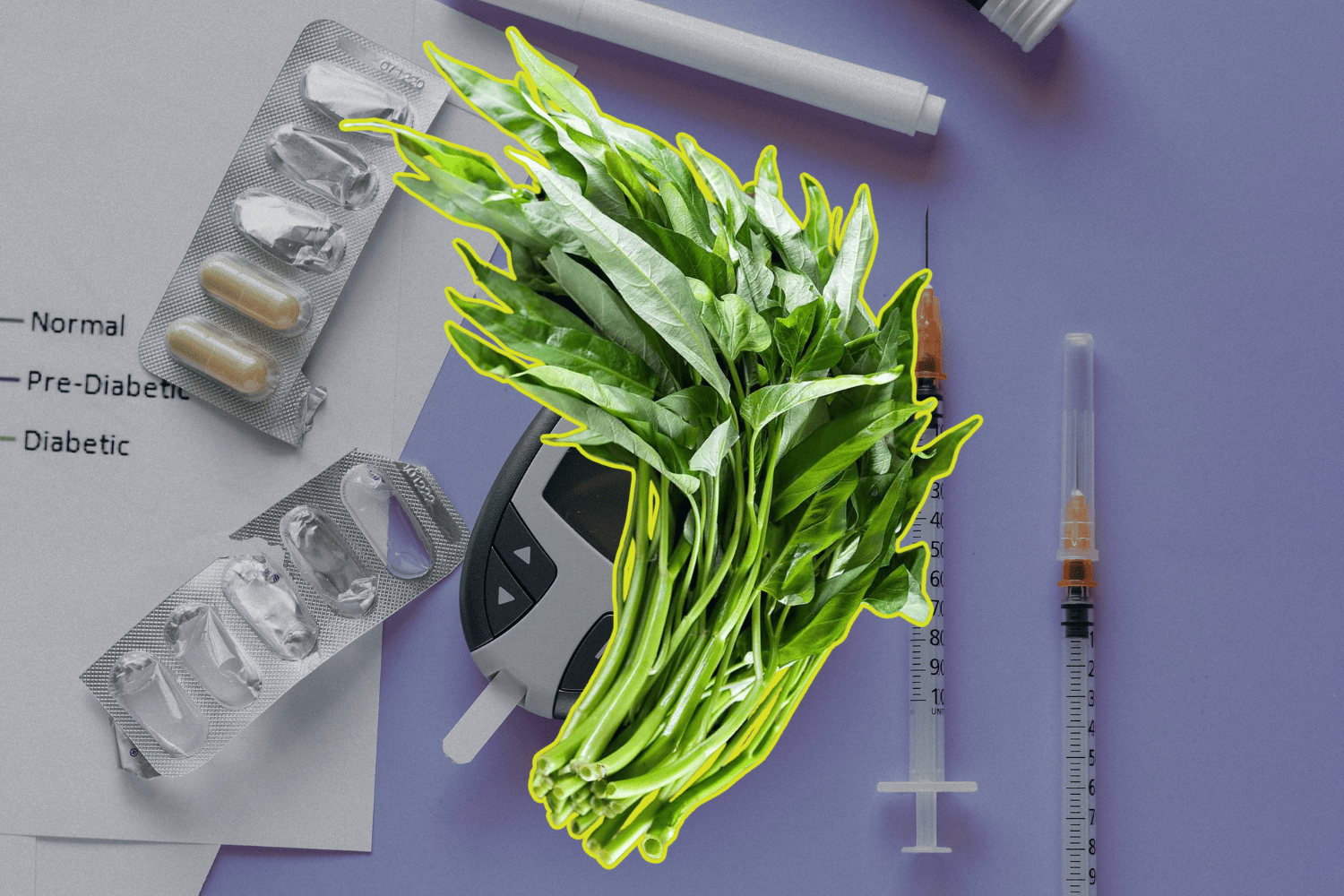
Kangkong is remarkably accessible to Filipinos as compared to other expensive imported “superfoods.”
It’s cheap, available in almost every palengke, and often treated as an ordinary side dish. But the humble kangkong may be one of the most underrated vegetables on the Filipino table—especially for people trying to manage their blood sugar.
Known scientifically as Ipomoea aquatica, kangkong is packed with fiber, vitamins, minerals and plant compounds that researchers have studied for their antioxidant and potential blood sugar-regulating effects.
That doesn’t make kangkong a cure for diabetes. But as part of a balanced diet, there are good reasons to eat more of it.
Why it makes sense for diabetics
For people with diabetes, one important dietary goal is preventing sharp rises in blood glucose.
Kangkong is a non-starchy leafy vegetable that is naturally low in carbohydrates while providing dietary fiber. Fiber can slow digestion and help moderate how quickly carbohydrates from a meal are absorbed.
That makes kangkong a much better plate-filler than simply adding more rice, noodles or other refined carbohydrates.
Research has also investigated Ipomoea aquatica for possible antihyperglycemic and antiglycation properties. Laboratory and animal studies have reported compounds that could potentially influence glucose metabolism and help protect cells from damage associated with prolonged high blood sugar.
The important word, however, is potentially. Much of this research remains preclinical, so kangkong should complement—not replace—diabetes medication, medical care and an overall healthy diet.
Packed with antioxidants
A 2020 study indexed in PubMed examining commonly consumed green vegetables found Ipomoea aquatica extracts showed strong antioxidant activity, including high ferric-reducing antioxidant power.
Why does that matter?
Persistent high blood sugar can contribute to oxidative stress, which damages cells and is involved in the development of diabetes complications. Eating vegetables rich in antioxidant compounds can therefore be a useful part of a healthy dietary pattern.
More than blood sugar
Kangkong also provides nutrients including vitamins A and C, along with minerals such as iron, calcium and magnesium. Its fiber supports digestive health and regular bowel movement, while its micronutrients contribute to normal immune, blood and bone functions.
And unlike expensive imported “superfoods,” kangkong is remarkably accessible to Filipinos.
There is one catch: how you cook it matters.
Turning kangkong into a dish loaded with sugar, salty sauces, processed meats or excessive oil can undermine some of its nutritional advantages. For people managing diabetes, simpler preparations—such as blanching, steaming, making sinabawang kangkong or lightly stir-frying it with garlic—can be better choices.
So no, kangkong is not a miracle diabetes medicine.
But when a vegetable is inexpensive, nutrient-dense, fiber-rich, low in carbohydrates and supported by emerging research into its potential glucose-related properties, there is a strong case for giving it more space on the Filipino plate.
Sometimes, healthy food doesn’t have to come in an expensive bottle or carry a fashionable “superfood” label.
Sometimes it’s already sitting in a bundle at the palengke.
READ: