Shaped by foreign baking traditions, Filipino hands transformed otap into something distinctly our own.
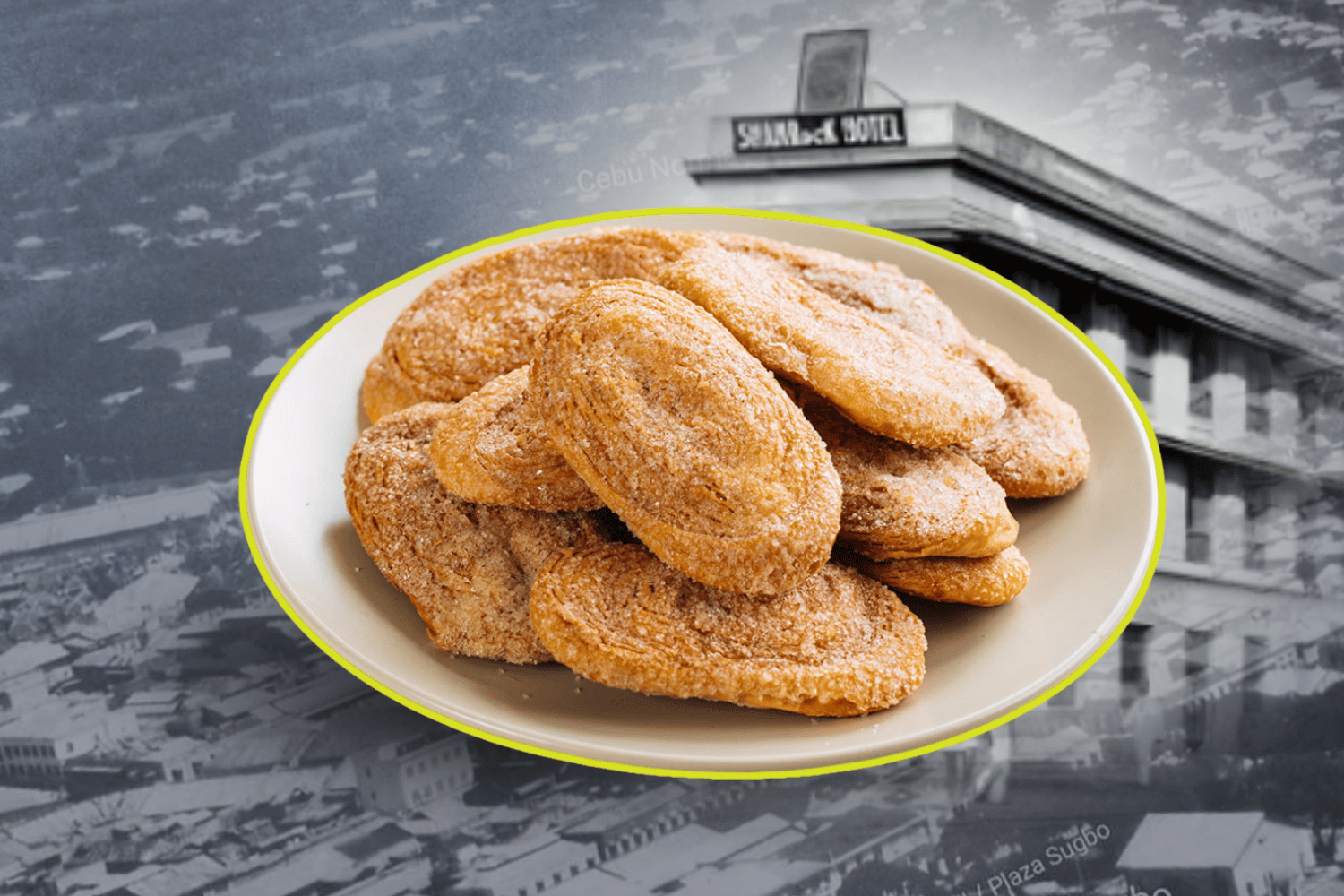
One bite and it practically explodes—thin, brittle layers scattering everywhere, with sugar inevitably ending up on your shirt.
That mess is part of the charm of otap, the oval-shaped pastry that has become one of Cebu’s most recognizable pasalubong. But behind this humble biscuit is a story shaped by colonial baking traditions, war, migration and one determined baker.
Otap, sometimes spelled utap, belongs to the family of laminated pastries. Its ancestry is often connected to Spanish hojaldre, or puff pastry, reflecting centuries of Spanish influence on Philippine baking. Commercial baking expanded further during the American colonial period as wheat flour and modern baking technology became increasingly available.
The woman behind Cebu’s famous otap
The pastry’s rise as a Cebu icon is closely associated with Shamrock Bakery.
According to Shamrock’s company history, the business began before World War II as a partnership between Kapampangan baker Honoria Paras and an Irish businessman. The Irish connection explains the distinctly non-Cebuano name “Shamrock.”
Their first store stood in the old Compania Maritima building along Cebu’s waterfront—a perfect location for a product that would eventually become synonymous with travelers bringing food home.
World War II changed everything. The Irish partner eventually left the business, but Paras carried on. In 1945, she opened a bakery at the former Capitol Hotel on Sikatuna Street in Cebu City.
Not quite a palmier
Otap is sometimes compared with the French palmier, but anyone who has bitten into one knows the difference.
Otap is flatter, thinner and extraordinarily brittle. Its repeatedly rolled dough creates the delicate layers responsible for that unmistakable crack before the pastry disintegrates into sweet flakes.
Over the decades, other Cebu bakeries produced their own versions, while Shamrock became closely identified with the delicacy and helped establish otap as a Cebuano pasalubong favorite.
Today, otap has traveled far beyond Cebu, appearing in supermarkets and pasalubong centers around the Philippines and in boxes carried overseas by Filipino travelers.
Yet its identity remains unmistakably Cebuano.
A pastry shaped by foreign baking traditions was transformed by Filipino hands into something distinctly our own—and eventually into a crunchy little symbol of coming home with something sweet.
READ: