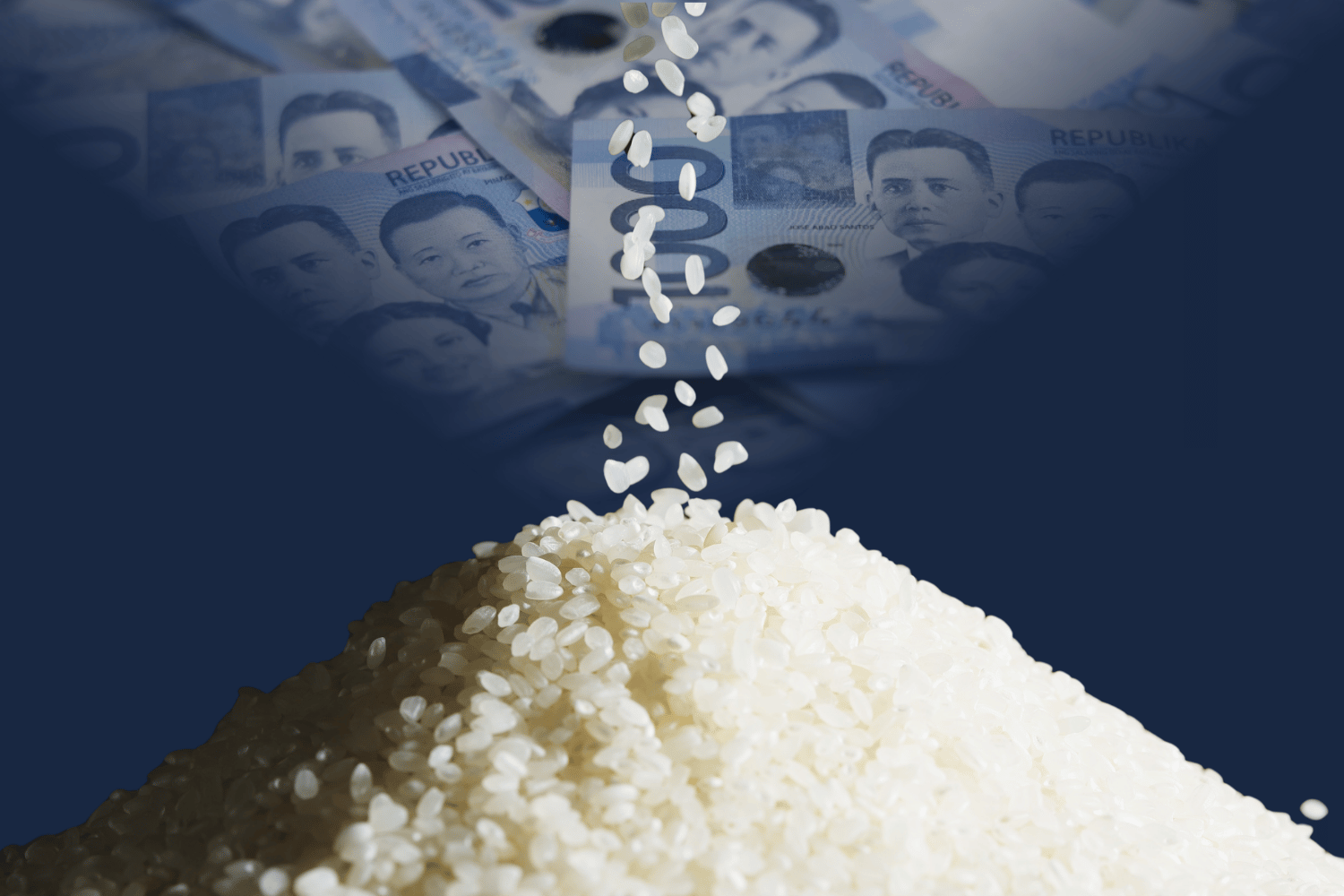
The government is proposing ₱69.9 billion for rice programs in 2027, but the real test will be whether farmers earn more, production costs fall, and consumers see lower prices.
The government is preparing to put ₱69.9 billion into rice next year. At that level of spending, Filipinos should eventually see something tangible in return, whether in the price of rice, the income of farmers or the cost of producing the country’s staple grain.
The Department of Budget and Management says the proposed allocation is meant to do three things, boost local production, raise farmer incomes and keep rice affordable for consumers.
The National Rice Program gets ₱29.9 billion for seeds, farm inputs, extension services and technology. Another ₱30 billion goes to the Rice Competitiveness Enhancement Fund, which has been extended until 2031. Then there is ₱10 billion for Rice for All, the government program that provides affordable rice to consumers through KADIWA Centers and accredited outlets.
Those are sensible goals. The problem is that each one eventually has to show up somewhere beyond a government budget document.
If nearly ₱70 billion is being directed toward rice, farmers should see lower production costs, better yields and stronger incomes. Consumers should have access to more affordable rice. Local producers should also become more competitive, giving the country a better chance of producing rice at a cost that works for both farmers and consumers.
That is a tall return to expect from public money, but it is also a reasonable one.
The ₱30-billion RCEF allocation deserves particular attention. The fund was created under the rice tariff reform framework to help farmers become more productive and competitive. With the annual allocation now tripled from ₱10 billion, the bigger spending should eventually be visible in the economics of farming.
Are farmers producing more from every hectare? Are their costs coming down? Are they taking home more income? And are those improvements strong enough to make locally produced rice more competitive without requiring ever-larger government support?
Then there is Rice for All, the government program that provides affordable rice to consumers through KADIWA Centers and accredited outlets.
Helping consumers access cheaper rice can make sense when prices are high. But a ₱10-billion allocation to make rice more affordable also puts the spotlight on the price structure underneath it. If taxpayers have to keep helping consumers absorb the cost of rice, the country still has work to do on the reasons that cost remains high.
The government deserves credit for putting substantial resources behind an issue that reaches practically every Filipino household. But the size of the allocation also makes it harder to settle for results that exist mainly in reports and program statistics.
A farmer deciding whether rice farming remains worth the effort does not experience the budget as ₱69.9 billion. He experiences it as the cost of fertilizer, the price of seeds, the expense of machinery, the yield from his land and, ultimately, the money left after selling his harvest.
A family buying rice sees something simpler. It sees the price per kilo.
And businesses that depend on rice, from eateries to food manufacturers, eventually feel those costs in their own expenses and in what they charge customers.
That is where the real measure of this ₱69.9 billion will be found. If the spending works, farmers should have more productive farms and better incomes, consumers should get more affordable rice and businesses should face a more predictable cost environment.
If those improvements remain difficult to see on the ground, then ₱69.9 billion will remain an impressive figure without being an especially satisfying result.
READ:
Rice imports continue even as Filipino farmers enter harvest season
John Lloyd Aleta
August 5, 2026
Small habits that can prevent rice wastage
Top Dagohoy
August 26, 2026
WARNING: Your salt, sugar, rice, and patis may already contain microplastics, says PH study
Top Dagohoy
July 16, 2026