Imagine a meal being served at the household of General Emilio Aguinaldo in Cavite.
On the table is adobo—but it is not the dark, soy sauce-stained dish familiar to most Filipinos today.
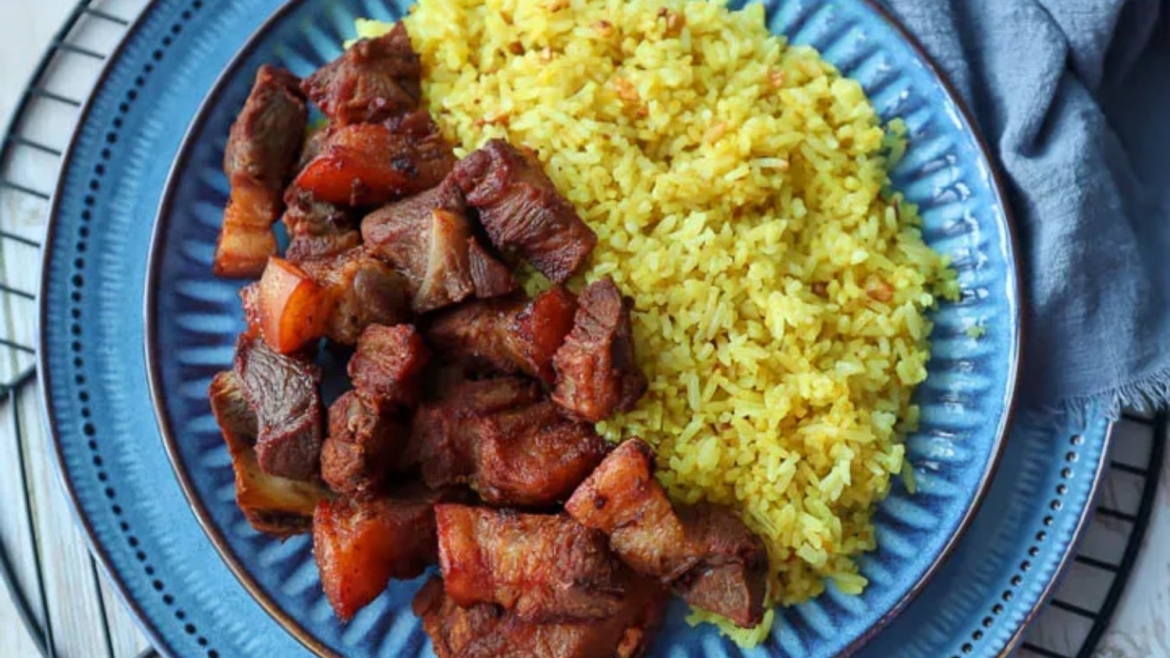
This one is golden yellow, fragrant with vinegar, garlic and freshly crushed turmeric. Its sauce glistens around the meat, carrying the earthy aroma of luyang dilaw.
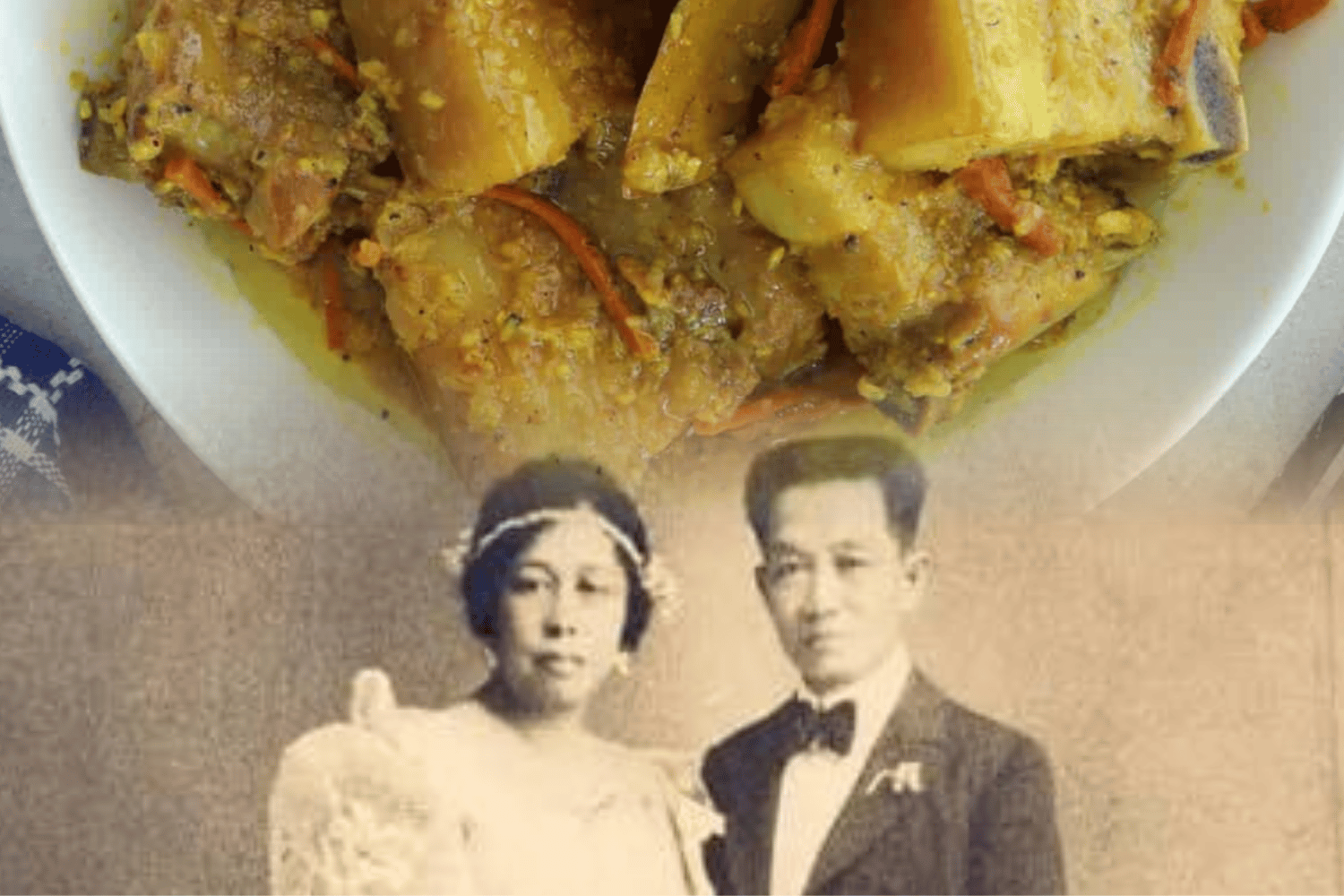
And the woman believed to have brought it to Aguinaldo’s table came from Taal, Batangas.
She was Maria Agoncillo, Aguinaldo’s second wife, and the dish was adobong dilaw.
Food-history accounts credit Maria with bringing this Batangueño specialty from her hometown to Cavite, creating an intriguing culinary connection between a regional adobo and the household of the Philippines’ first president.
From Taal to the Aguinaldo household
Maria Agoncillo was a native of historic Taal and belonged to the prominent Agoncillo family. She was related to Marcela Agoncillo, best remembered for sewing the first Philippine flag.
But Maria apparently carried another piece of Taal heritage with her: its food.
Accounts of adobong dilaw’s history link her to the dish’s migration from Batangas to Cavite, where the recipe eventually developed its own regional character.
It is a fascinating footnote in Philippine food history: a hometown recipe traveling through marriage into the home of one of the country’s most important historical figures.
At its heart was luyang dilaw, or turmeric.
The adobo on Aguinaldo’s table was yellow
Adobong dilaw belongs to the broader family of adobos prepared without soy sauce.
Instead of the familiar dark brown color, meat is cooked with vinegar, garlic, peppercorns and salt or fish sauce, then generously flavored with fresh turmeric.
The turmeric gives the dish its unmistakable golden color and an earthy, slightly peppery character.
The traditional Batangas preparation is generally tuyo, with the liquid reduced until intensely flavored oil coats the meat.
But when the dish crossed into Cavite, it evolved.
Cavite made it its own
Caviteños developed a more masarsa interpretation. Some versions incorporate mashed chicken liver, producing a thicker, richer golden gravy.
That difference offers a glimpse into how Filipino food evolves.
A recipe can leave one province through a family, settle in another and gradually change according to local tastes—while still carrying traces of where it came from.
In the case of adobong dilaw, that journey reportedly passed through the family of Emilio Aguinaldo.
A recipe with a place in history
Today, soy sauce is so closely associated with adobo that a bright yellow version can look almost unfamiliar.
But adobong dilaw reminds us that there has never been just one Filipino adobo.
What began as a turmeric-rich specialty of Taal reportedly traveled with Maria Agoncillo to Cavite, entered the household of the Philippines’ first president and evolved into another regional tradition.
Sometimes history survives in monuments, documents and ancestral houses.
Sometimes, it survives in a pot of adobo.
READ: