You may know of suman, bibingka and puto. But have you heard of patupat?
Growing up in Pangasinan, we had the early-morning catch, fresh fruits and vegetables, local candies and kakanin as part of our daily food. Patupat was one of my favorite meryenda as a kid, next to puto Calasiao and kutsinta. I remember getting my hands sticky and messy while trying to unwrap it. It took me minutes to completely open one, but it was worth the hassle.
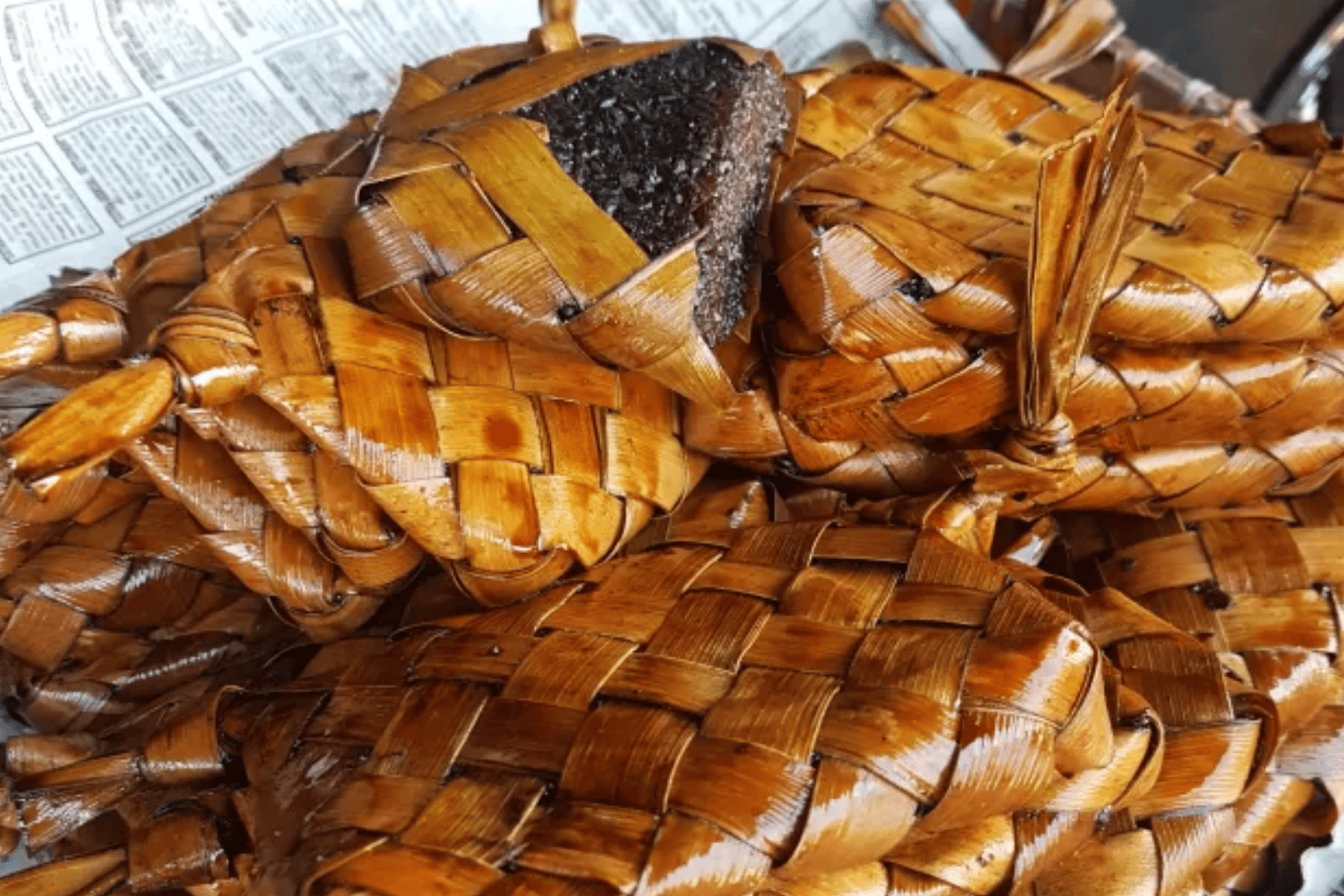
One of the best-known kakanin of Pangasinan, patupat starts as raw glutinous rice sealed inside a woven pouch made from coconut leaves. The pouches are then boiled in freshly pressed sugarcane juice until the rice takes on a deep caramel flavor. The complex woven basket is not to be mistaken for decoration, because it is the reason this kakanin turns out the way it does.
What patupat is
The name “patupat” describes the shape. It traces back to an old Malayo-Polynesian word that originally means “four-cornered.”
In the north, particularly in Pangasinan, La Union and Cagayan Valley, it goes by “patupat,” while in Ilocos Sur and Ilocos Norte, it goes by “sinambong.” In most public markets, it is sold alongside tupig.
Pozorrubio, Pangasinan is the province’s best-known source and even has its own Patupat Festival as part of the town’s fiesta and founding anniversary.
How it is made
Patupat starts at a cane mill, not a stove.
The journey of patupat making begins at the darapilan (sometimes written as “dadapilan”), a mill that uses heavy iron rollers to squeeze juice from freshly harvested sugarcane.
As the juice collects, the makers prepare the pouches, weaving strips of young coconut fronds into small, four-cornered packets. The glutinous rice is washed and soaked briefly, then poured into the pouches raw before they are tied shut.
Later, the pouches go into a large kawa of boiling sugarcane juice. The fire starts from bagasse, the crushed stalks left from the milling. It takes 30 minutes to an hour and a half to cook. Once fully cooked, the patupat are tied in bunches and hung to drip or placed in basins to cool. A finished patupat can be eaten hot or cold.
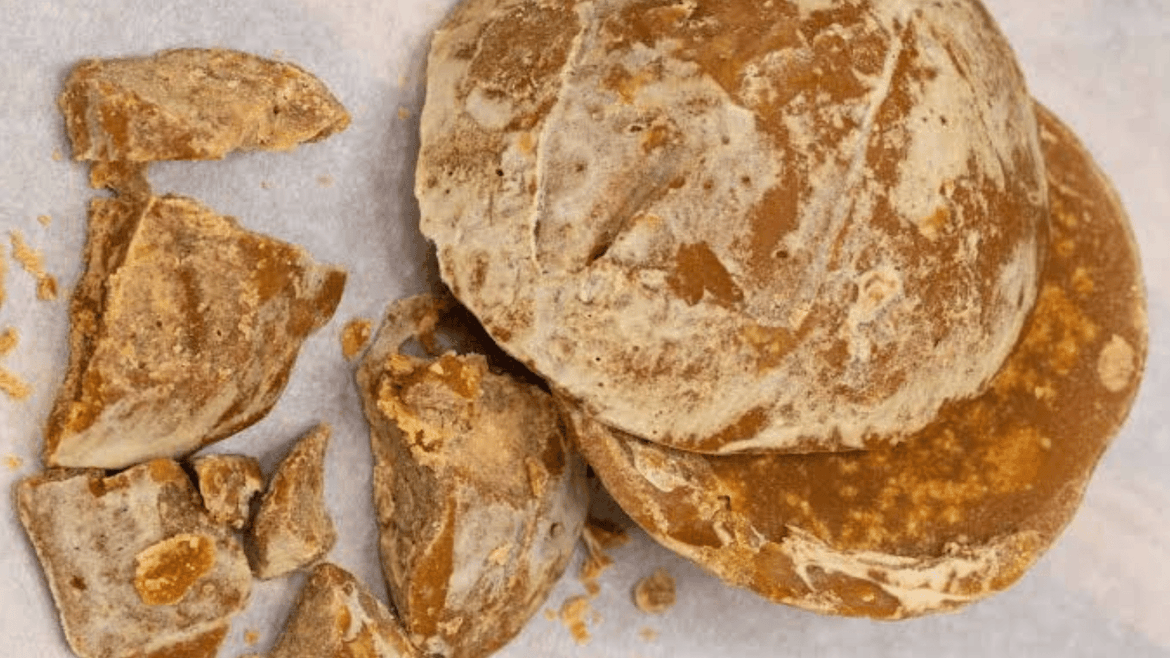
During the process, very little goes to waste. The leftover syrup is cooked further and poured into halved coconut shells, where it hardens into panutsa. The bagasse ash is also sold as fertilizer.
Why the woven wrapping
While the woven pouch carries the craft of weaving, it is more than just decoration. It is the mold, the handle, the plate and the package all at once. It allows the syrup to reach every grain while keeping the grains in place. It also works as a layer of protection from dust and handling, helping it stay fresh for about three days.
I don’t get to eat patupat as often as I used to. I miss the warmth of the lola vendors in Pangasinan as they wrapped one up for me. It wasn’t just the sweetness that I liked, but the little piece of home that takes a while to unwrap.
READ: