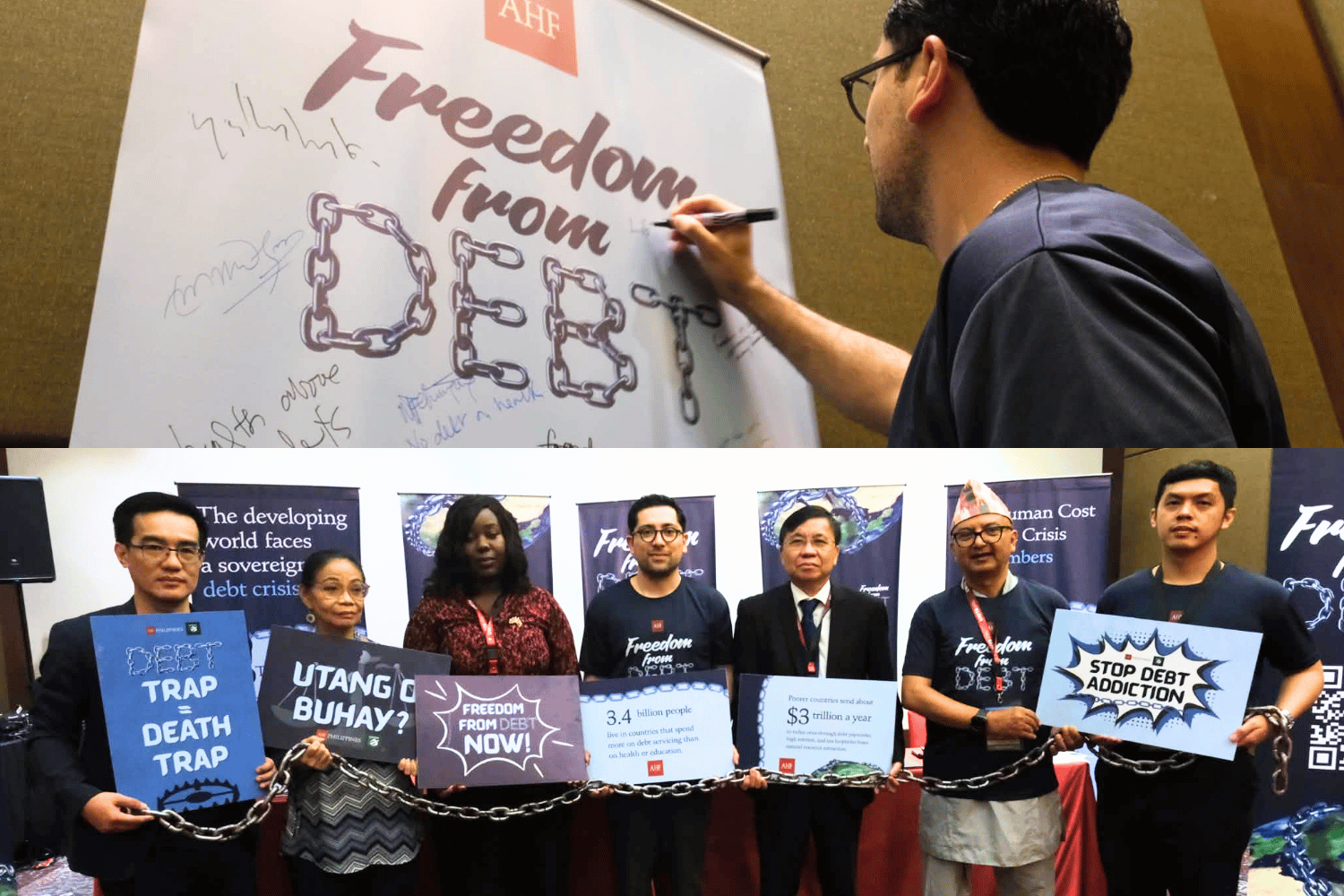
Debt payments are eating into funds for health and other public investments, advocates say.
The Philippines faces competing demands on its budget, from debt payments and infrastructure to health, education and other public services. With more than ₱2 trillion reportedly going to debt servicing, debt payments are taking up a sizeable share of public resources.
That puts the country’s fiscal room under pressure, particularly as the government seeks to fund development priorities while keeping its debt obligations in check.
The issue was raised by health advocates and debt campaigners at a “Freedom from Debt” press conference organized by the AIDS Healthcare Foundation (AHF) in Manila.
The Freedom from Debt Coalition Philippines said the government spends roughly ₱2 trillion on debt servicing, compared with about ₱448 billion for health.
“Debt is not an abstract economic issue. It affects the services people receive, the opportunities available to communities, and the government’s ability to respond during times of crisis,” said Dr. Ryan Guinaran, AHF Philippines country program manager.
The group is calling for reforms including a Borrowers’ Forum, automatic pauses on debt payments during major crises, and a proposed 1% levy on AI investments and revenues.
The argument goes beyond whether the Philippines should borrow less or pay less. It focuses on whether the way developing countries manage debt leaves enough fiscal space to invest in health and other services that support long-term growth.
That becomes particularly relevant as the Philippines takes on a greater share of financing programs such as HIV prevention and treatment amid changing international support.
AHF said the Philippines needs to prepare for greater domestic financing of its HIV response as international support becomes less certain. The organization also pointed to broader challenges in the health system, including shortages of personnel and supplies at the local level.
But the discussion also highlighted why simply increasing the health budget may not solve every problem. AHF representatives acknowledged that procurement, implementation and the way health services are delivered can affect how effectively public money translates into services.
Collective bargaining is key
That is worth keeping in mind when looking at the country’s fiscal priorities. A larger debt bill does not automatically mean less effective health spending, just as a larger health budget does not automatically produce better health outcomes.
“Every budget season, Filipinos hear promises of better healthcare, education and social services. But these goals become harder to achieve when a substantial share of public resources is devoted to debt payments,” said Raquel Castillo of the Freedom from Debt Coalition Philippines.
The coalition’s proposed Borrowers’ Forum seeks to address one part of the equation by giving developing countries a platform to coordinate their positions when negotiating with creditors. The group argues that collective bargaining could help countries secure fairer financing terms while improving transparency and debt management.
It is also calling for automatic pauses on debt payments during public health emergencies and climate disasters, allowing governments to redirect resources toward crisis response when they need them most.
Debt can help governments finance infrastructure and other investments that support growth. But when repayment obligations take up a large share of the budget, the government has less room to fund other priorities.
The issue goes beyond how much the Philippines owes. What matters for the economy is how much of the budget remains available after debt obligations are met, and whether that money is enough to fund the health, infrastructure and other public investments needed to support future growth.
READ: