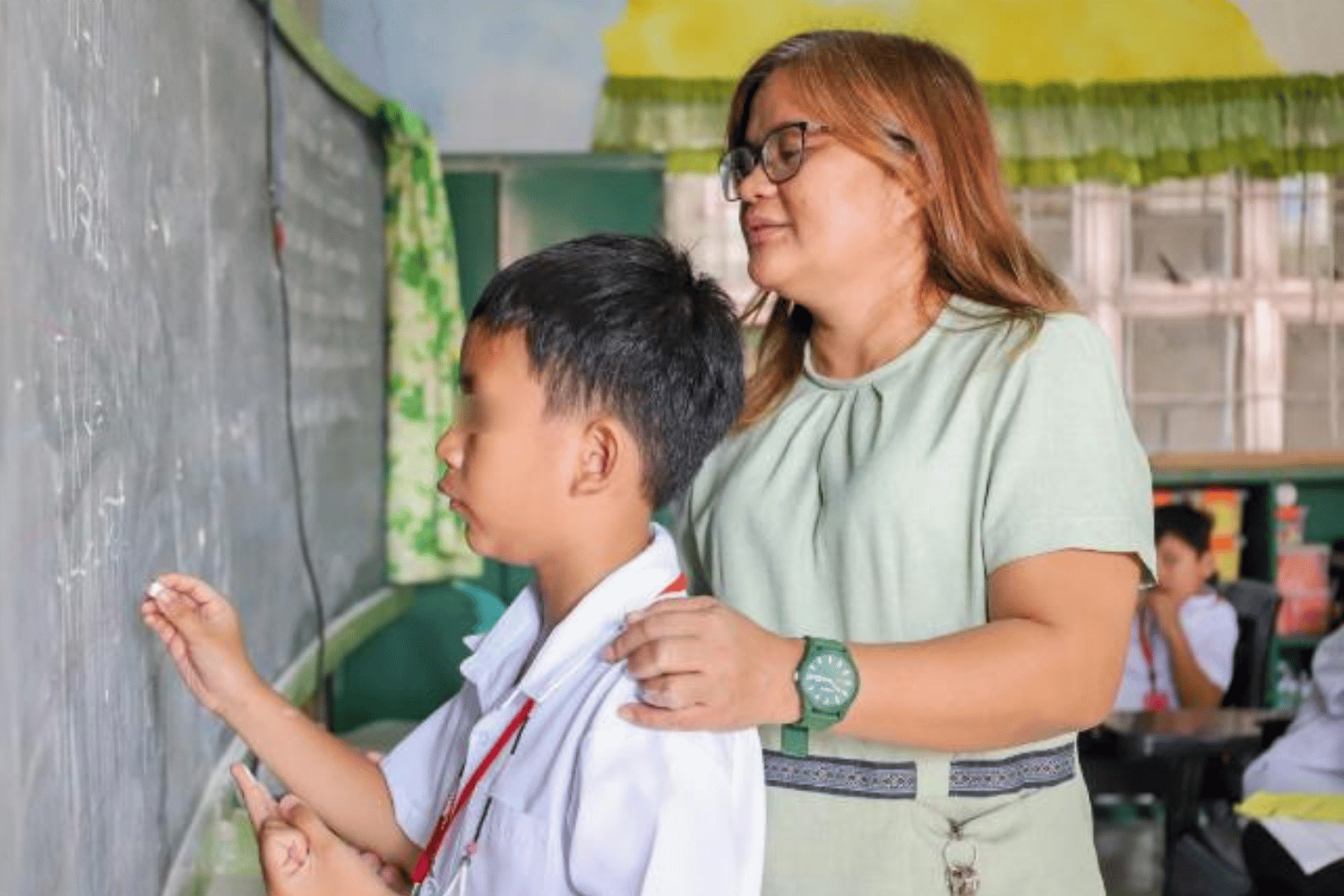
The ₱8.68-billion funding boost under DepEd’s career progression system is welcome, but the real test is whether teachers feel the difference in their pay and careers.
The Department of Budget and Management has announced ₱8.68 billion in additional funding for the salary upgrades of 93,344 public school personnel under the Department of Education’s Expanded Career Progression System.
That sounds good, and it should. More than 93,000 public school personnel are set to receive the compensation attached to their reclassified positions, with the funding covering requirements for fiscal years 2025 and 2026. The money will come from DepEd’s built-in Personnel Services lump-sum appropriations, with DBM regional offices processing the releases directly to DepEd regional units.
But before we start handing out medals for finally paying teachers what comes with their reclassified positions, it is worth looking at what this announcement actually says.
For one thing, the ₱8.68 billion is not exactly a surprise windfall that the government has decided to give teachers because it suddenly discovered that educators deserve better pay. The DBM says the funding covers personnel who already have Notices of Organization, Staffing, and Compensation Action, or NOSCAs, and appointments. These are people whose positions have already been reclassified under the career progression system, so the funding is essentially what allows the compensation attached to those positions to be released.
That is certainly good news for the people who have gone through the process. It also happens to be what should happen when a position is reclassified and an appointment is issued. Paying people the compensation attached to their positions hardly qualifies as an extravagant government favor.
The more interesting part of the announcement is what comes next.
The DBM says the proposed 2027 national budget contains ₱12.09 billion for the Expanded Career Progression System, which it describes as ₱5.94 billion, or 96.6%, higher than its FY 2026 funding. The agency says the larger allocation will support the continued reclassification and career advancement of public school teachers.
Again, nobody is going to complain about more money going toward teachers’ career advancement. In fact, the government’s basic argument here makes plenty of sense. A good teacher should not have to leave the classroom simply because moving up professionally means taking on an administrative position or pursuing an entirely different career path.
That premise, however, still has to make its way into the classroom.
A larger budget is one thing. A teacher seeing a meaningful increase in pay, having a clear path toward professional advancement and being able to stay in the classroom while doing so is another. Those are the outcomes that will ultimately determine whether the Expanded Career Progression System is working.
The DBM’s own language sets a fairly high bar. Acting Budget Secretary Kim Robert C. De Leon said the administration wants teaching to be a profession where educators can build a rewarding, lifelong career, adding that teachers should not have to leave the classroom simply to have a chance to move up.
Fine. That is a goal worth supporting.
But if the government wants to make that case, then the conversation should eventually move beyond the size of the allocation and toward what that money is actually buying. How many teachers can advance through the system? How much does their compensation increase at each level? What additional responsibilities come with reclassified positions? And does the system make it easier for public schools to keep experienced teachers in the classroom?
Those are less glamorous questions than announcing billions of pesos in additional funding, but they are much more useful in determining whether the program is delivering what it promises.
For now, ₱8.68 billion is certainly welcome. So is the proposed ₱12.09 billion for next year. Teachers deserve competitive pay, and career advancement should not require them to leave classroom teaching and move into administrative roles simply to earn more.
Still, a government budget is an input, not an outcome. The real measure of this program will come when teachers can actually feel the difference in their pay, their careers and their working lives.
Because teachers, inconveniently enough, have to live in the real world where a billion-peso allocation eventually has to become an actual salary.
READ:

South African ESL teacher mocks Filipina colleague over her English
Nikko Miguel Garcia
August 16, 2026
Classmates support struggling peer with food, school supplies
Mia Capio
August 8, 2026
Filipino teachers struggle with inclusive education amid lack of training, resources
John Lloyd Aleta
July 13, 2026