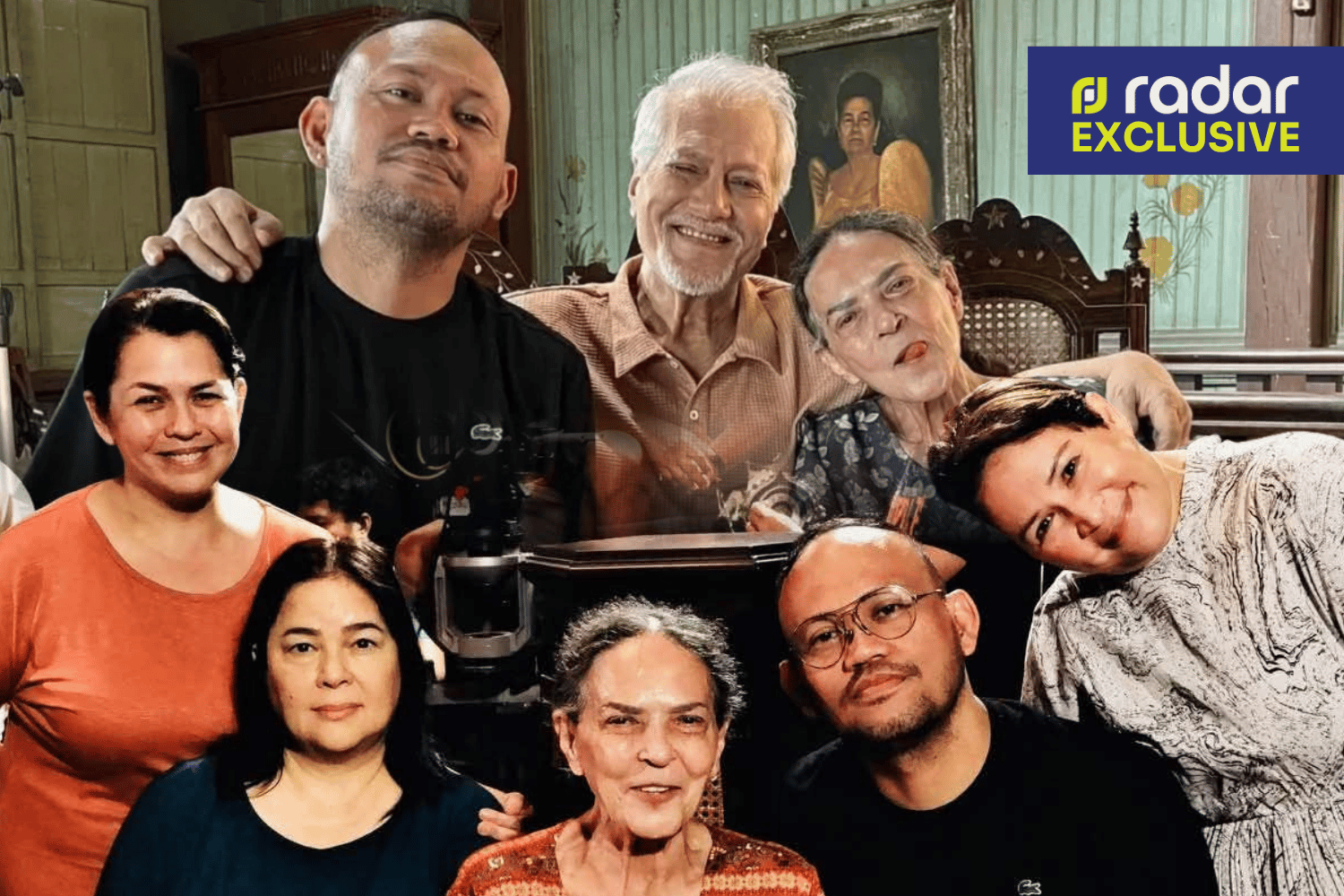
The star-studded horror feature tackles deep family secrets, religious devotion, and generational trauma.
For director Adolfo Alix Jr., the scariest thing in ‘Poon’ was never the supernatural entity haunting an old family home.
It was everything the family had already done to one another before the haunting even began.
That darkness has already traveled beyond Philippine shores. Written by Jerry B. Grácio and directed by Alix, ‘Poon (The Hallowed)’ made its world premiere at the 48th Moscow International Film Festival in April 2026 and is now headed home for its nationwide theatrical release on September 9, 2026.
The horror-mystery-drama brings together a formidable ensemble led by late screen legends Ronaldo Valdez and Jaclyn Jose, alongside Gina Pareño, Janice de Belen, Lotlot de Leon, Ara Mina, Allen Dizon, Bembol Roco, JC de Vera, Martin del Rosario, Kelvin Miranda and Joao Constancia. The film carries an R-16 rating from the MTRCB.
But beneath the supernatural scares and its star-studded cast, Alix says ‘Poon’ is ultimately about something painfully familiar: a family being destroyed by everything it has refused to confront.
“The true horror has always been rooted in what families refuse to talk about,” Alix told radar in an exclusive interview.
“The wood and the spirit are terrifying, but the rot within blood ties, greed, guilt, and generations of suppressed bitterness is what ultimately destroys a home.”
‘Poon’ follows three estranged daughters who return home after the mysterious death of their patriarch during Holy Week. As inheritance disputes and old resentments explode, a supernatural force connected to a sinister statue known as the 13th Apostle begins terrorizing the household.
But Alix says the entity merely exposes what was already festering within the family.
“It isn’t creating the malice; it’s merely holding up a mirror to the unresolved cruelty already festering inside those four walls.”
The film also allowed Alix to explore another distinctly Filipino tension: the thin boundary between religious devotion, folk belief and fanaticism.
“In Filipino culture, religious devotion and animist folk beliefs are deeply intertwined—it is rarely just one or the other,” he explained.
For Alix, even the reverence Filipinos give religious images carries an unsettling duality.
“When we revere statues, there is an inherent duality: devotion borders on obsession, and unquestioning faith can blind people to actual morality.”
That is why ‘Poon’ treats Catholic imagery and rituals not merely as horror devices but as familiar parts of Filipino life.
“The dread comes from recognizing how close deep piety is to fanaticism,” Alix said.
The film carries another, unintended emotional weight: it stands among the final screen appearances of Valdez and Jose.
“Directing Tito Ron and Tita Jane was always a masterclass in subtlety and restraint,” Alix said.
Jose’s presence was particularly personal. She had worked with Alix since his first feature, ‘Donsol.’
“She is family to me. From my first film ‘Donsol,’ she supported me and it was a wonderful collaboration as always.”
Their deaths have inevitably changed how Alix now sees ‘Poon.’
“Seeing their frames on screen now feels less like reviewing scenes and more like preserving sacred moments with masters who gave so much of their lives to Philippine cinema,” he said.
“It transformed the film into an unintended monument to their craft.”
Despite Alix’s roots in character-driven independent cinema and social realism, he never wanted to choose between dramatic depth and what Filipino audiences expect from horror.
“Filipino horror audiences expect tension, pacing, and payoff,” he said. “The approach was not to compromise one for the other, but to let the drama earn the horror.”
The film has become even more personal following Alix’s own major accident and recovery.
“Going through a major accident and confronting physical vulnerability changes how you process finality,” he said.
Suddenly, the film’s preoccupation with mortality, inheritance and words left unsaid took on another meaning.
“Surviving a close call and doing the work to recover makes those themes hit much closer to home.”
For Alix, what began as a horror film has ultimately become something more intimate: a warning about waiting too long to confront the things that haunt us.
“The film is no longer just a narrative exercise in horror,” he said. “It serves as a personal reminder of how fragile our time is, and how crucial it is to make peace with the past before it consumes you.”
READ:

Gina Pareño-starrer ‘Pila’ to world premiere at Moscow International Film Festival
radar Entertainment
April 6, 2026

Jaclyn Jose and Ronaldo Valdez’s final performances to premiere in Moscow
radar Entertainment
April 6, 2026

Adolf Alix Jr. survives pedestrian accident, calls it second chance
Kiko Escuadro
July 15, 2026