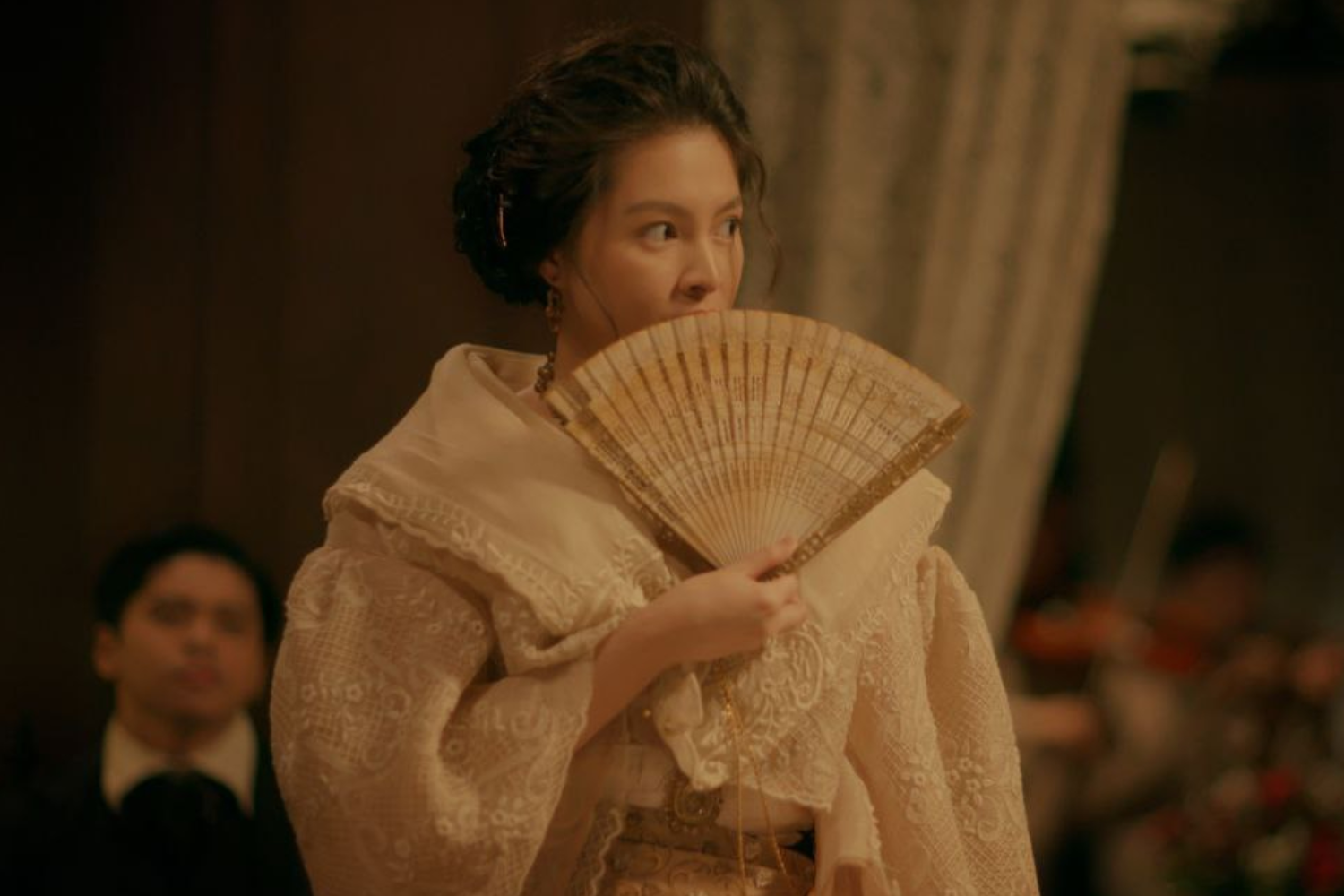
The quiet language of the Filipino abaniko.
Before K-pop idols like Jisoo made handheld “Jisu Life” fans a Gen Z staple—waved at concerts, flashed for selfies, and printed with inside jokes—Filipino women already had their own version. Only theirs came with rules, restraint, and a kind of quiet power that didn’t need to shout.
The abaniko wasn’t just something you held—it was something that said who you were.
You could tell a woman’s place in society by the fan she carried. The elite had folding abanikos made of fine wood or ivory-like materials, dressed in piña or silk, edged with lace, sometimes hand-painted or embroidered with intricate detail. These weren’t just accessories; they were declarations. The more delicate the material, the more intricate the craftsmanship, the higher the status.
Meanwhile, the masses made do with the pamaypay—non-foldable fans woven from anahaw or buri. Practical, sturdy, and everywhere, they did the job without the flourish. No lace, no painted scenes, no coded elegance—just relief from the heat.
That contrast alone already told a story.
But for women who carried the abaniko, especially those moving within tightly watched social circles, the fan became something else entirely: a language.
A flick too fast could mean irritation. A slow flutter across the face could invite attention. Holding it close to the chest softened one’s presence, while snapping it shut could end a conversation without a word being spoken. In rooms where speech was measured and movement observed, the abaniko allowed women to communicate in plain sight—seen, but not always understood.
It was subtle rebellion disguised as grace.
The fan shielded more than just the face. It protected secrets, emotions, intentions. It allowed women to navigate courtship and conversation on their own terms, even within a culture that expected them to be silent and composed.
Now, the language is gone.
Today’s fans are louder—literally and figuratively. Battery-operated mini fans hum in crowded commutes. Printed fans scream punchlines or fandom allegiance. Communication is instant, typed, posted, broadcast. There’s no need to decode a gesture when everything can be said outright.
And so the abaniko slowly slipped into the margins.
It appears now mostly as an aesthetic choice—wedding souvenirs, cultural costumes, curated nostalgia. The pamaypay survives in everyday life, still dependable, still unassuming. But the abaniko, once layered with meaning, has been reduced to something decorative.
What disappeared wasn’t just the object—it was the intention behind it.
Because once, Filipino women could hold a simple fan and say everything they needed to say. Not with noise, not with spectacle, but with a flick of the wrist—controlled, deliberate, and entirely their own.
In a world that now demands constant expression, the abaniko feels almost radical in hindsight.
Imagine saying less—and being understood completely.
For women who carried the abaniko, especially those moving within tightly watched social circles, the fan became something else entirely: a language.
READ: