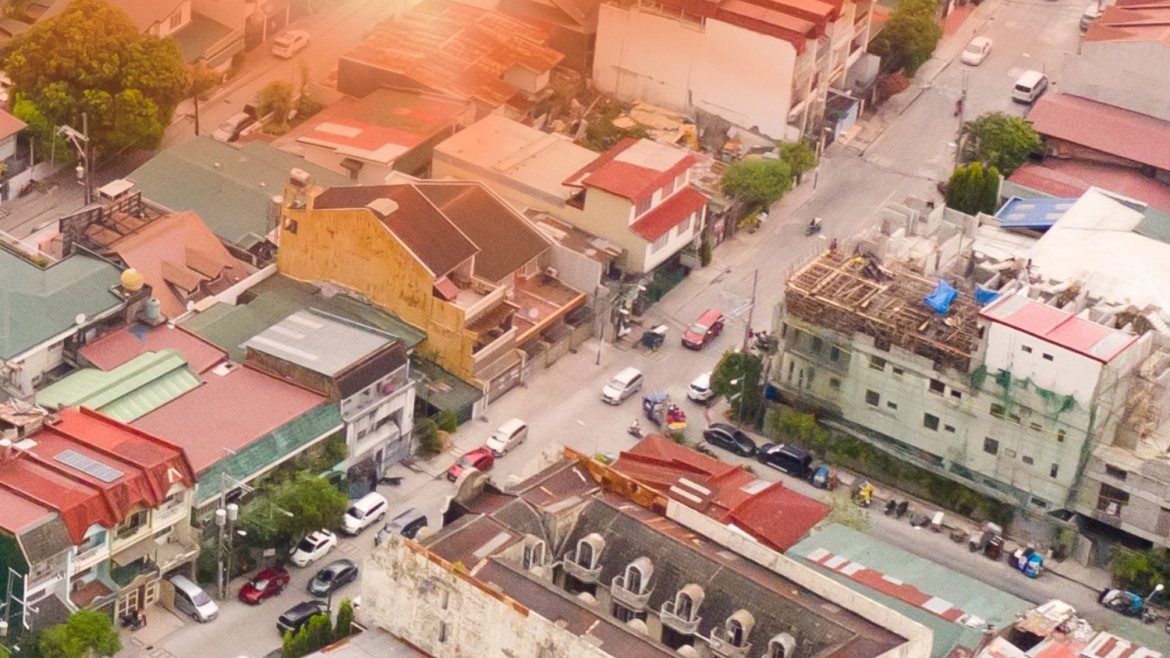
These towering styles became cultural icons in Makati and Greenhills, but they unknowingly contributed to a global environmental crisis.
Have you seen the teased hairstyle of your mom in old family photos—hair sprayed sky-high, bangs curled stiff like a wave, every strand frozen in place as if gravity had stopped working?
For many Filipinos who grew up in the 1980s, that look was more than just fashion. It was the era itself.
It was the look of titas strolling through Greenhills, office workers heading to Makati in power blazers, prom queens posing in photo studios with soft-focus filters, and moms preparing for Sunday mass while blasting Sharon Cuneta or Madonna on cassette tapes. The bigger the hair, the better. Flat hair was practically a social crime.
The teased hairstyle defined the decade’s obsession with excess and glamour. Women spent long hours backcombing their hair—known locally as “tukso” or “ratting”—to create impossible volume before sealing everything with clouds of hairspray. Local beauty salons, neighborhood parloristas, and even home vanity kits revolved around one mission: making hair stay up no matter how humid the Philippine weather became.
And that was where the environmental problem quietly began.
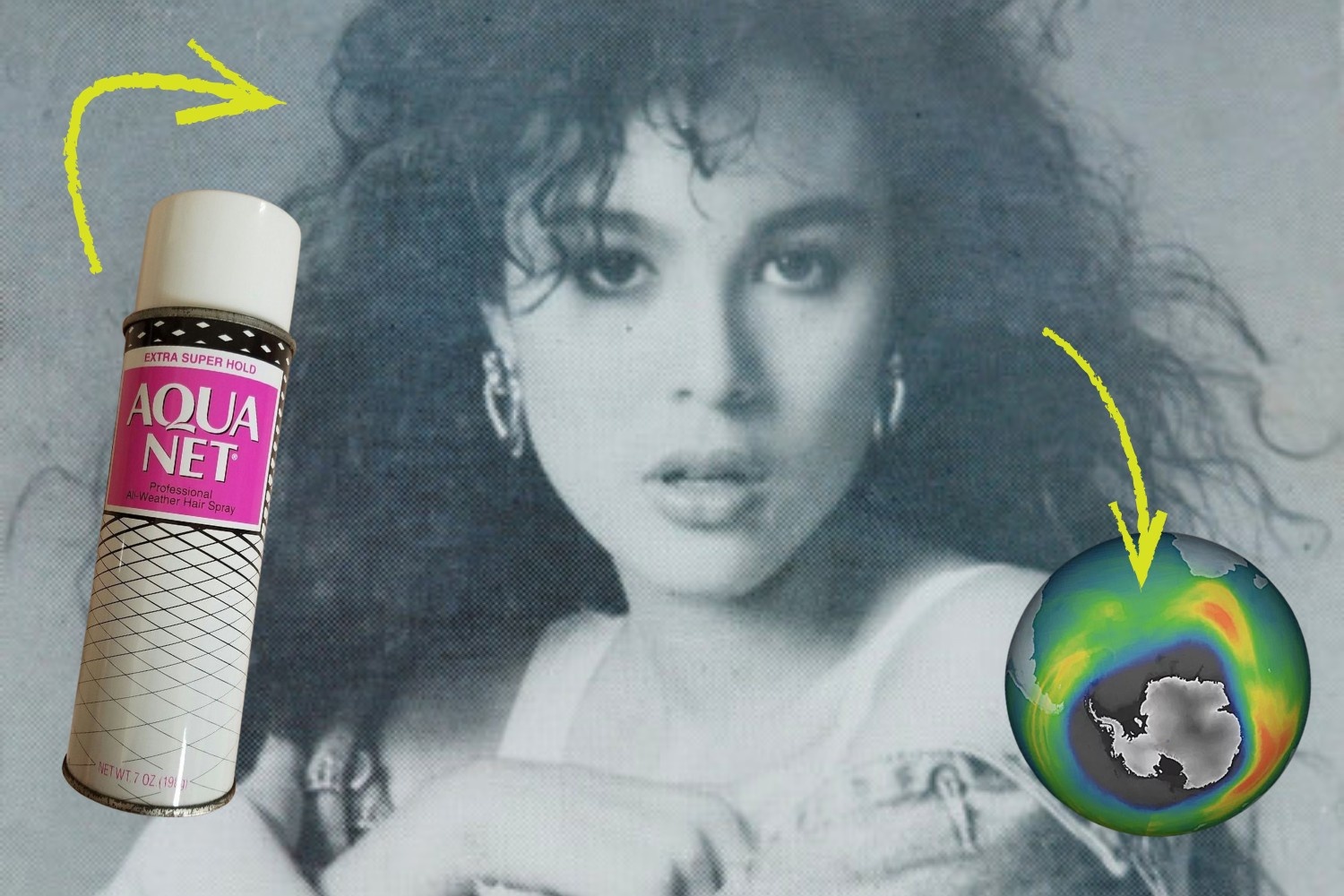
Many aerosol hairsprays used during the 1980s contained chlorofluorocarbons or CFCs, chemicals once considered harmless and highly effective for spray products. Every time someone sprayed their hair before heading to a disco in Quezon City, a wedding in Pampanga, or a town fiesta in Cebu, invisible CFCs were released into the atmosphere.
The chemistry of style
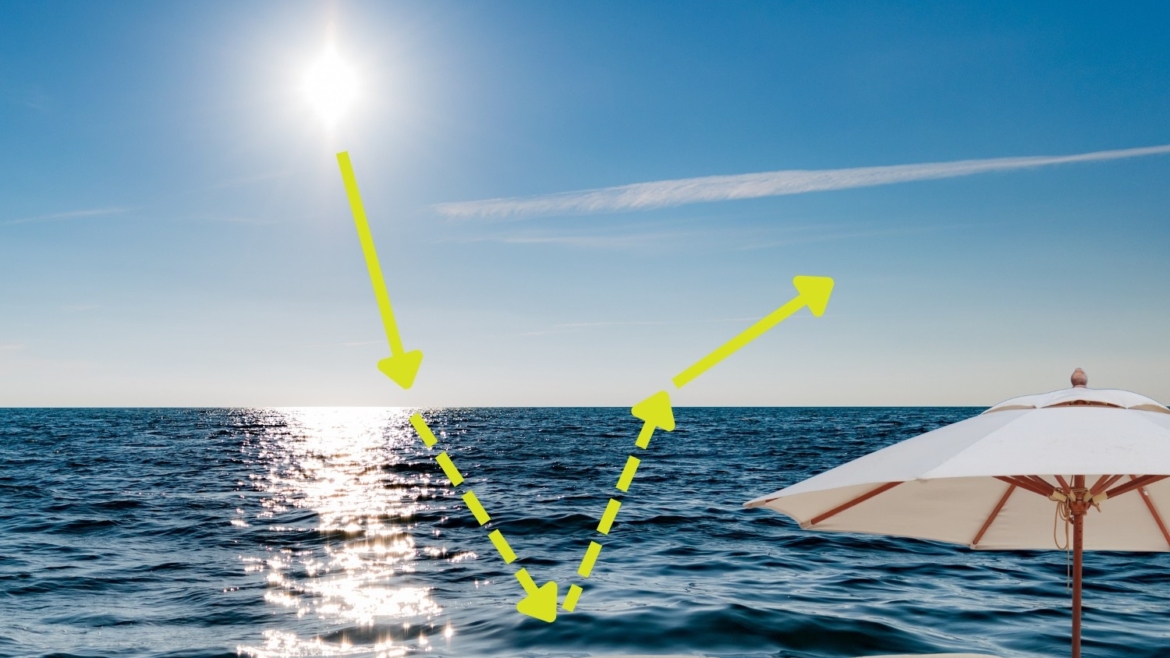
Scientists later discovered that these chemicals drifted into the stratosphere, where sunlight broke them apart and released chlorine atoms that destroyed ozone molecules. The ozone layer acts like Earth’s sunscreen, protecting people from dangerous ultraviolet radiation. As more ozone disappeared, the world became increasingly vulnerable to stronger UV rays linked to skin cancer, crop damage, and environmental disruption.
The beauty industry—particularly hairspray—became one of the most visible symbols of the problem because of how excessive the sprays were during the decade of “big hair.” The higher the teased hairstyle rose, the more aerosol products were often needed to keep it intact.
By the late 1980s, global alarm over the growing ozone hole above Antarctica led to international action. In 1987, countries signed the Montreal Protocol, an agreement that phased out CFCs worldwide. Eventually, aerosol formulas changed. Brands survived, but the chemicals damaging the ozone layer did not.
Even iconic hairsprays associated with the era evolved. Products that once relied on ozone-depleting propellants shifted to safer alternatives like hydrocarbons and compressed gases.
Today, the teased hairstyle survives mostly in throwback parties, old wedding albums, and reruns of vintage Filipino variety shows. But behind all the nostalgia is a strange historical irony: one of the most iconic beauty trends of the ’80s also became part of one of the world’s biggest environmental lessons.
The era of giant bangs and immovable curls may be gone, but it left behind a reminder that even ordinary everyday habits—something as simple as spraying hair before leaving the house—can have consequences far bigger than anyone imagined.
Many aerosol hairsprays used during the 1980s contained chlorofluorocarbons or CFCs, chemicals once considered harmless and highly effective for spray products.
READ: