Why the iconic detergent soap vanished from grocery shelves and sari-sari stores in 1992.
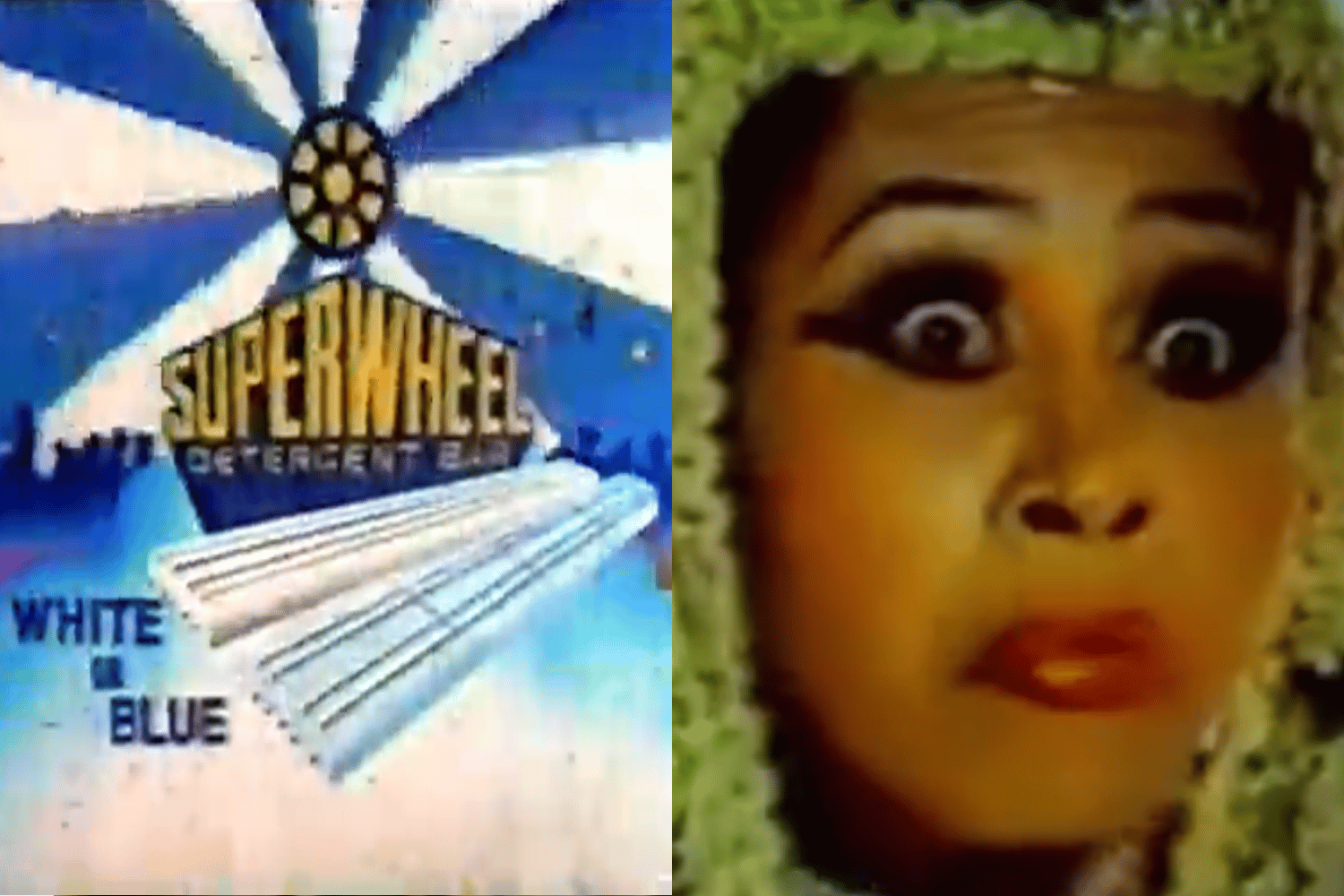
You stumble upon an old television commercial online. Before the familiar green detergent bar even appears, you hear Elizabeth Ramsey’s theatrical cry: “Magapatuka na lang ako sa ahas!” Instantly, you’re no longer in 2026. You’re back in a Filipino living room where the whole family laughs, not at a sitcom, but at a laundry soap commercial.
That was the magic of Superwheel Detergent Bar.
Long before commercials chased viral moments, Superwheel had already mastered the art of entertaining Filipinos. Manufactured by the Philippine Refining Company, now Unilever Philippines, the detergent bar became a household staple throughout the 1970s and 1980s—not just because it washed clothes well, but because it gave the country some of the most unforgettable television advertisements ever made.
At a time when detergent commercials simply demonstrated how to remove stains, Superwheel dared to be different. It borrowed from Hollywood, Broadway, and Philippine cinema, turning every commercial break into a miniature comedy.
Nothing captured that better than its legendary “Cleopatra” campaign, launched by J. Walter Thompson, one of the leading ad agencies in the ’70s.
Dressed as an extravagant Egyptian queen, Elizabeth Ramsey found herself overwhelmed by mountains of dirty royal garments. In melodramatic despair, she declared—in a rather unusual wording—“Magapatuka na lang ako sa ahas!”
Superwheel then came to the rescue. The commercial ended with another line that would become part of everyday Filipino vocabulary: “Konting kuskos, ayos!”
4As Philippines, or the Association of Accredited Advertising Agencies, reposted the clip on YouTube in 2022, and listed those behind the campaign: Yolly Ong, Edd Fuentes (copywriters); Gil Corcuera, Poli Maquiraya (art directors); Manuel Daves (director); and Tito Arce (cinematographer). Vergara Films served as producer.
The campaign was such a phenomenon that Superwheel kept raising the bar.
In the 800,000-member Facebook group “Memories of Old Manila,” a moderator recalled that in 1978, the brand released a parody of “The King and I,” starring Gloria Romero as Anna and opera singer Aurelio Estanislao as the King of Siam. But the joke unexpectedly turned into an international incident after the Thai Embassy objected to a scene showing Gloria scrubbing the king’s bald head, explaining that touching a monarch’s head—even in parody—violated Thai cultural traditions. The advertisement was promptly pulled from television, becoming one of the most unusual controversies in Philippine advertising history.
By the late 1980s, Superwheel was once again setting trends, this time by riding the popularity of local blockbuster comedies. Joey de Leon starred in memorable spoofs like “Starzan & Barok” and “Barbie: Maid in the Philippines,” joined by Yoyoy Villame and Whitney Tyson. The commercials blurred the line between entertainment and advertising, making viewers remember the jokes as much as the product itself.
For millions of Filipinos, Superwheel wasn’t simply another detergent. It was part of childhood. It was part of television history.
Which is why many were left wondering: What happened to it?
The answer had little to do with sales.
In the early 1990s, Unilever began reorganizing its brands worldwide. Rather than maintain different detergent names in different countries, the company decided to consolidate under Surf, one of its global brands. Around 1992, consumers briefly saw products labeled “Superwheel by Surf,” easing them into the transition. By 1993, the Superwheel name had quietly disappeared from grocery shelves and sari-sari stores, fully replaced by Surf.
The soap vanished, but the memories never did.
Today, younger Filipinos may know Surf, but older generations still remember Superwheel—not because of the detergent bar itself, but because it proved that even something as ordinary as laundry soap could make an entire nation laugh.
Few products disappear yet remain instantly recognizable decades later. Superwheel did exactly that, leaving behind not just clean clothes, but one of the richest legacies in Philippine advertising history.
READ:
The unmistakable scent, the white finish—Chin Chun Su was peak ‘80s beauty
radar Lifestyle
April 3, 2026
FLASHBACK: Mony Mony, the iconic Batang ’90s candy, is now under an FDA public health warning
radar Lifestyle
June 30, 2026
FLASHBACK: The bizarre true-crime rivalry that pitted Kris Aquino against Lorna Tolentino
radar Entertainment
June 22, 2026