Generations of Filipino cooks transformed sopas into a dish distinctly our own.
It’s raining outside. Someone at home isn’t feeling well. Out comes the big pot.
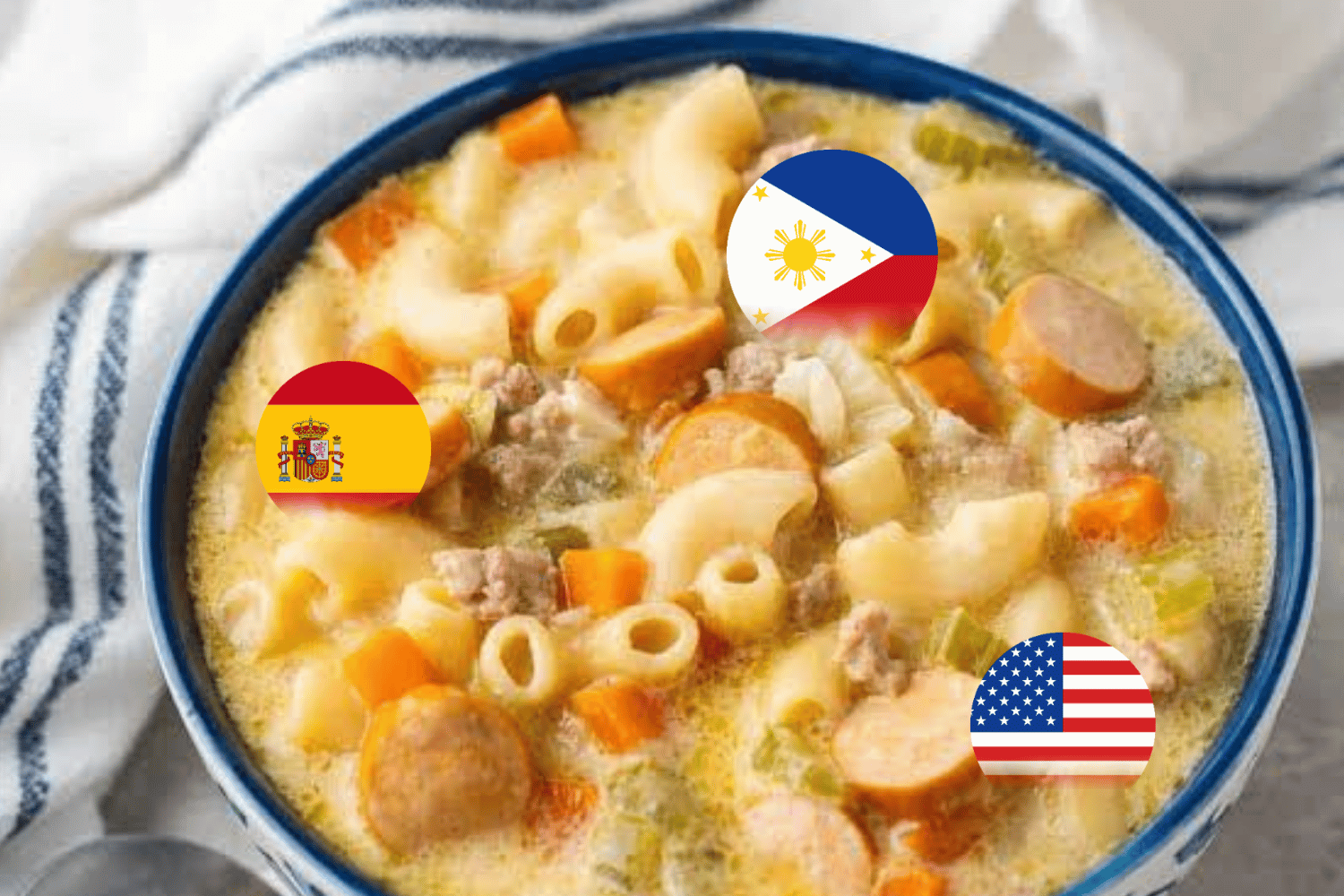
Garlic and onions hit the oil, followed by chicken, macaroni, carrots, cabbage and evaporated milk. Maybe there are slices of bright-red hot dog floating around, too.
That bowl is unmistakably Filipino sopas. But the comfort food we know today wasn’t simply inherited from Spain or America. It evolved here through centuries of foreign influence and Filipino adaptation.
The name came from Spain
“Sopas” comes from the Spanish sopa, meaning soup. Spain gave Filipinos the word, but the creamy, macaroni-filled dish familiar today developed much later.
Its modern form owes much to another colonial period.
Then came the americans
During the American era, products such as macaroni and canned milk became increasingly familiar in Filipino kitchens. Evaporated milk was particularly practical in a tropical country where fresh dairy was difficult to store and distribute.
Filipino cooks eventually combined macaroni and milk with chicken broth, garlic, onions and vegetables such as carrots, cabbage and celery.
Instead of the clear broth associated with American chicken noodle soup, evaporated milk gave Filipino sopas its signature creamy appearance and comforting richness.
Pinoys made it their own
Then came the unmistakably local touches.
Bright-red Filipino hot dogs became a popular addition, reflecting the country’s adaptation of American-style processed meats. Some households added chicken liver, gizzard, pork or sausages, often stretching whatever ingredients were available to feed an entire family.
Even its consistency became a matter of household preference. Some like sopas soupy; others want it thick and creamy.
And every sopas cook knows the problem: macaroni keeps absorbing liquid. Leave the pot sitting long enough and your soup can practically turn into a pasta dish.
A bowl of Philippine history
Sopas is essentially Philippine history served hot.
Its name carries Spanish influence. Its macaroni, canned dairy and chicken-soup inspiration reflect American influence. But generations of Filipino cooks transformed those elements into something distinctly their own.
Today, sopas means rainy mornings, school canteens, community feeding programs and a warm bowl brought to someone who isn’t feeling well.
Its ingredients may have come from different places, but the comfort it became is unmistakably Filipino.
READ: