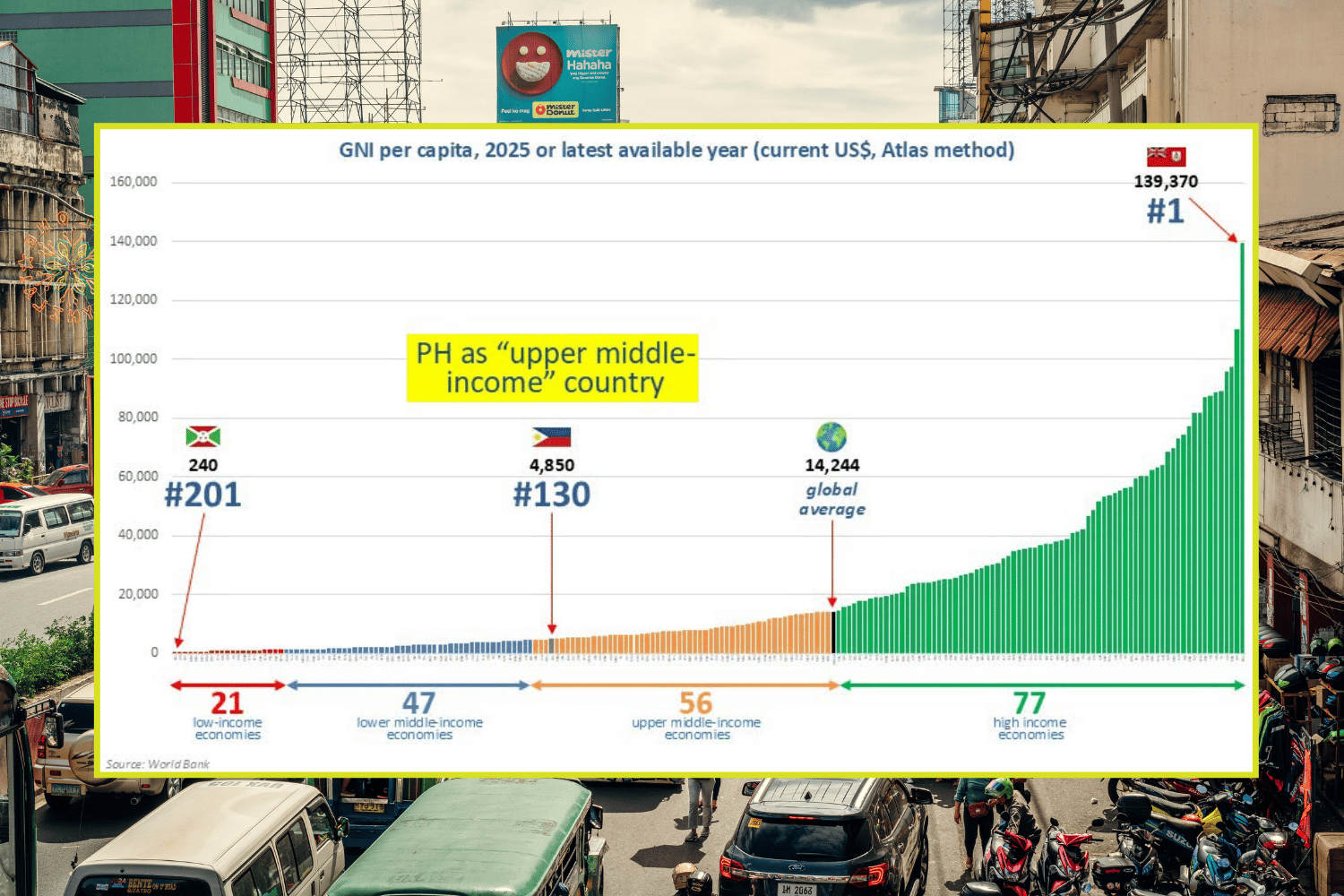
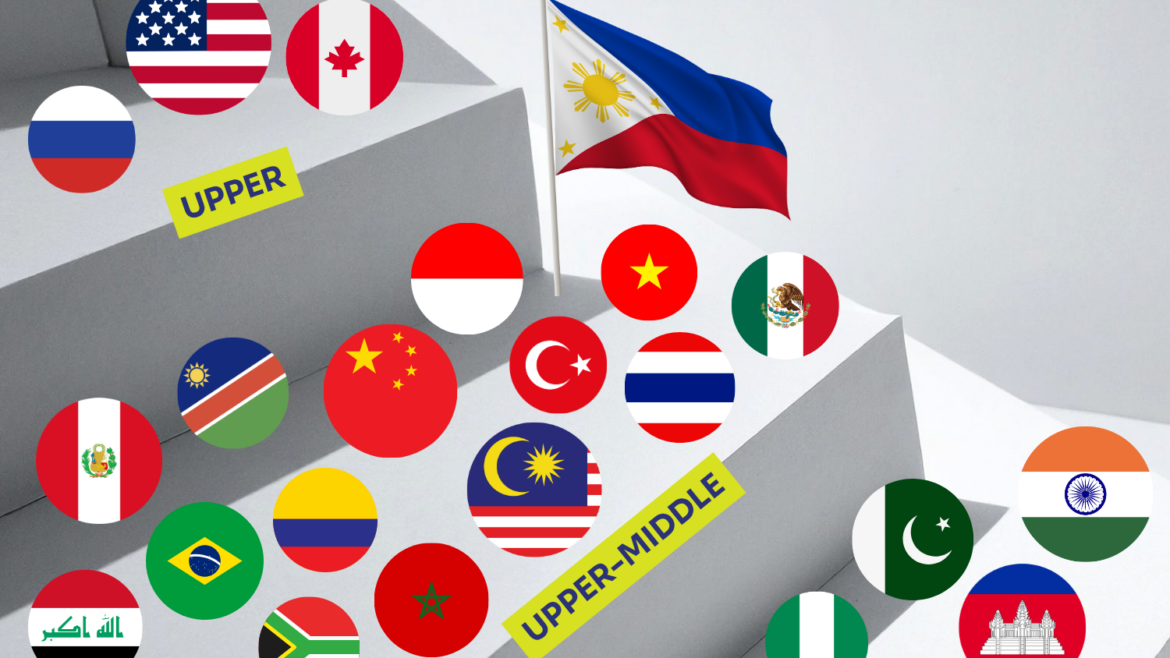
According to Africa, the classification simply places the Philippines at the lowest end of the World Bank’s UMIC bracket, with a gross national income per capita of US$4,850.
He noted that among 201 countries, the Philippines ranks 130th, placing it in what he described as the poorest one-third of nations globally. He also pointed out that the country’s GNI per capita remains only about one-third of the global average.
Africa argued that the World Bank’s income classifications were originally intended as administrative tools for determining lending eligibility rather than as comprehensive measures of a country’s development or the quality of life of its people.
He also warned that graduating to a higher income classification could eventually mean the country loses access to some concessional financing, making future borrowing more expensive.
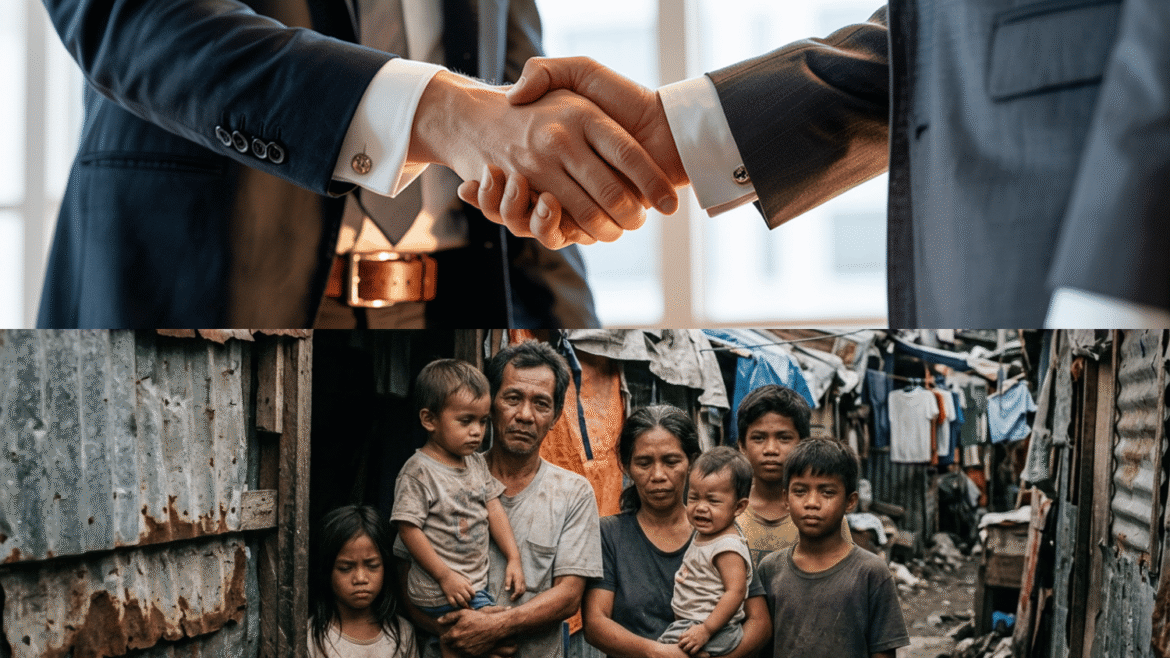
The economist criticized what he described as an overly celebratory government narrative linking the reclassification to the success of current economic policies. He argued that relying on GNI per capita alone overlooks persistent problems such as poverty, inequality, low wages, informal employment, shrinking manufacturing and agriculture, environmental degradation, and the continued dependence on overseas Filipino workers whose earnings boost national income figures.
“GNI per capita is a narrow metric,” Africa wrote, adding that averages can conceal the unequal distribution of wealth and fail to reflect the everyday experiences of many Filipinos.
He likewise questioned the idea that economic growth will naturally benefit everyone, calling the “trickle-down” narrative outdated.
Africa concluded by urging the public to look beyond headline economic indicators and seek a more balanced discussion of the country’s economic condition instead of simply accepting official narratives celebrating the reclassification.
READ: