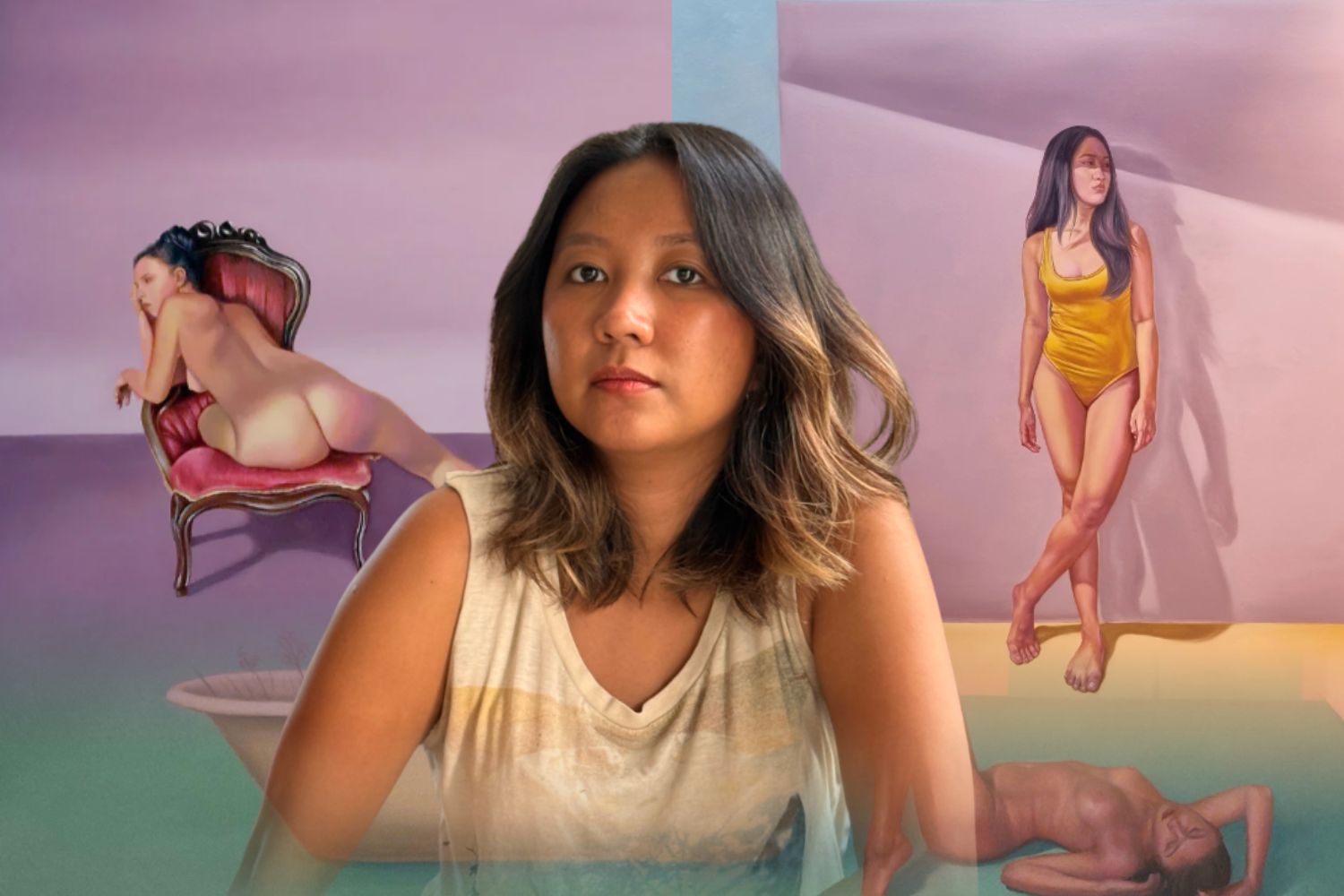
Her works have been exhibited in Vietnam, Indonesia, and Hong Kong, alongside numerous local exhibitions.
There comes a point in an artist’s career when the subject quietly changes. The faces may still be familiar. The symbols may still return. But the questions become larger. They stop asking Who am I? and begin asking Who are we?
For visual artist Jessa Almirol, that shift didn’t happen overnight. It unfolded over years of painting, through a succession of bodies of work that now come together in her CUR8 presentation, “Threshold State.” Seen as one exhibition, they reveal an artist whose practice has evolved from exploring the inner life to examining what it means to belong to something beyond oneself.
“My presentation for CUR8 is titled Threshold State. It traces the organic shift in my practice, from tending to the self toward collective goals, and the uncomfortable space in between where real connection begins,” Almirol writes in her artist statement.
The title itself suggests transition. A threshold is neither the room you leave nor the one you enter. It is the space between. That in-between space is where Almirol’s paintings now reside.
Her earliest works were deeply personal.
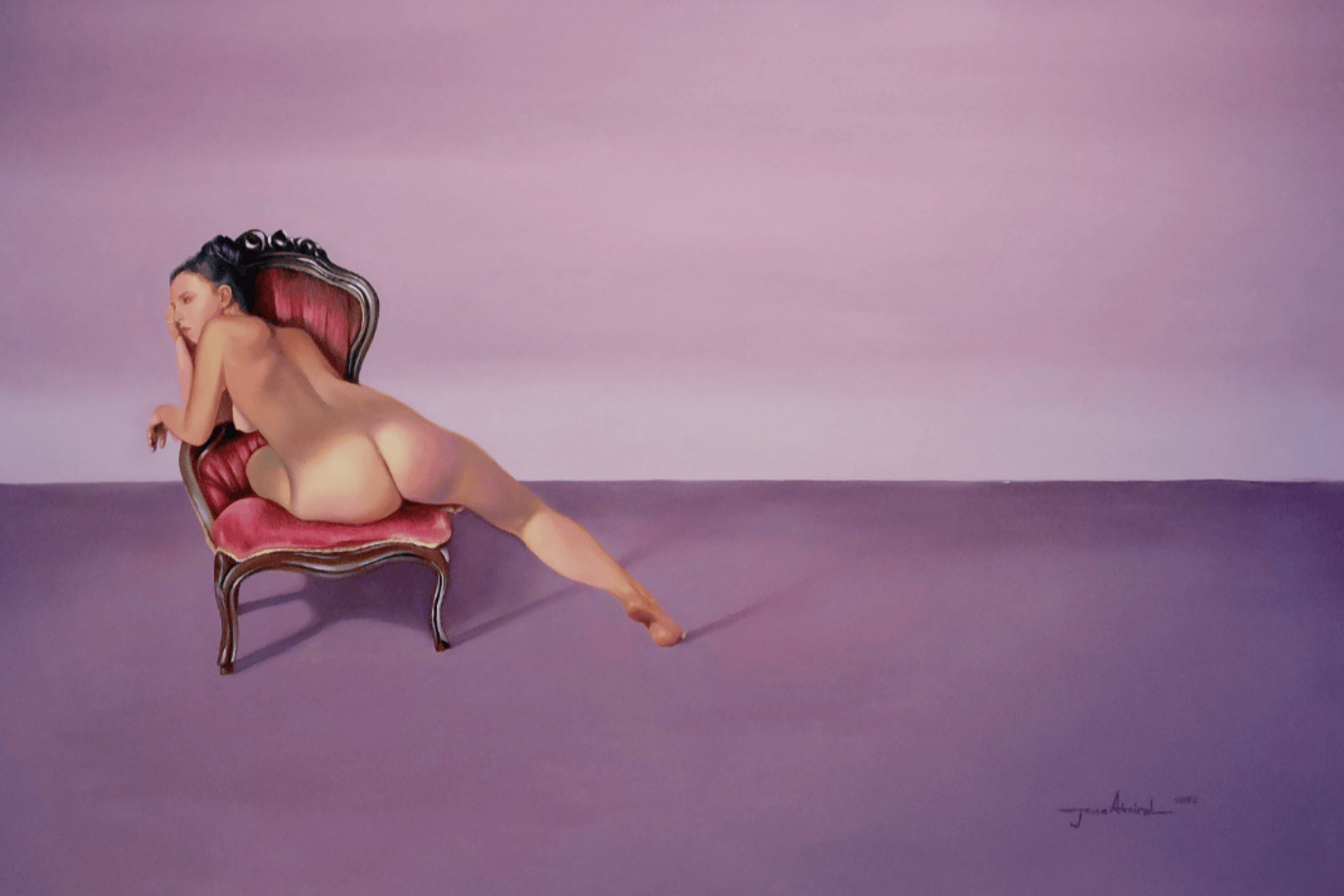
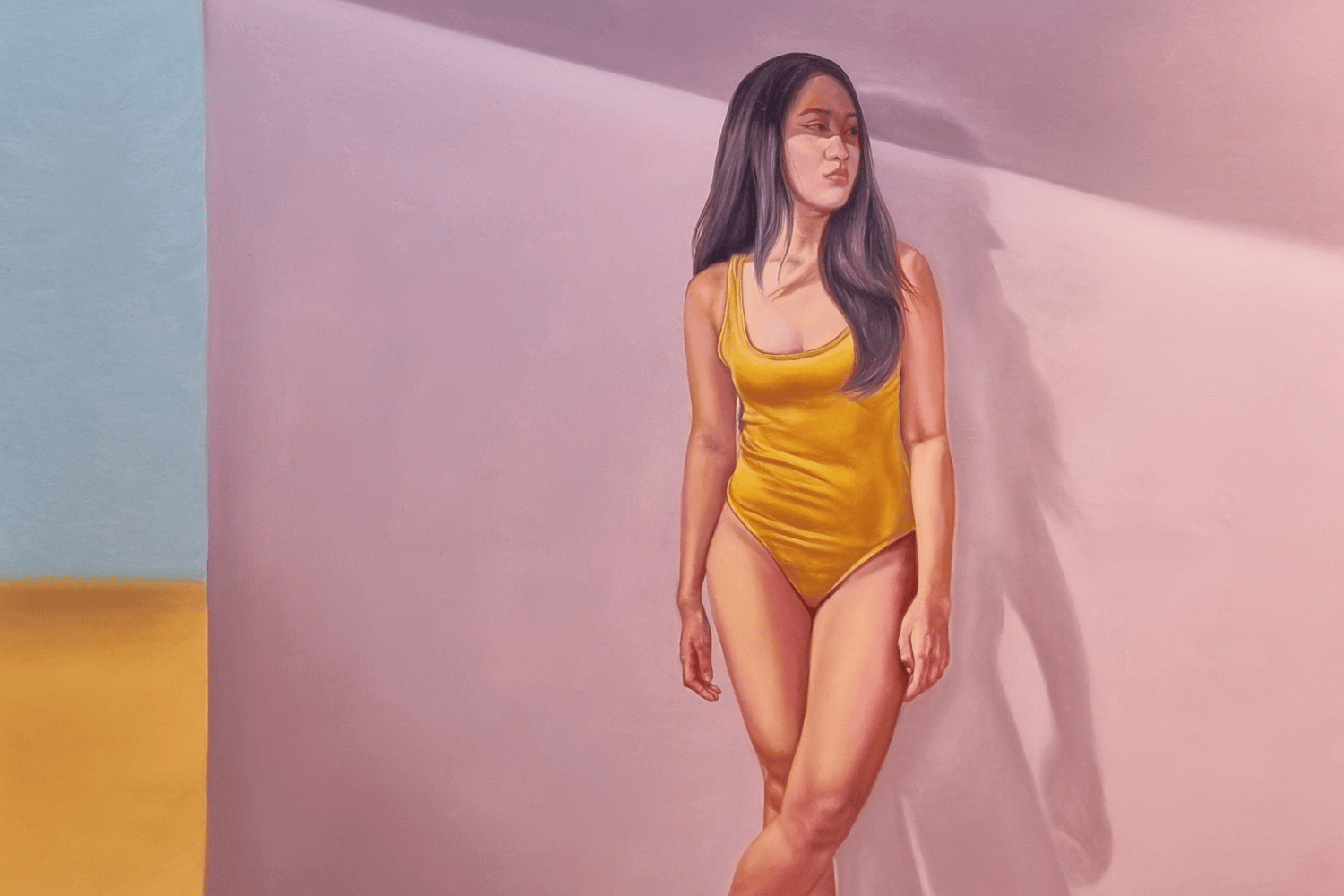
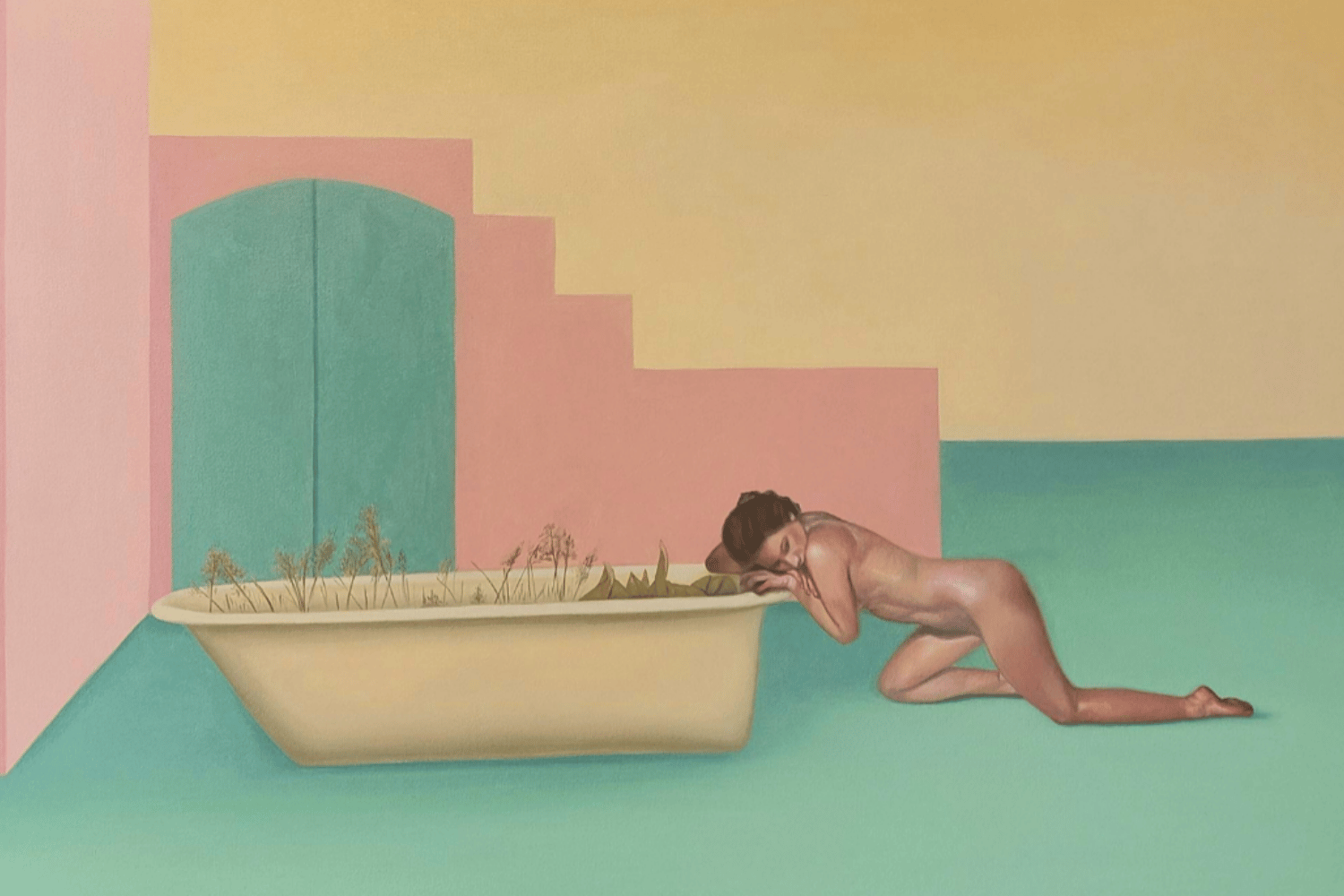
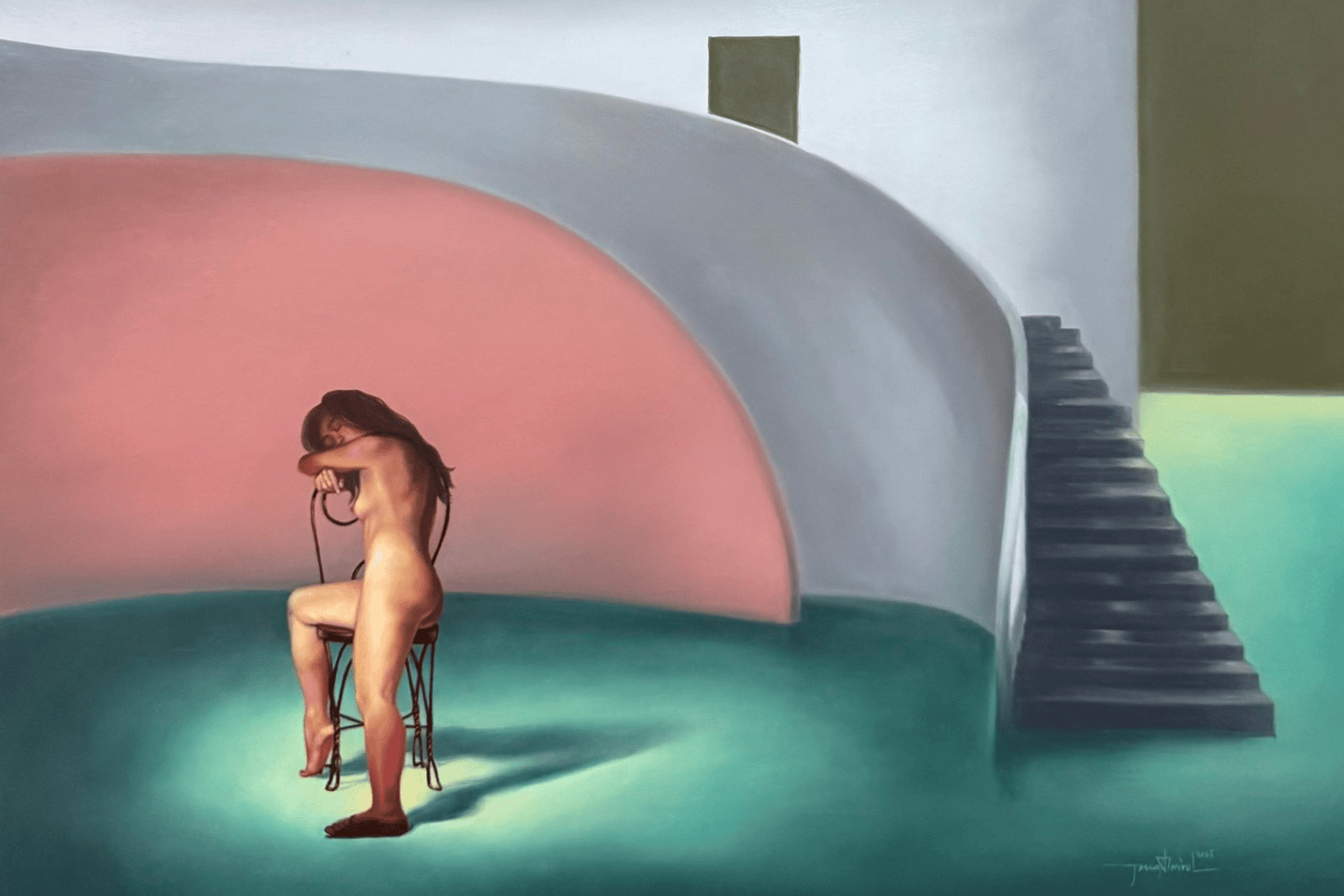
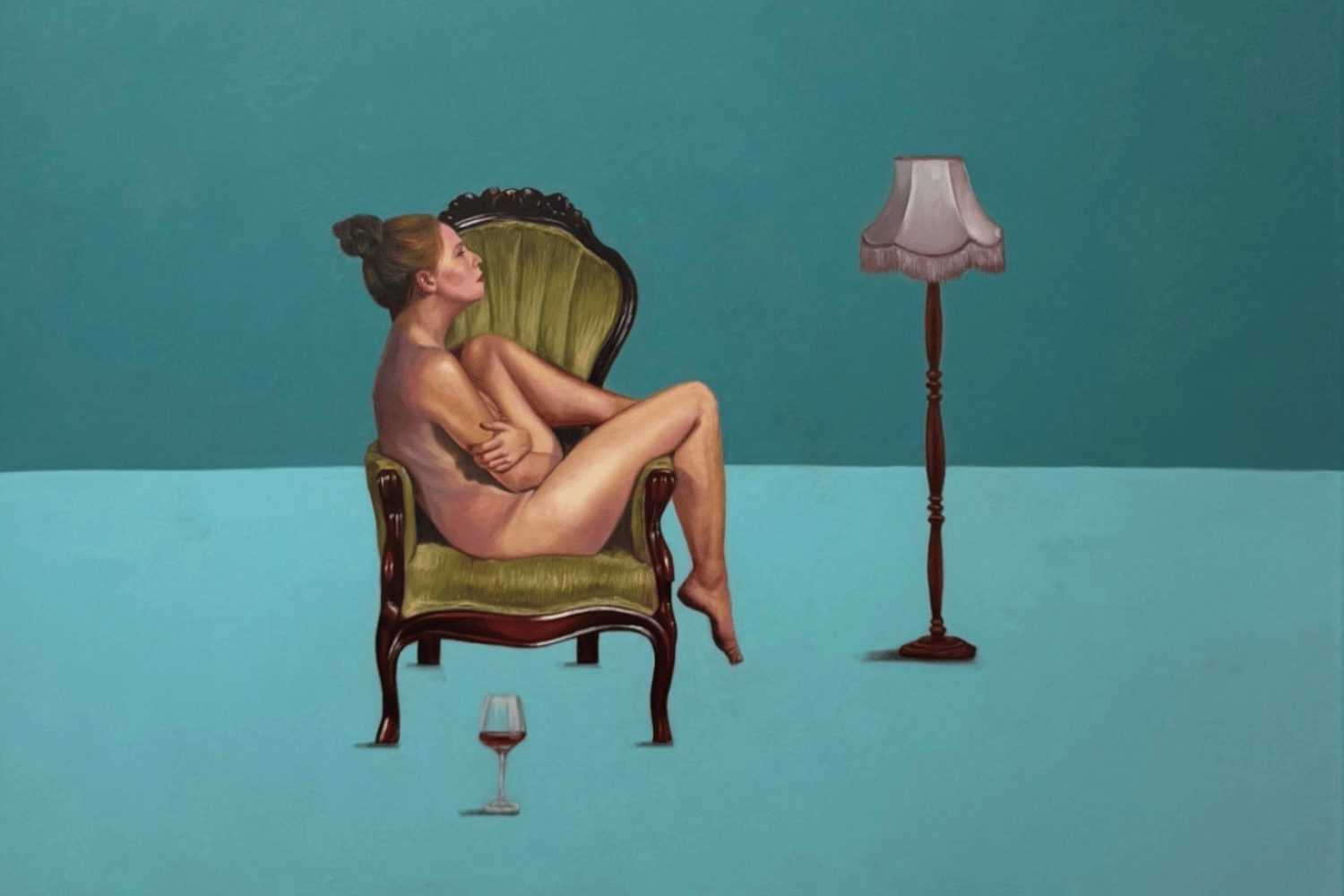
The “Pantsdrunk” series—including “A Fine Sunday,” “Pantsdrunk I,” and “Pantsdrunk III”—takes inspiration from the Finnish tradition of relaxing alone in one’s underwear. But Almirol transforms the concept into something more philosophical.
For her, Pantsdrunk is “to embody a state of mind wherein being physically alone is being in one’s own spiritual plane; letting go is not just stripping away of excess clothing but also of all external demands.”
The paintings celebrate solitude not as isolation but as a necessary encounter with oneself.
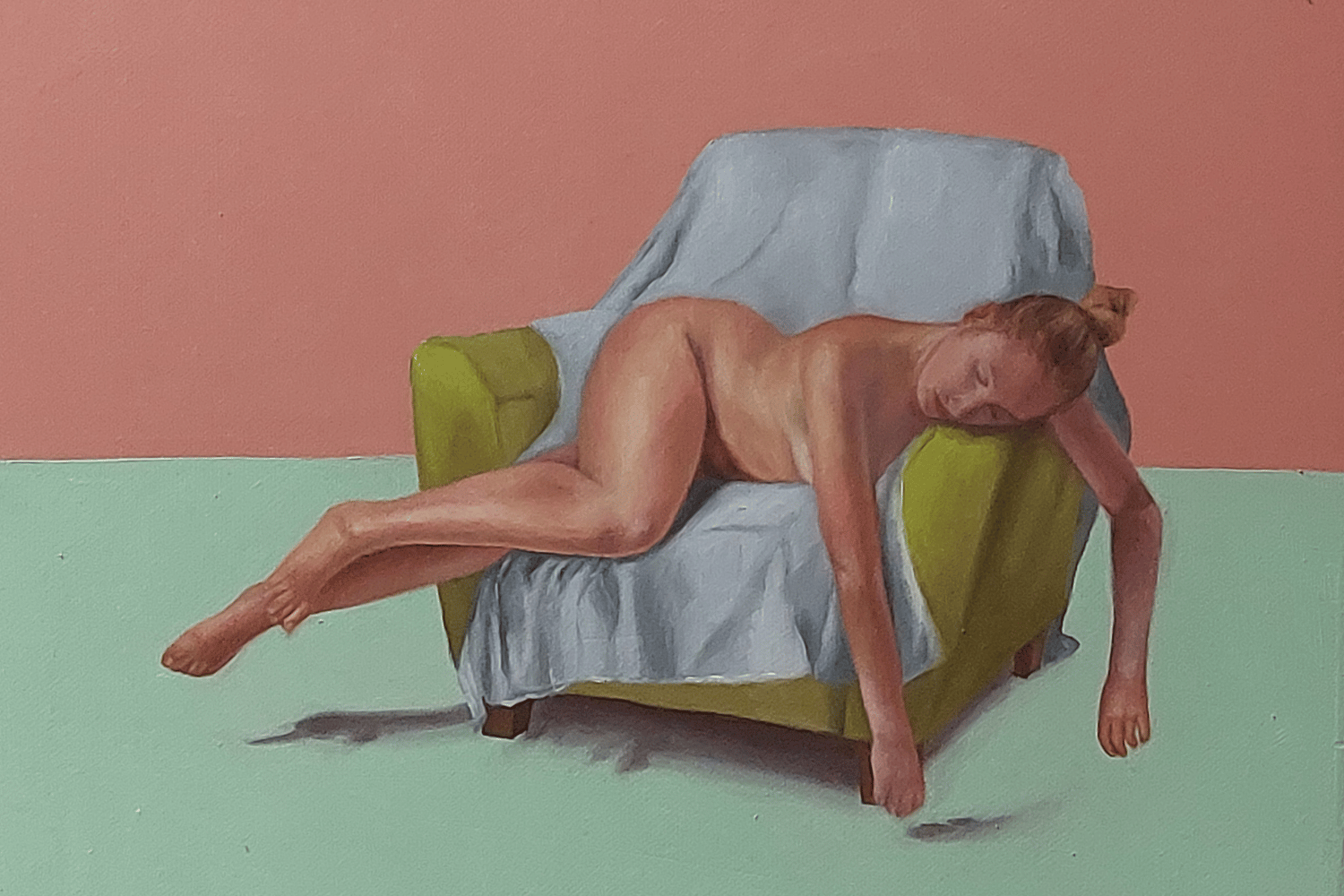
That exploration continues in the “Sunday Blah” series, composed of “Sunday Blah I,” “Sunday Blah II,” and “Sunday Blah III.” Here, she defends something increasingly difficult to claim in a culture obsessed with productivity: the right to rest.
“The Sunday Blah series is an evolution of the Pantsdrunk concept, with a deliberate emphasis on protesting rest,” she explains. “Sunday belongs to everyone. To own it and spend it however they like. Even if that means lounging, simply existing, or just living.”
But somewhere along the way, Almirol realized that understanding oneself was only the beginning.
Her succeeding works chart that widening perspective.
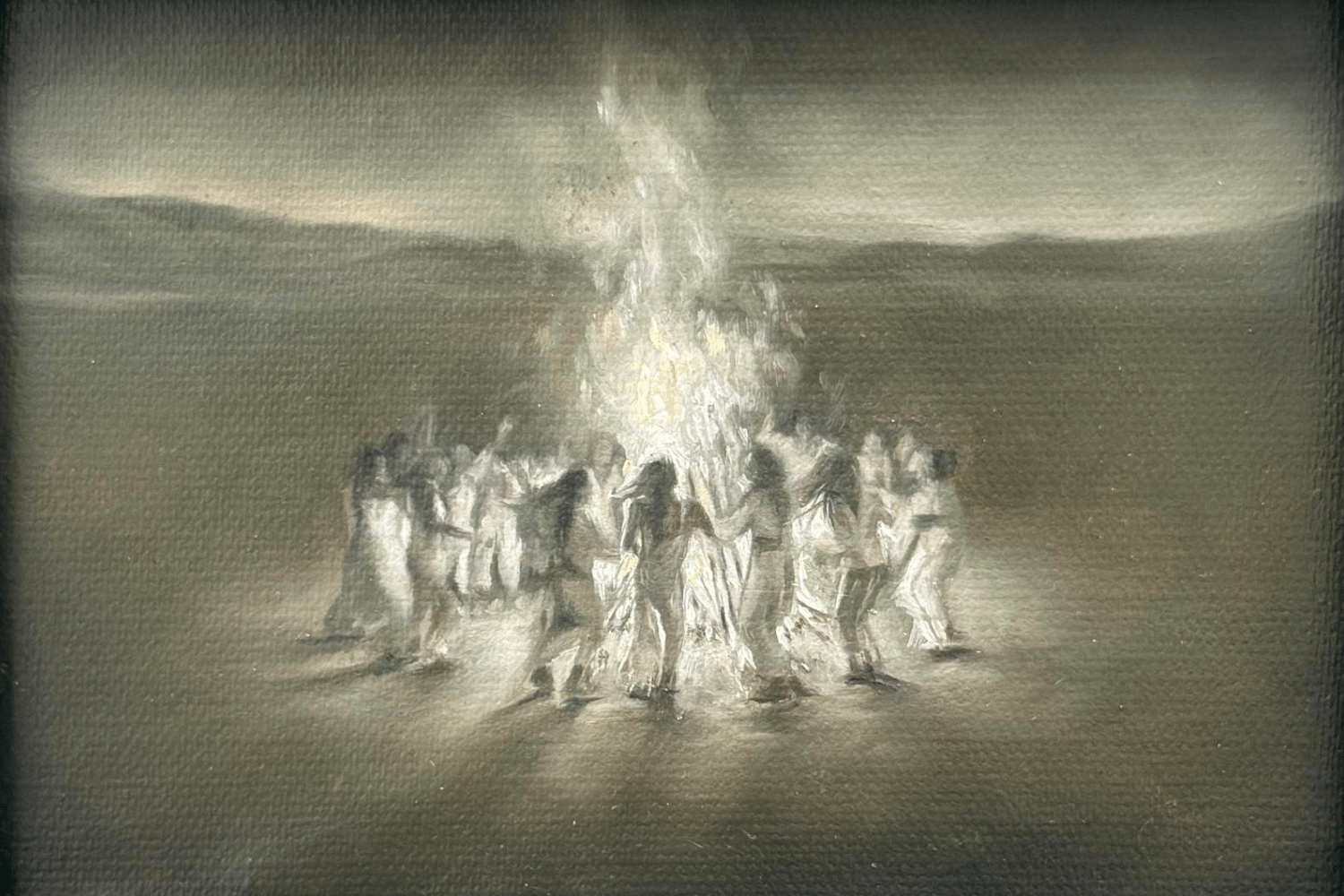
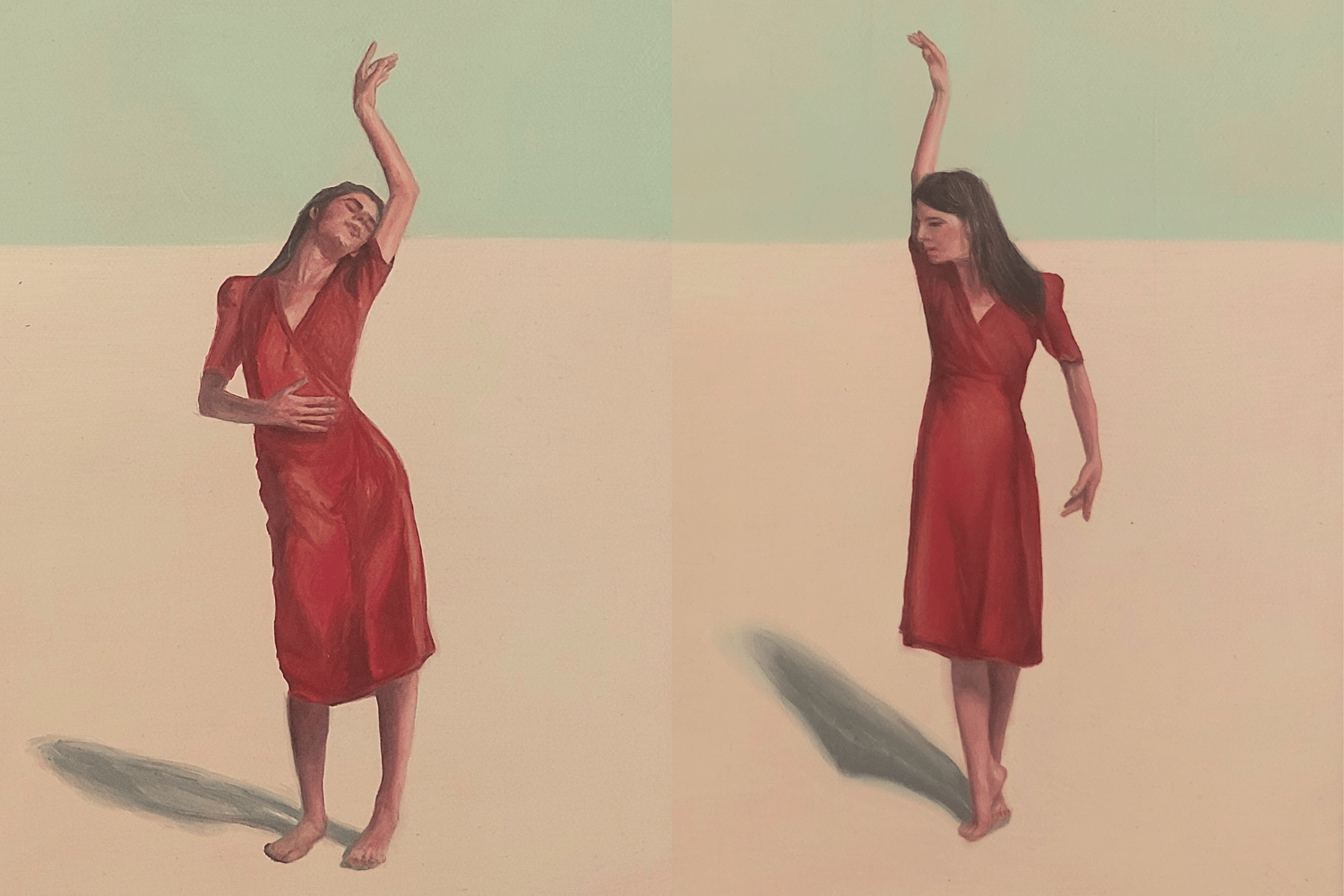
In “Great Speck I” and “Great Speck II,” she reflects on humility and humanity’s place within the vastness of the universe. “Sun Dance” imagines a ritual of gratitude to the sun as the source of life, while “Mushin No Shin I” and “Mushin No Shin II” embrace the Japanese idea of clear awareness—living without fear, ego, or attachment to control.
Even “Sugar Hiccup” from her “Summertime” series shifts the conversation outward.
“The Summertime series is like a lullaby that evokes comfort and serenity,” she says. “It’s a reminder that we can create this sense of security and breathing space within ourselves, and then extend it to our community.”
Perhaps no work illustrates that evolution more personally than “Nesting.”
Painted during a difficult move with her partner, the work initially emerged from uncertainty and transition. Looking back, however, Almirol discovered that she had been painting something much more enduring.
“Those abstract shapes I kept painting were always a home,” she reflects. “A home I carry with me, wherever I go.”
By the time she painted “All Tribes Are From Fire,” her concerns had become unmistakably collective.
The work protests divisions created by belief systems and reminds viewers that “beyond our differences, we all come from the same origin.”
Looking back at her own practice, Almirol realized why.
“Once I learned to make safe space within, I began yearning for something beyond myself,” she writes. “Self-care… was never the destination. It was only ever meant to be the bridge.”
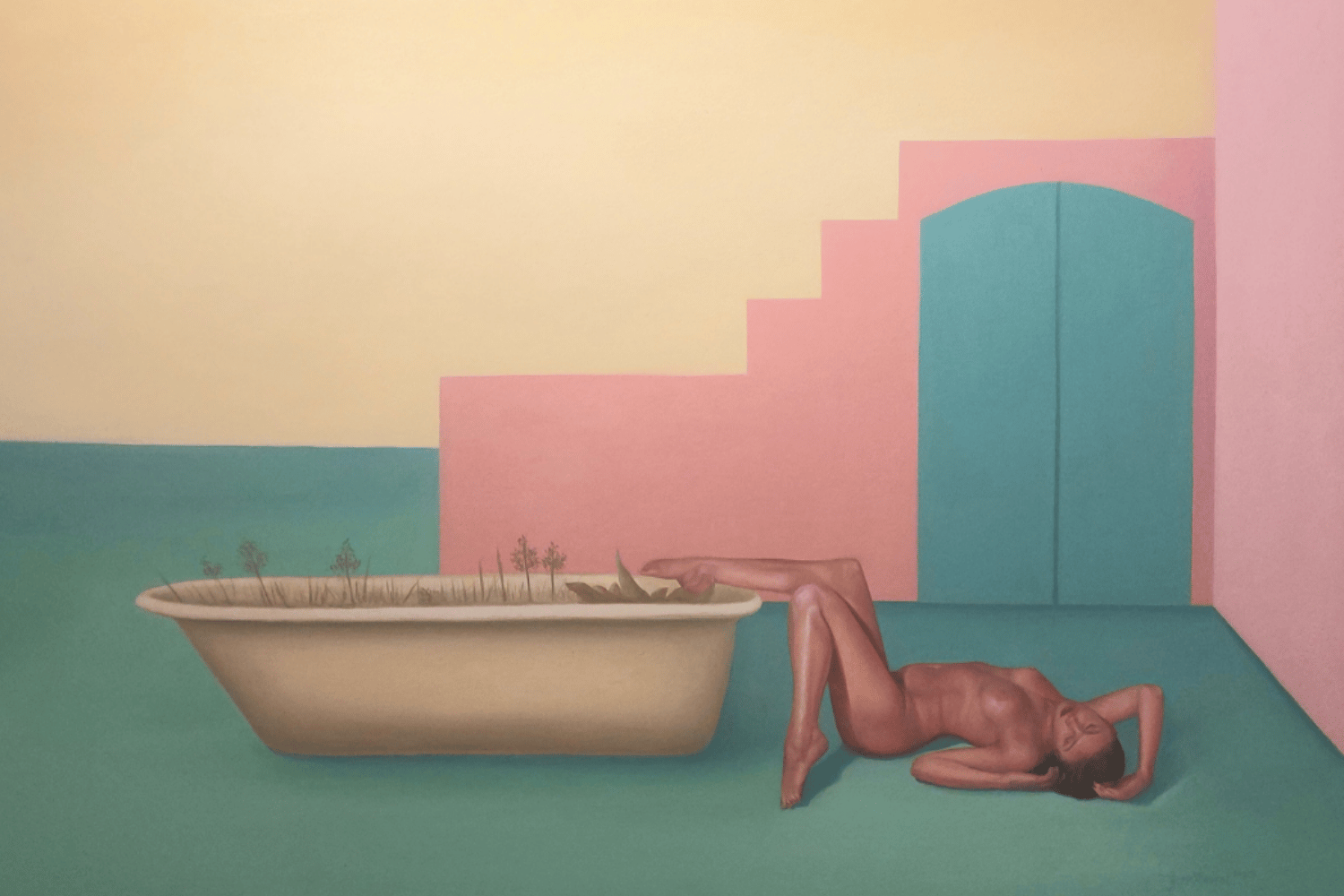
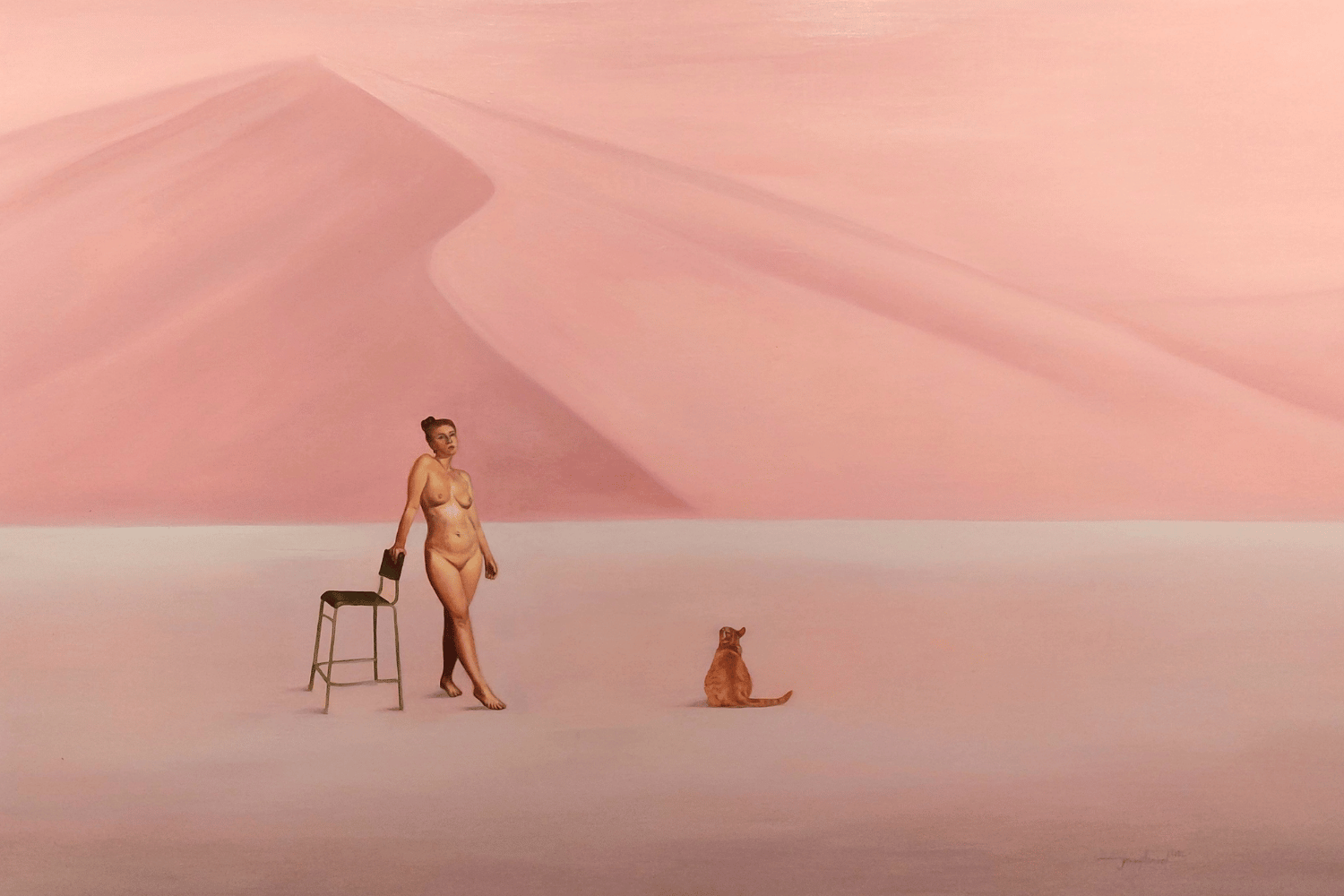
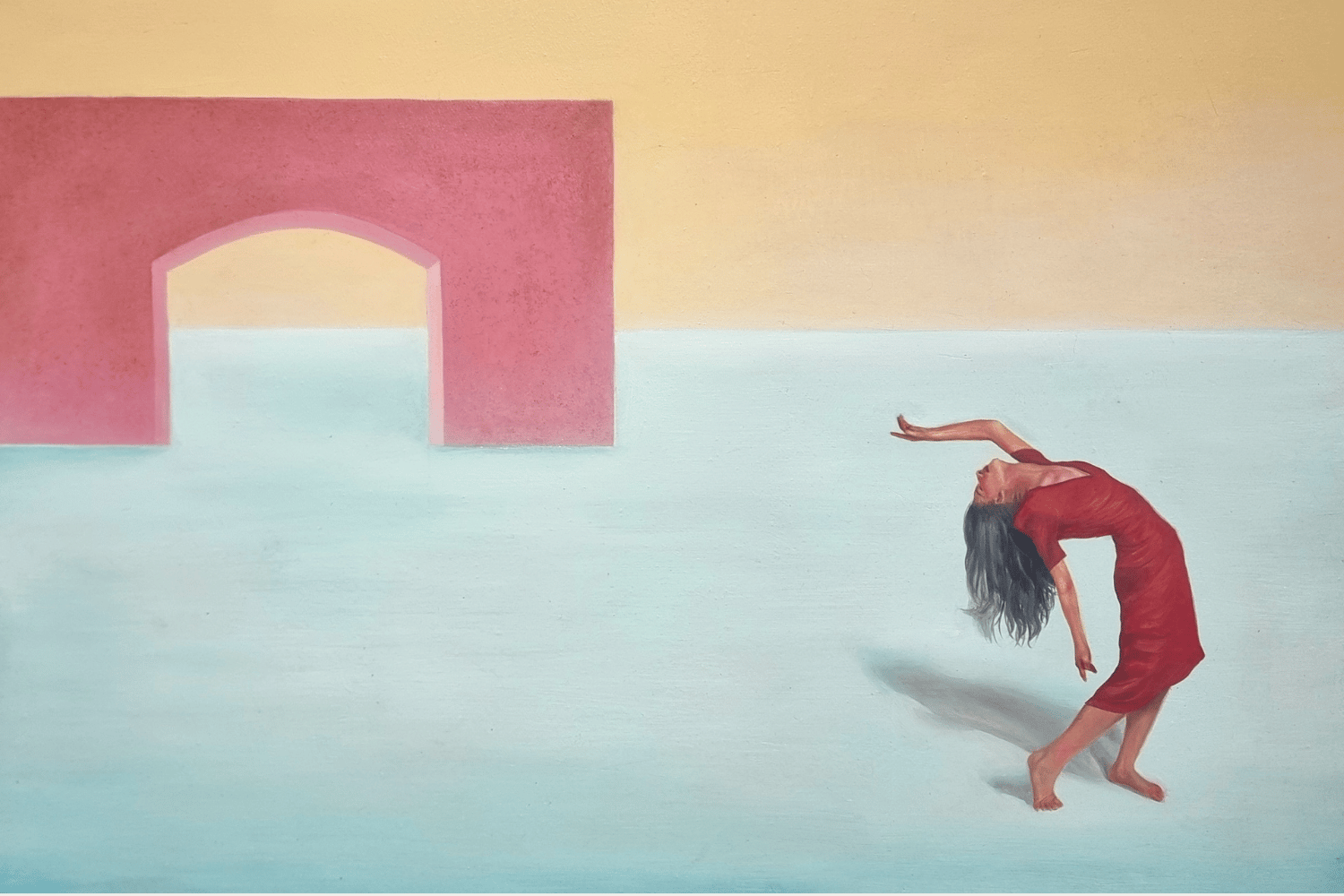
That bridge leads directly to her newest series, “Village Without The Villagers,” consisting of “Village Without The Villagers I,” “Village Without The Villagers II,” and “Village Without The Villagers III.”
The series examines a paradox of modern life: people long for belonging while avoiding the vulnerability and discomfort genuine communities require.
“It is my observation of a culture that wants the warmth of belonging without sitting through the discomfort it requires,” she explains. “A society that increasingly feeds a culture of consuming people over connection and collective goals.”
In many ways, the paintings feel like a portrait of the digital age, where connection is abundant but community often feels elusive.
Swipe or click arrows to see photos
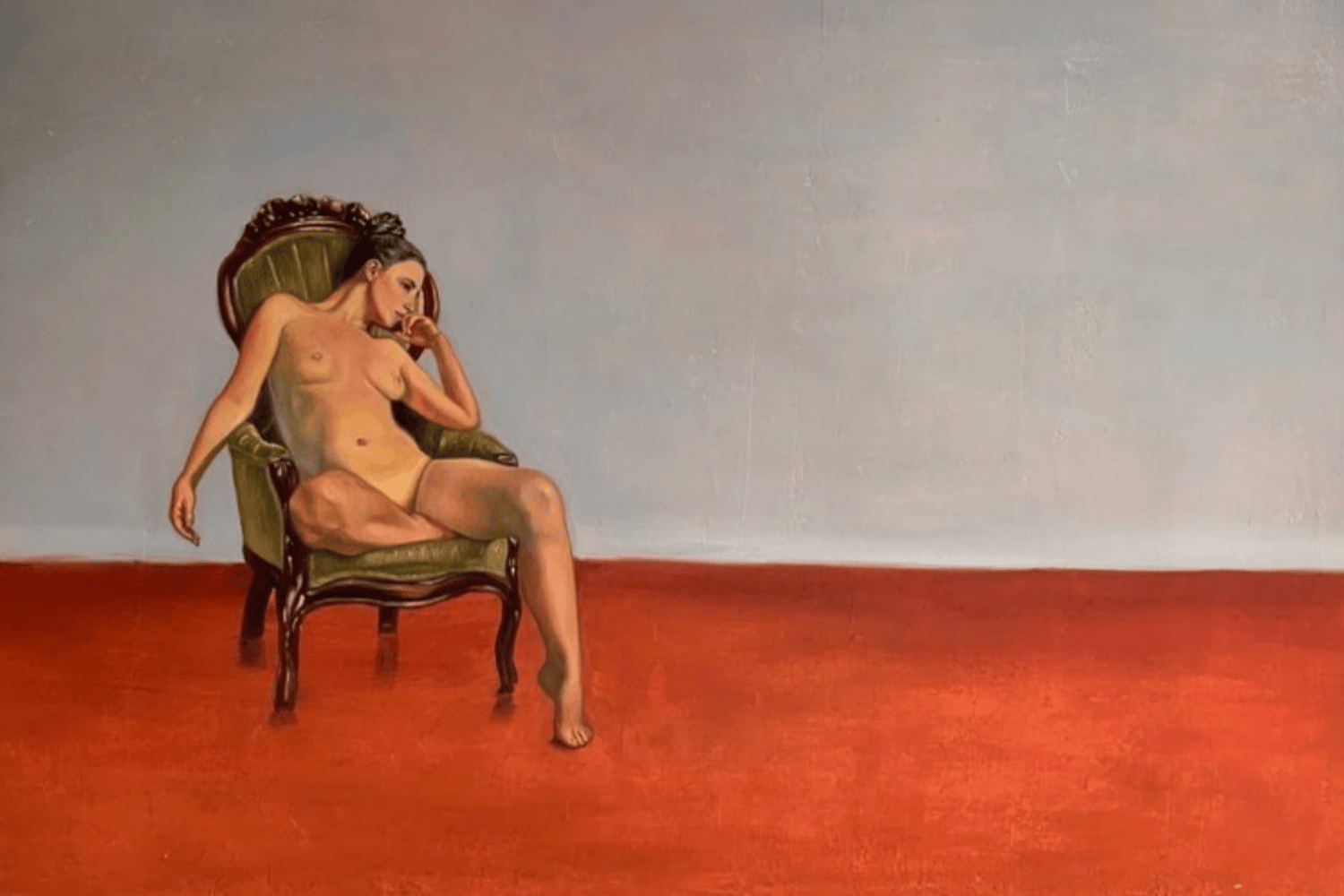
Born in 1991, Almirol is a Quezon City-based visual artist and a graduate of Far Eastern University’s Fine Arts program, majoring in Painting. She also teaches classical painting techniques at Galvez Atelier, bringing the discipline of the Old Masters into a practice that increasingly embraces abstraction inspired by the Bauhaus and De Stijl movements.
Her works have been exhibited in Vietnam, Indonesia, and Hong Kong, alongside numerous local exhibitions, including “Dancing in Supernova” at Art Fair Philippines, “Figured Realities” at Altro Mondo Gallery, and “MoCAF Discoveries 2025.” She mounted her first solo exhibition, “Pantsdrunk,” in 2023, followed by “Summertime” in 2024.
Viewed separately, each series captures a distinct chapter in Almirol’s artistic journey. Viewed together in “Threshold State,” they become something larger: a meditation on how personal growth eventually asks us to look beyond ourselves.
As Almirol writes in the closing lines of her artist statement, “My body of works trace one arc: from tending to the self, to tending to each other. From rest, to reverence, to responsibility. The work is no longer just about me. It’s about what we build when we choose to sit through the hard parts, and remember that beyond our differences, we all come from the same fire.”
READ:
After decades in furniture design, Milo Naval mounts first solo art exhibit
Nikko Miguel Garcia
July 21, 2026
Escape into nature through Art Lozano’s stunning new forest-inspired exhibit
Top Dagohoy
July 23, 2026
Kevin Roque uses ghosts, glitches, and holograms to confront the histories we refuse to see
radar Lifestyle
June 21, 2026