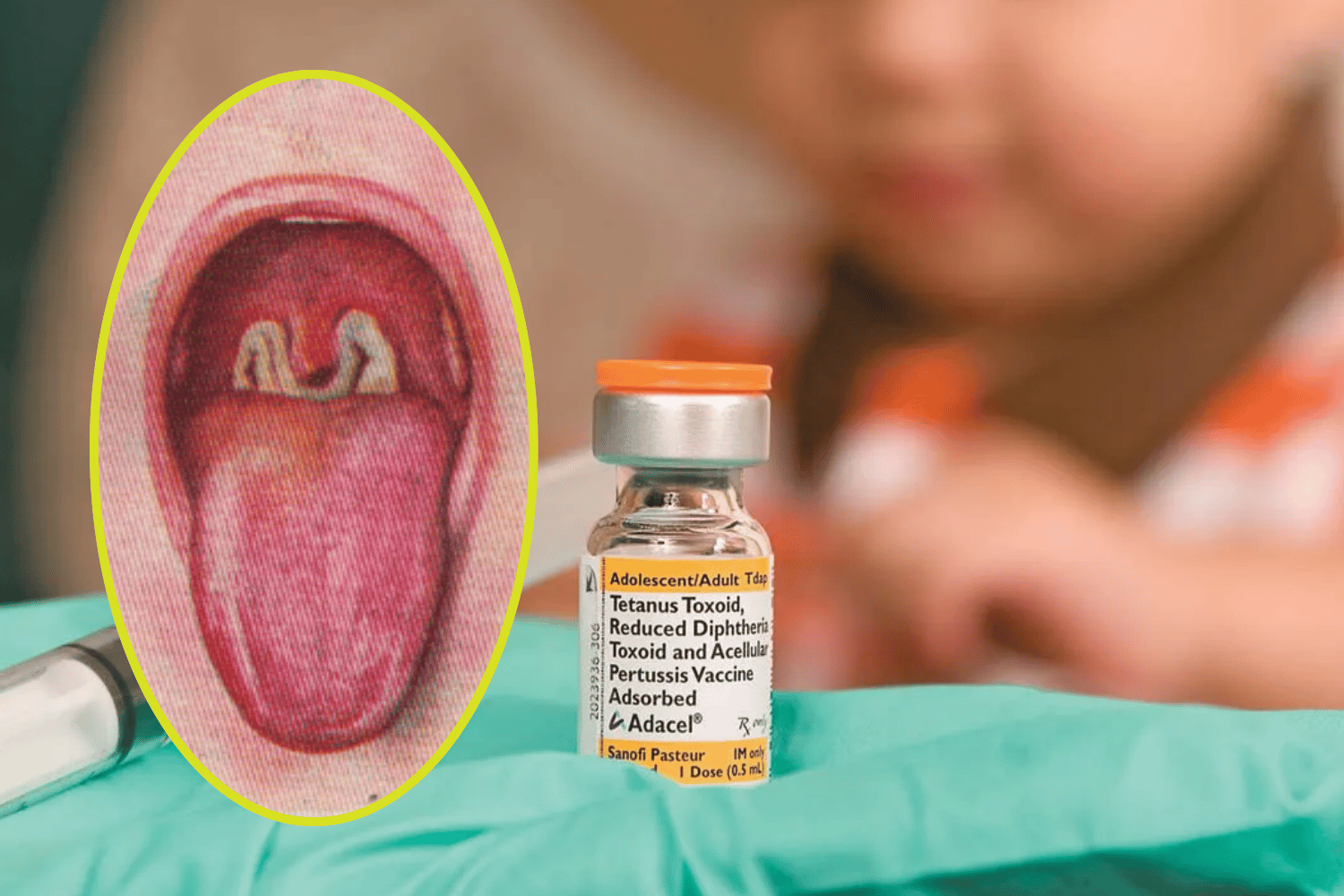
Diphtheria causes a thick gray coating to form in the back of the throat that can make breathing and swallowing difficult.
Imagine if a single day at work meant intubating a child and watching that child pass away anyway. And because of that patient, you spend the next ten days on antibiotics, tracing down every person who may have encountered the patient, wondering how many more may be affected. For Little Nest Children’s Clinic’s “Doc Jen,” it’s not hypothetical or a case of paranoia, it’s a memory from her residency that impacts how she practices medicine today.
A pediatrician who goes by “Doc Jen” is speaking out about the dangers of vaccine-preventable diseases. She shared a case from her residency training that she says has stayed with her throughout her medical career.
It involved a 4-year-old child who was brought to the emergency room in severe respiratory distress. Physicians on duty noted classic signs of diphtheria, a bacterial infection that spreads through respiratory droplets and close contact, characterized by thick gray-white pseudomembrane coating the throat, high-grade fever, and the characteristic “bull neck” swelling caused by inflamed lymph nodes. Left untreated, the pseudomembrane can block the airway and the infection can damage the heart and nerves.
The child needed to be intubated right away. A junior co-resident tried first and couldn’t get the tube in, saying the airway looked unusual. Doc Jen was called in to help. One look at the child’s throat was enough. She recalled telling her colleagues at the time that it looked like a case of diphtheria. By then, the pseudomembrane was already damaged from the struggle to intubate, and it had spread up to the nose.
The team fought to revive the child and tried to arrange a transfer to San Lazaro Hospital, one of the few facilities where diphtheria antitoxin is available. Unfortunately, the child passed away before they could get there.
But the horror did not stop there. Instead, it set off a new one.
Diphtheria spreads easily, so hospital staff had to move fast, tracing and assessing everyone who had come near the patient, inside the hospital and at home.
Doctors, nurses, aides, and household contacts were all put on prophylactic antibiotics, typically Penicillin G, for seven to ten days straight. Doc Jen, allergic to penicillin, was given Erythromycin instead, and paid for it with severe stomach side effects.
“It was just one child who was sick, but many people needed to be treated and monitored,” Doc Jen wrote in the post. She emphasized that vaccines may involve personal decisions, but the consequences rarely stay personal.
As a pediatrician, Doc Jen now tells parents not to wait for their own family to go through something like this before taking vaccination seriously. She urges them not to wait until their child gets sick or develops complications from a vaccine-preventable disease, or until it’s too late and they’re left thinking, “I wish I had vaccinated her.”
She also points to herd immunity, drawing a direct line to COVID-19. When population-level vaccination coverage fell short, restrictions stayed stricter, masks stayed on longer, and everyday life stayed limited far longer than it needed to.
“When someone gets sick from a vaccine-preventable disease, it’s not just them who are affected,” Doc Jen said. “The family suffers. Healthcare workers suffer. Other patients suffer. The community suffers.”
Before anyone decides against vaccination, Doc Jen wants them to sit with one question: who else might pay for that choice.
“Sometimes, one decision can create a domino effect far beyond what we imagined,” Doc Jen said.
READ:

Langka seeds are too nutritious to end up in the trash
Top Dagohoy
August 5, 2026

Beyond milk, what babies eat can shape their first 1,000 days
Nikko Miguel Garcia
August 14, 2026

WARNING: Swimming in floodwaters can turn deadly
Top Dagohoy
August 16, 2026