For mobile users, high peak speeds mean little without consistent daily service.
Mobile subscribers experiencing slow internet connections and unreliable network services may have good reason to complain, as government tests revealed performance deficiencies among the country’s three major telecommunications companies.
The National Telecommunications Commission (NTC) has directed Smart, Globe, and DITO to improve their services after joint quality-of-service (QoS) tests conducted across several Metro Manila cities produced mixed results.
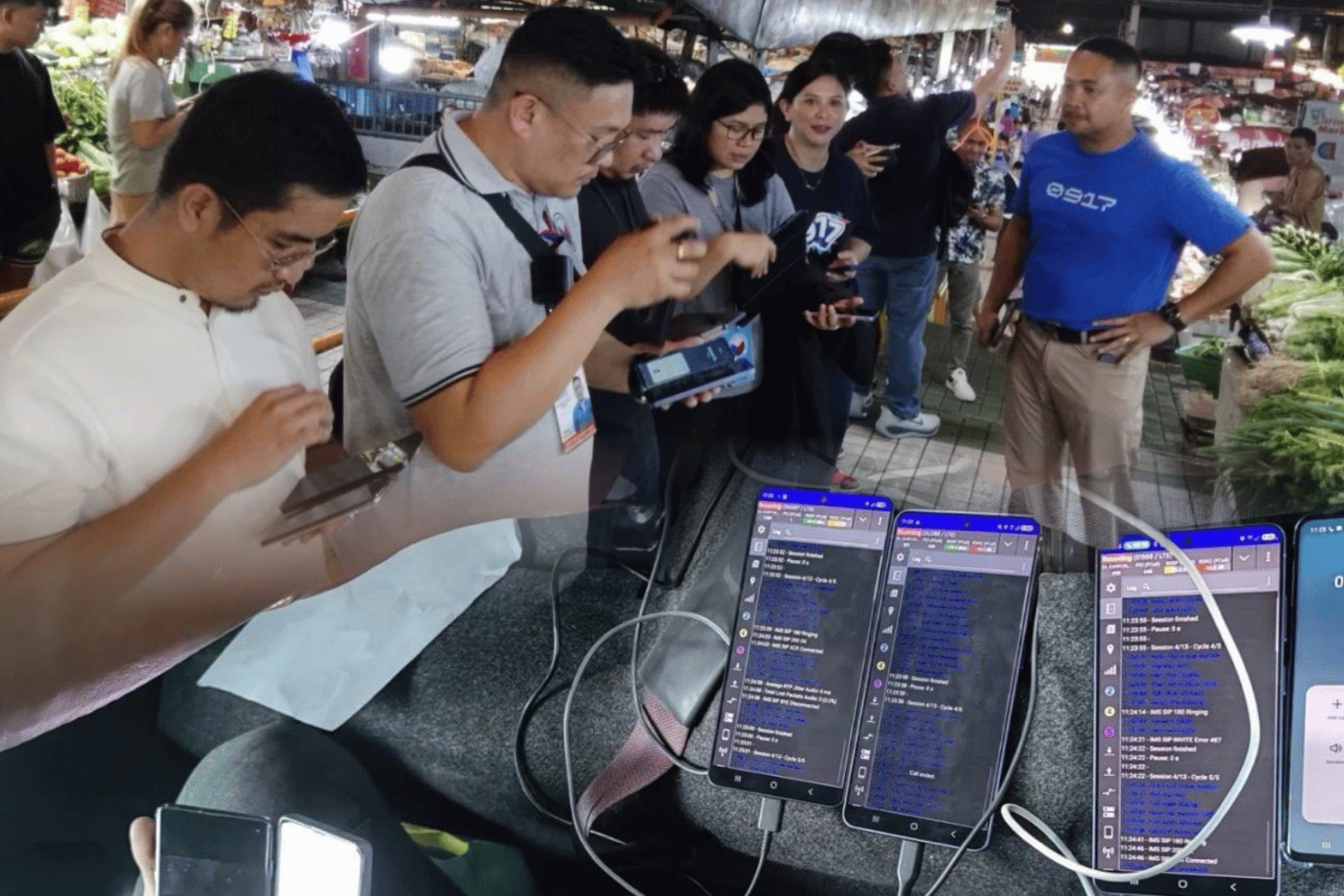
The tests, conducted with representatives from the three telecommunications companies, measured actual mobile broadband speeds, text message reliability, and call quality using commercial 5G-capable Android smartphones.
Of the 142 mobile broadband test campaigns conducted, 113 recorded download speeds exceeding 50 Mbps. However, 29 produced unsatisfactory results, raising concerns about inconsistent network performance.
DITO registered the highest download speed at 422 Mbps along Bonny Serrano Avenue in Quezon City. Globe followed with 381 Mbps, while Smart recorded 377 Mbps, both along San Francisco Street in Barangay Plainview, Mandaluyong City.
But the results also exposed serious connectivity problems.
DITO recorded zero measurable download speed outside Farmers Market in Cubao, Quezon City. Globe registered its lowest speed of 11.10 Mbps along Mercedez Avenue in Pasig City, while Smart dropped to 6.32 Mbps along a test route from Coronado Street in Mandaluyong to J.P. Rizal in Taguig.
In text messaging reliability, Globe led with a 99.41% success rate, followed by DITO at 98.82% and Smart at 92.94%.
Only Globe passed the NTC requirement of more than 99% successful SMS delivery.
For call quality, Smart performed best with a zero-percent call drop rate, followed by Globe at 0.74% and DITO at 2.82%.
DITO failed the prescribed standard requiring call drop rates to remain below 2%.
NTC Deputy Commissioner Andres Castelar acknowledged the satisfactory speeds recorded in most locations but expressed concern over the areas that failed to meet regulatory standards.
“The NTC notes the very satisfactory speeds recorded in most areas tested. However, the NTC expresses serious concern about 29 test points that yielded unsatisfactory results. There is a need to immediately address the identified deficiencies,” Castelar said.
The commission said testing would continue across Metro Manila and warned that telecommunications companies could face additional show cause orders if more locations fail to meet the required standards.
The findings highlight a continuing concern for Filipino mobile subscribers: impressive peak internet speeds do not necessarily translate into reliable everyday connectivity.
READ: