Penalizing jaywalkers without fixing unsafe roads fails to solve the real problem.
For an elderly commuter, climbing a steep footbridge can feel like an impossible task. The stairs are exhausting, the walkway may be poorly maintained, and there is often no elevator or escalator in sight. For someone with a disability, the crossing may be completely inaccessible.
So instead of climbing, some pedestrians take their chances crossing the road below, risking their lives and potentially getting fined for jaywalking.
But should pedestrians be punished when the infrastructure supposedly built for their safety is inaccessible to them?
This question has sparked a discussion on Threads, where Filipinos are criticizing the government’s approach to jaywalking enforcement while allegedly neglecting basic pedestrian infrastructure.
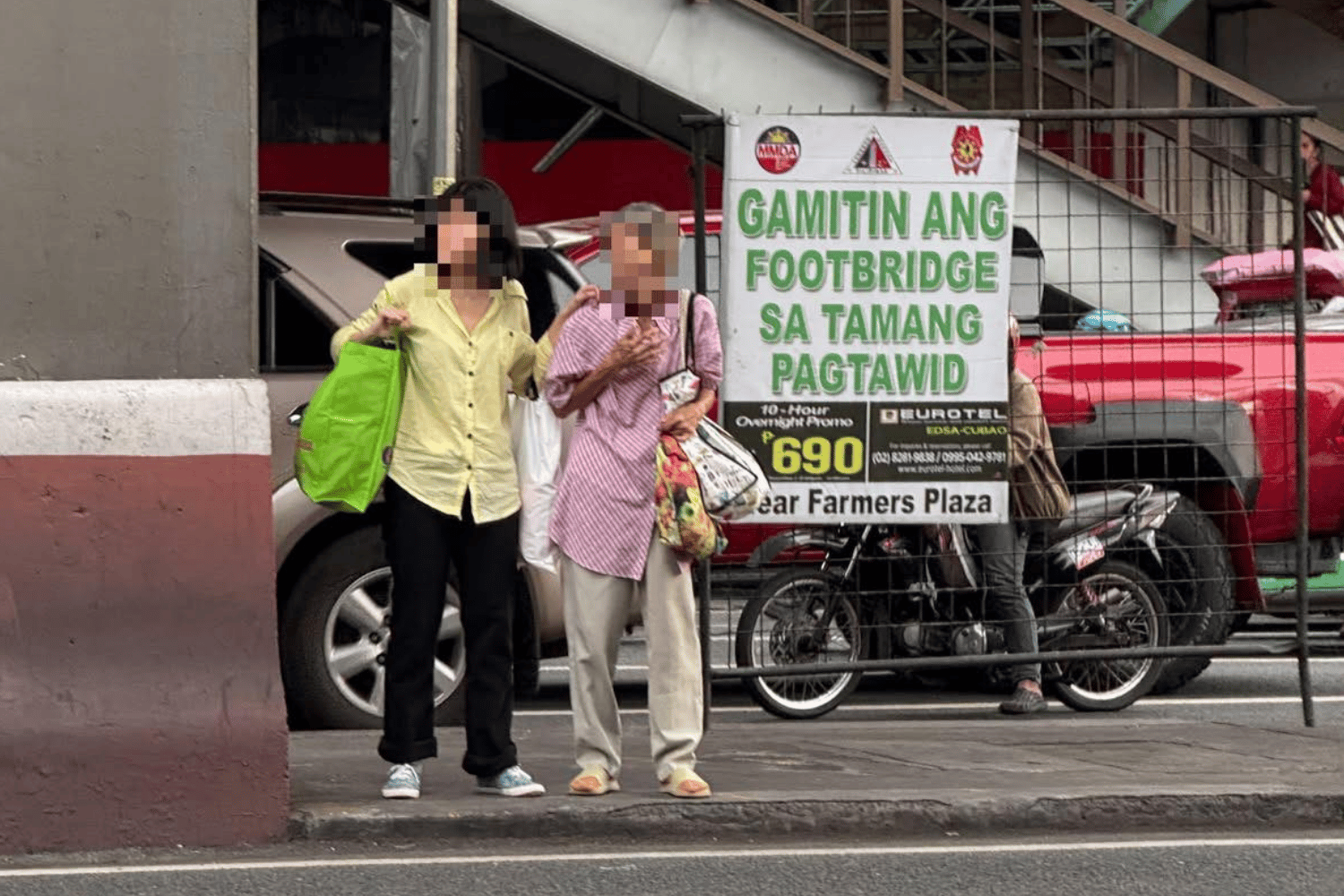
Threads user @leandromangubat shared a photograph of two women standing near a busy road beneath a footbridge, beside a sign reminding pedestrians to use the elevated crossing.
“The question we should be asking is not whether jaywalking should be penalized, but why are pedestrians deprived of safe and convenient infrastructure,” the user wrote.
The post, which had attracted approximately 5,000 views in the screenshots provided, pointed to barely usable sidewalks, drivers who refuse to yield at pedestrian crossings, inaccessible footbridges, and disconnected public transportation stops.
“Pedestrians are the most vulnerable road users, yet the environment is hostile and the rules don’t protect them,” the user added.
Footbridges under fire
The discussion quickly drew complaints from commuters who described footbridges as physically exhausting, poorly maintained, and sometimes unsafe.
Threads user @nikkotequila criticized the lack of accessibility for persons with disabilities and senior citizens, particularly along EDSA.
Another user, @im_jenbajar, cited steep staircases, damaged railings, inadequate lighting, accumulated garbage, and security concerns as reasons pedestrians avoid some elevated crossings.
Meanwhile, @asorite suggested installing more escalators, covered walkways, and other accessibility features along EDSA to make commuting easier for pedestrians.
Others questioned why authorities continue building elevated crossings instead of providing safer, properly designed street-level pedestrian crossings.
Jaywalking remains punishable
Under applicable traffic regulations and local ordinances, pedestrians can be penalized for crossing outside designated areas or disregarding traffic signals.
In Metro Manila, MMDA anti-jaywalking enforcement has included a ₱500 fine or three hours of community service, although penalties and enforcement arrangements may vary.
But the controversy raises a fundamental question: How can authorities demand compliance when designated crossings are difficult or impossible for some pedestrians to use?
For senior citizens, pregnant women, persons with disabilities, and people with mobility limitations, climbing several flights of stairs can present serious physical challenges.
Philippine accessibility laws, including Batas Pambansa Blg. 344, require accessibility features in covered buildings, facilities, and public utilities.
Who should be held accountable?
The discussion also highlights a larger problem in Philippine urban planning: pedestrians are frequently expected to adjust to infrastructure designed primarily around motor vehicles.
Sidewalks are occupied by parked vehicles, pedestrian crossings are sometimes far apart, and commuters are forced to navigate dangerous or inconvenient routes.
While jaywalking presents genuine safety risks, commenters argued that imposing penalties without addressing inadequate pedestrian infrastructure fails to solve the underlying problem.
The government has every right to enforce road safety regulations. But it also has the responsibility to provide safe, convenient, and accessible crossings.
Otherwise, pedestrians face an unfair choice: struggle through an inaccessible footbridge or risk being penalized for crossing the road below.
READ:
OPINION: Give the roads back to pedestrians
John Lloyd Aleta
July 9, 2026
Unrepaired EDSA bus carousel elevators leave commuters climbing stairs
Top Dagohoy
October 10, 2026
Filipinos are turning to generative AI to imagine better sidewalks and streets
John Lloyd Aleta
October 2, 2026