Every haircut, every color, every strand left behind becomes a chapter marker of who we were—and who we are trying to become.
There is an unspoken Filipino tradition that happens quietly in salons, comfort rooms, and late-night mirror sessions. It begins with one sentence:
“Gusto kong magpagupit.”
Not because the weather changed. Not because split ends suddenly became unbearable. But because something inside shifted first.
A breakup. A graduation. A new job. A relapse. A healing season. A version of yourself you no longer recognize.
And somehow, Filipinos have learned to mark every emotional era through hair.
New chapter? Dye it blonde.
Heartbreak? Cut it short.
Need control over your life again? Get bangs.
Want to feel like a different person? Change everything.
Hair theory may be a viral internet term now, but Filipinos have lived by it long before TikTok gave it a name.
Because in the Philippines, hair is never just hair. It is identity, emotion, rebellion, healing, and sometimes the only thing we can control when everything else feels uncertain.
The ‘bangs after breakdown’ phenomenon
Almost every Filipino has witnessed it happen to a friend.
One day they disappear after a painful breakup, then suddenly return with curtain bangs and a completely different aura.
The transformation is so common it has become a joke online, but beneath the humor is something deeply human. Changing hair becomes a physical way to process emotional change. It gives heartbreak a visible ending.
You cannot instantly fix grief, loneliness, or confusion. But you can sit in a salon chair and walk out looking like a newer version of yourself.
That’s why post-breakup haircuts feel symbolic. The old hair carries memories. The new hair creates distance from them.
For many Filipinos, especially in a culture where emotions are often softened through humor or resilience, hair becomes a safer language for reinvention.
Filipino cinema has always understood hair theory
Long before people started analyzing “main character transformations” online, Filipino films were already using hair as emotional storytelling.
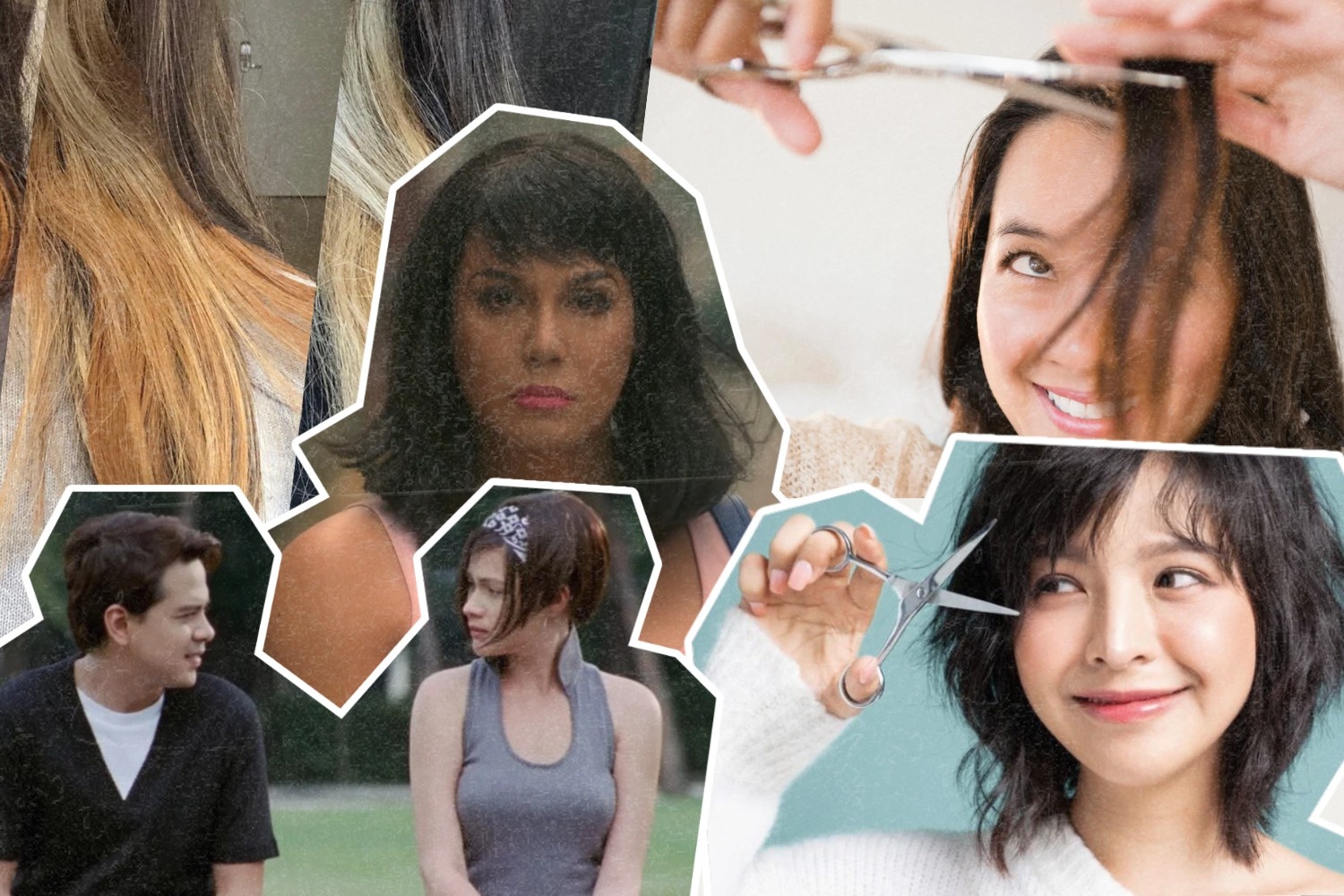
In “One More Chance,” Basha’s shorter hairstyle after leaving Popoy became one of the most iconic visual representations of moving on in local cinema. She did not need to announce she was changing. The haircut already said it.
In “The Hows of Us,” the shifts in Primo and George’s appearance mirrored their emotional exhaustion and maturity. Their styling quietly reflected the collapse of youthful idealism.
But perhaps no Filipino film explored transformation through hair more powerfully than “Die Beautiful.”
In the film, Trisha’s wigs are not simply accessories or glamour pieces. Each hairstyle becomes a version of survival. A version of femininity. A version of fantasy.
Through every wig change, the audience witnesses how she rebuilds herself again and again despite rejection, grief, and discrimination. Hair becomes armor, performance, freedom, and identity all at once.
Meanwhile, “She’s Dating the Gangster” turned wigs and exaggerated hairstyles into emotional time capsules. The hair was intentionally theatrical, separating fantasy, nostalgia, and reality. Even today, the film’s hairstyles remain instantly recognizable because they carried an entire era’s feeling.
Then there’s “A Very Special Love,” where Laida’s makeover symbolized confidence and finally being seen differently by the world—and by herself.
Filipino filmmakers understand something audiences instinctively feel: before characters say they changed, viewers need to see it first.
And often, the first sign is the hair.
Hair as a Filipino timeline
Scroll through anyone’s old Facebook albums and you can almost map their life story through hairstyles alone.
The over-layered college cut.
The DIY quarantine bleach job.
The “corporate era” sleek black hair.
The impulsive red highlights after getting hurt.
The soft curls during healing season.
Hair becomes a timestamp for survival.
Filipinos attach memory to appearance because transformation here is deeply emotional. We celebrate resilience loudly, but privately, many people process change through small acts of physical reinvention.
Sometimes, changing your hair is less about beauty and more about permission.
Permission to leave old versions behind. Permission to become unfamiliar. Permission to start over without explaining yourself.
And maybe that is why every Filipino knows the feeling of wanting to touch their hair after crying.
Not because they hate how it looks, but because somewhere inside, they already know they are about to enter another season of life.
Changing hair becomes a physical way to process emotional change. It gives heartbreak a visible ending.
READ:
Joross Gamboa: The scene-stealer behind PH cinema’s biggest hits
Denchelle Castro
May 8, 2026
The woman behind the heartbreak: How Cathy Garcia-Sampana made us feel every kind of love
Denchelle Castro
May 8, 2026
Summer means lazy afternoons and the art of “kulasisi” curls
radar Lifestyle
April 12, 2026