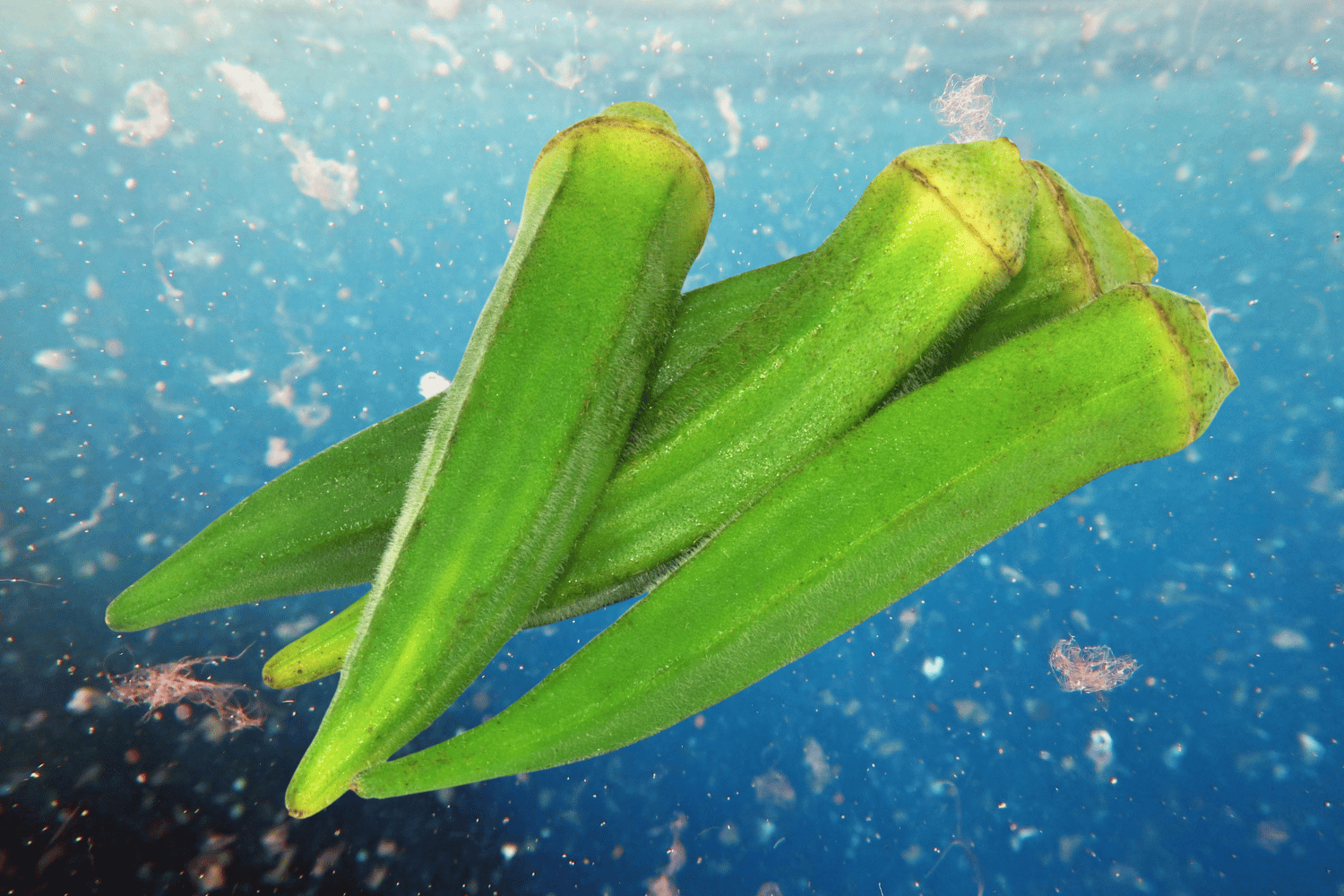
A resurfaced 2025 study explores the water-cleaning potential of the Pinoy favorite, as well as fenugreek.
Okra is a familiar sight on the hapag, be it added to pinakbet or sinigang, or simply steamed and paired with bagoong isda.
However, its soft, slimy texture is a no-no for some people.
But beyond Filipino cuisine, okra may have another rather unexpected use. A resurfaced 2025 study suggests its natural polymers could help remove microplastics from water.
Published in ACS Omega by the American Chemical Society, the study examined plant-derived polymers from okra, as well as fenugreek, as possible alternatives to synthetic chemicals used in water treatment.
Researchers first extracted the substance that gives okra its characteristic sliminess, then isolated its natural polymers and used them to treat water samples containing microplastics. They tested the plant-based polymers on simulated water as well as samples from groundwater, freshwater, and the ocean.
The polymers essentially act as a catcher. They attach to the tiny bits of plastic and bind them together into larger clusters, making them easier to separate from the water. Researchers call this process “bridging.”
Okra showed its strongest result in the ocean-water sample, removing around 80% of microplastics under laboratory conditions. A combination of okra and fenugreek removed around 77% from freshwater, while fenugreek performed best in groundwater, removing around 89%.
The plant-based polymers also showed better microplastic-removal efficiency than polyacrylamide, a synthetic chemical used commercially in water treatment.
The study was conducted under controlled, laboratory conditions, and the researchers said more work is needed to understand how the plant polymers interact with different types of microplastics.
If further research confirms these findings, plant-based polymers could offer a biodegradable, less toxic alternative to synthetic chemicals used in water treatment. This could help remove microplastics from water while reducing the environmental impact of the treatment itself.
READ: