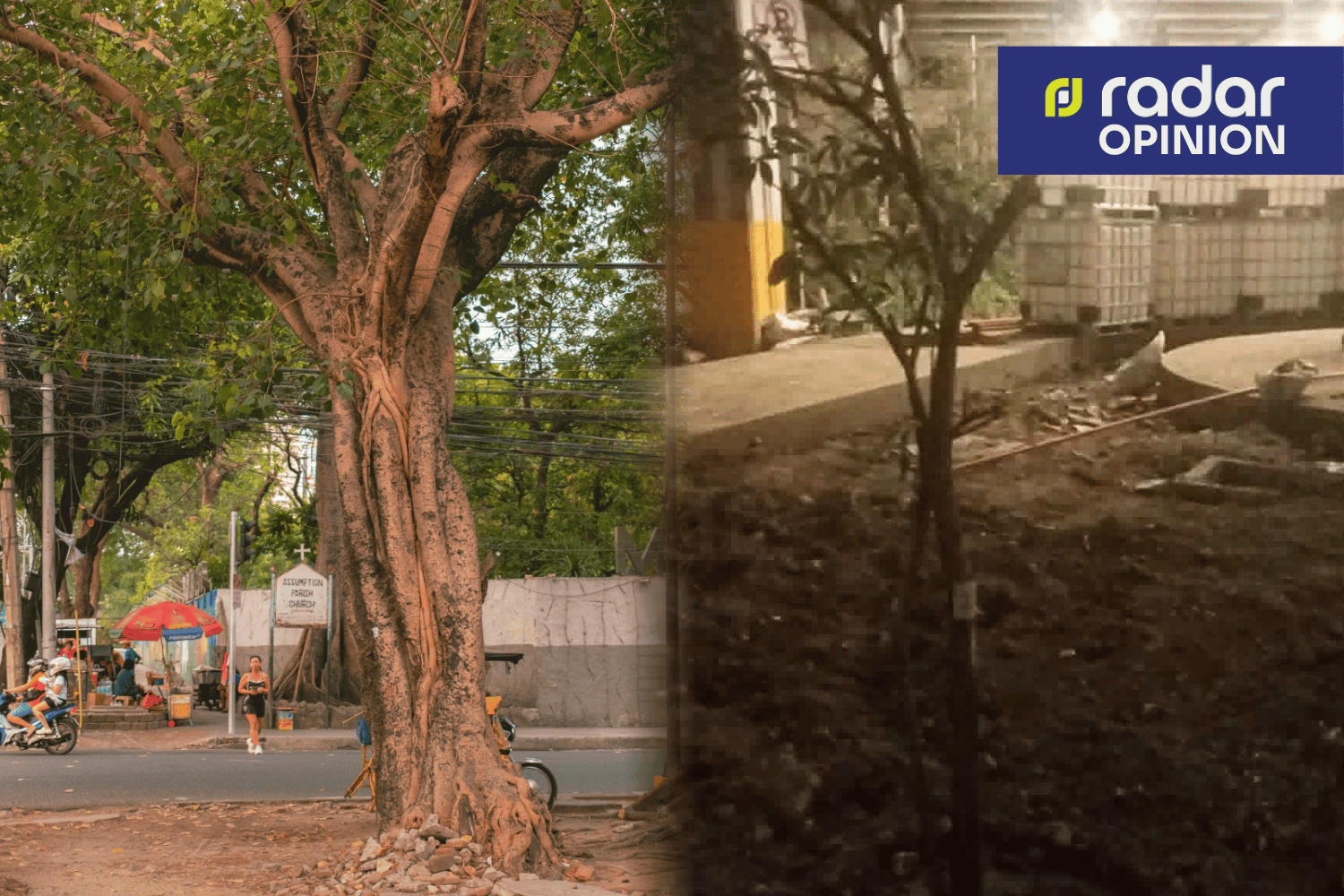
Netizens noticed a difference between the original Quirino Avenue mature trees and the newly transplanted ones.
When the Department of Environment and Natural Resources–National Capital Region (DENR-NCR) posted another update on the relocation of trees affected by San Miguel Corporation’s South Access Link Expressway (SALEX) project, it likely hoped to reassure the public that the environment remained a priority.
Instead, it raised even more questions.
The agency announced that another Tabebuia tree had been successfully earthballed and transplanted to Plaza Azul, bringing the number of relocated trees there to 12. It also reported that 63 of the 94 trees affected by the project have already undergone earthballing and transplantation and are now under continuous monitoring as part of a post-transplant care program.
But the photos accompanying the update told a story many Filipinos found difficult to believe.
The trees now standing in Plaza Azul appear noticeably smaller, thinner, and barer than the towering, decades-old trees that once shaded Quirino Avenue before they were uprooted to make way for the SALEX project. Whether this difference is the result of transplant shock, heavy pruning, photographic perspective, or something else cannot be determined from Facebook posts alone.
What the public does know is this: the visual difference is striking enough to raise legitimate questions.
And those questions deserve answers—not assurances.
If these are indeed the same mature trees that were earthballed from Quirino Avenue, then DENR-NCR should have no difficulty proving it. Release the complete inventory. Publish the tree identification numbers, species, trunk diameters, original locations, transplantation records, survival reports, and updated photographs documenting each tree from removal to relocation.
Transparency is the easiest way to end speculation.
Instead, many netizens noticed that comments on DENR-NCR’s Facebook posts had been restricted. Whether intentional or not, it creates the impression that the agency is trying to manage public perception rather than engage with legitimate concerns.
The biggest question remains unanswered.
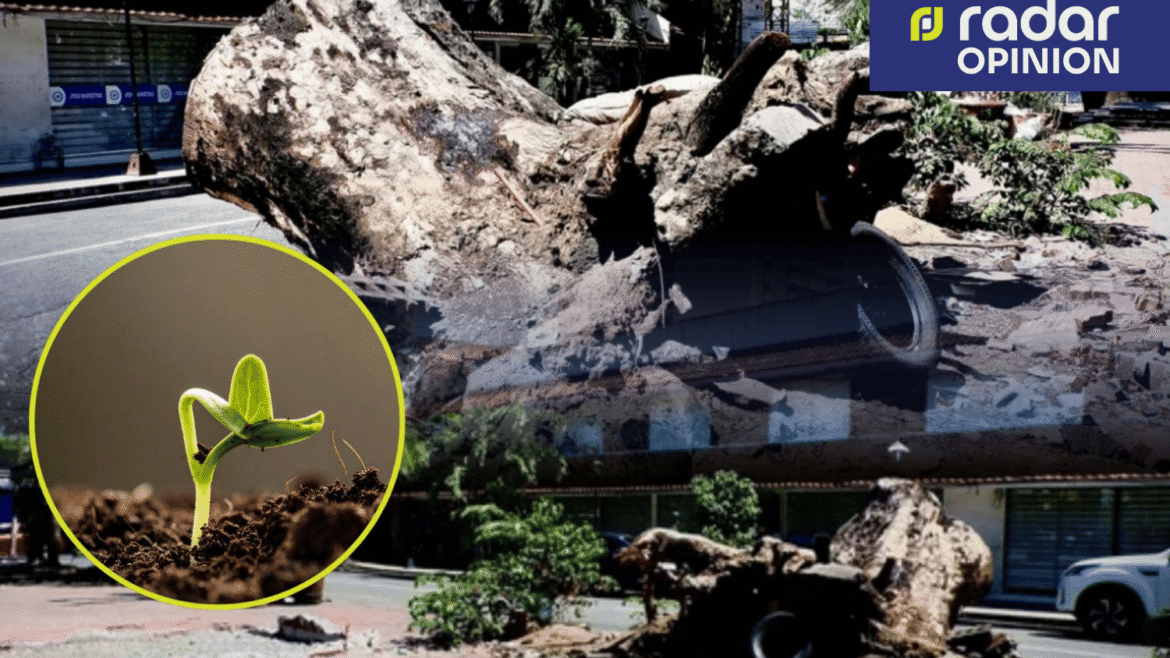
What happened to the actual decades-old trees of Quirino Avenue?
Not the numbers in a progress report.
The actual trees.
Were all 94 successfully earthballed? Which ones survived? Which ones did not? Where exactly is each transplanted tree today? If any failed to survive after relocation, will the public be told?
These are not ordinary roadside plants. They are mature urban trees that took decades to grow. They cooled surrounding neighborhoods, filtered pollution, absorbed rainwater, reduced flooding, stored carbon, and provided habitat for birds and other wildlife. Their ecological value cannot simply be replicated by planting much smaller trees elsewhere.
This is why expectations are much higher for DENR-NCR.
It is not just another government office.
It is the government’s environmental guardian.
When the agency entrusted to protect the country’s natural resources appears less than transparent on one of Metro Manila’s biggest environmental controversies, it risks undermining the very public trust it depends on to carry out its mission.
Infrastructure and environmental protection do not have to be opposing goals. Roads can be built. Cities can grow. But these projects must be accompanied by honesty, scientific evidence, and complete transparency.
Filipinos are willing to understand difficult decisions.
What they are unwilling to accept is the feeling that they are being asked to ignore what they can plainly see.
Because protecting the environment begins with protecting the truth.
READ: