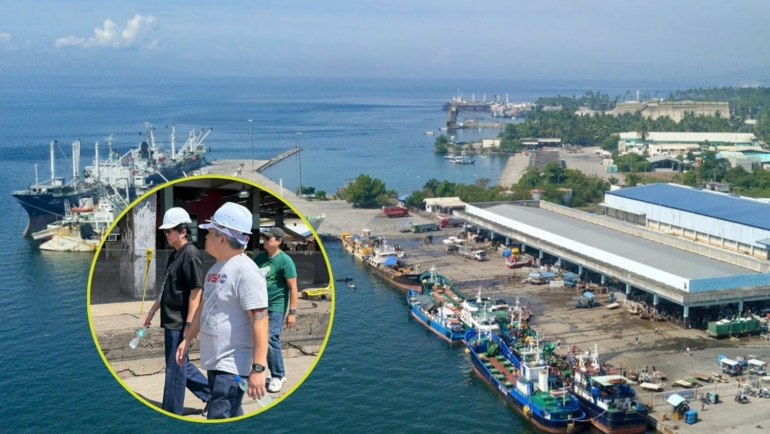
The relocation program spreads economic activity more evenly across the country.
For decades, cities have competed to attract more people. Japan is now doing something different.
Instead of encouraging people to move into Tokyo, the Japanese government has been offering financial incentives to encourage some residents to relocate to less populated areas. The policy is part of a broader effort to ease pressure on the capital while helping revive regional communities facing population decline and labor shortages.
Eligible households moving from the Tokyo metropolitan area to participating municipalities can receive relocation support, with additional incentives available for families with children, subject to program requirements.
At first glance, the idea sounds unusual. Why would a government pay people to leave its largest city?
The answer says a great deal about how urban economies evolve.
Tokyo remains one of the world’s largest economic centers, but decades of population concentration have created familiar challenges. Housing has become increasingly expensive, public transport remains heavily used despite its efficiency, and many rural towns are shrinking as younger workers continue moving to the capital in search of better opportunities. The relocation program is not simply about reducing congestion. It is also about spreading economic activity more evenly across the country.
The idea may sound far removed from the Philippine setting, but it touches on a challenge that Metro Manila has been grappling with for decades.
Driving economic growth in the provinces
The capital region occupies less than 1% of the country’s land area, yet it remains the center of government, finance, corporate headquarters, and many of the country’s highest-paying jobs. That concentration has helped drive economic growth, but it has also contributed to traffic congestion, rising property prices, longer commutes, and increasing pressure on public infrastructure.
The Philippines has tried, in different ways, to encourage growth outside Metro Manila.
Economic zones have expanded in provinces. New business districts have emerged in Clark, Cebu, Iloilo, and Davao. Major infrastructure projects, including new railways, expressways, and airports, are designed not only to improve mobility but also to make investment outside the capital more attractive.
Japan has also played a major role in improving Philippine infrastructure. It is the country’s largest source of official development assistance and is helping finance major transport projects, including the Metro Manila Subway, the North-South Commuter Railway, and other initiatives designed to improve mobility and strengthen connections between Metro Manila and nearby provinces.
Still, relocating people is much easier when jobs move first.
That may be the biggest difference between Japan and the Philippines.
Japan’s challenge is largely demographic. Its population is aging and shrinking, leaving many regional communities with too few workers and residents.
The Philippines, on the other hand, continues to have a relatively young and growing population. The issue is not a shortage of people. It is the concentration of economic opportunities in one metropolitan area.
That means offering cash alone is unlikely to persuade large numbers of Filipinos to leave Metro Manila. That’s because people generally follow jobs, not incentives.
A relocation subsidy may cover moving costs, but it cannot replace career opportunities, reliable public transportation, quality healthcare, schools, or fast internet. Unless those fundamentals exist, many workers would still choose to remain close to where the opportunities are.
The relocation incentives are not really about paying people to leave Tokyo. They are part of a much broader strategy to make other cities worth moving to in the first place.
If there’s one lesson the Philippines can take from Japan, it is that regional development cannot rely on incentives alone. Instead, it may be about giving people enough reasons to build their future somewhere else.
READ:

Philippine population decline expected to begin in 2055
Top Dagohoy
July 12, 2026
EXPLAINER: Why many Filipinos leave even when they already have jobs
Top Dagohoy
July 18, 2026

Philippines’ population reaches 112.7 million, PSA reports
Top Dagohoy
July 12, 2026