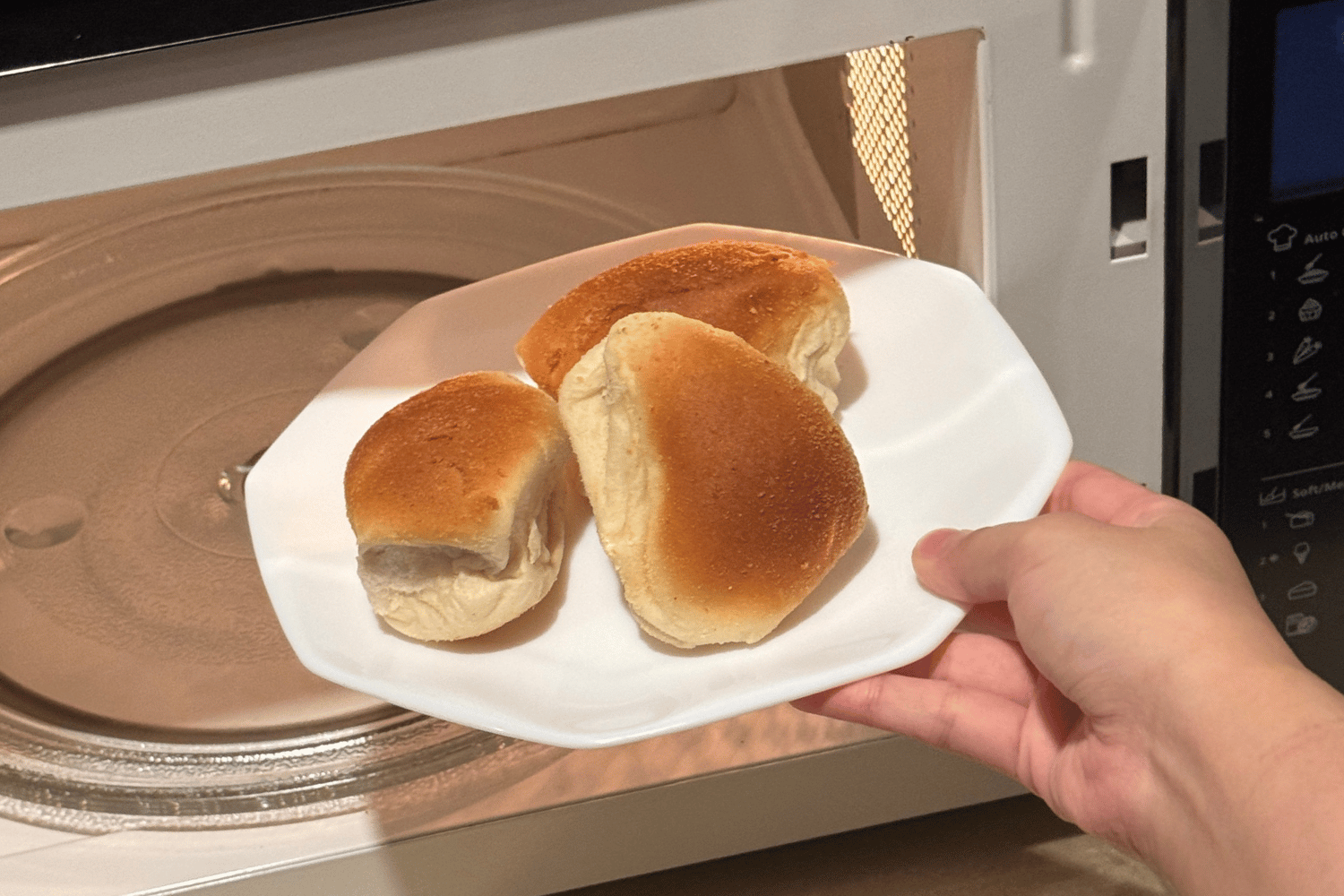
The trick is moisture, lower heat and very short bursts.
You pop yesterday’s pandesal or a slice of pizza into the microwave, hoping to bring it back to life.
For a few glorious seconds, it comes out warm and soft. Then you take a bite—and somehow the bread has turned chewy, rubbery or, minutes later, surprisingly hard.
The microwave isn’t necessarily ruining your bread because it “dries everything out.” The real culprit is the way microwave heating rapidly moves moisture through bread and affects its starch.
What’s happening to your bread?
Bread contains plenty of starch and some water. Microwaves primarily heat by interacting with polar molecules, especially water, so moisture inside bread heats very quickly.
That heat can temporarily soften starch structures and mobilize water, making the bread initially feel wonderfully soft. But microwave heating also creates an environment with little surface browning or crisping.
Then comes the bigger problem: cooling.
As the bread sits, moisture redistributes and escapes while starch molecules reorganize—a process associated with starch retrogradation. The result can be bread that rapidly becomes tougher, chewier and eventually hard.
That explains the strange microwave experience: soft while piping hot, rubbery soon afterward, and sometimes nearly rock-hard when cold.
How to microwave it better
If the microwave is your only option, moisture and time are your friends.
Cover or loosely wrap the bread with a slightly damp paper towel before heating. Then use lower power and microwave it in short 10- to 15-second bursts, checking between each round.
Don’t blast one piece of bread for a minute just because you want it hotter. The longer you microwave it, the greater the chance of overheating and driving off too much moisture.
And eat it while it’s warm. Microwave-reheated bread generally deteriorates quickly as it cools.
Better yet, skip the microwave
If texture matters, use a toaster, air fryer, skillet or conventional oven instead. These methods can warm the interior while drying and browning the surface—something an ordinary microwave struggles to do.
For buns and sliced bread, a covered skillet over low heat with just a few drops of water in the pan can gently steam the bread before you briefly uncover it.
So the next time your perfectly good pandesal turns into something resembling a rubber ball, don’t immediately blame the bakery.
You may simply have microwaved it too hot, too long—and eaten it too late.
READ: