The subtle art of the Ilocano garden: The difference between a dry shrivel and a smoky simmer defines the soul of the North.
For the palate unfamiliar with Northern dishes, it’s difficult to tell the difference between dinengdeng and pinakbet. The nuances might seem subtle, but to the Ilocano soul, they represent the distinct rhythms of life in Northern Luzon. It all begins with geography.
Tucked between the Cordillera mountains and the sea to the west, Ilocanos have always had access to a wide range of ingredients. Both dishes started in backyard gardens, where whatever was ripe that morning became the day’s meal.
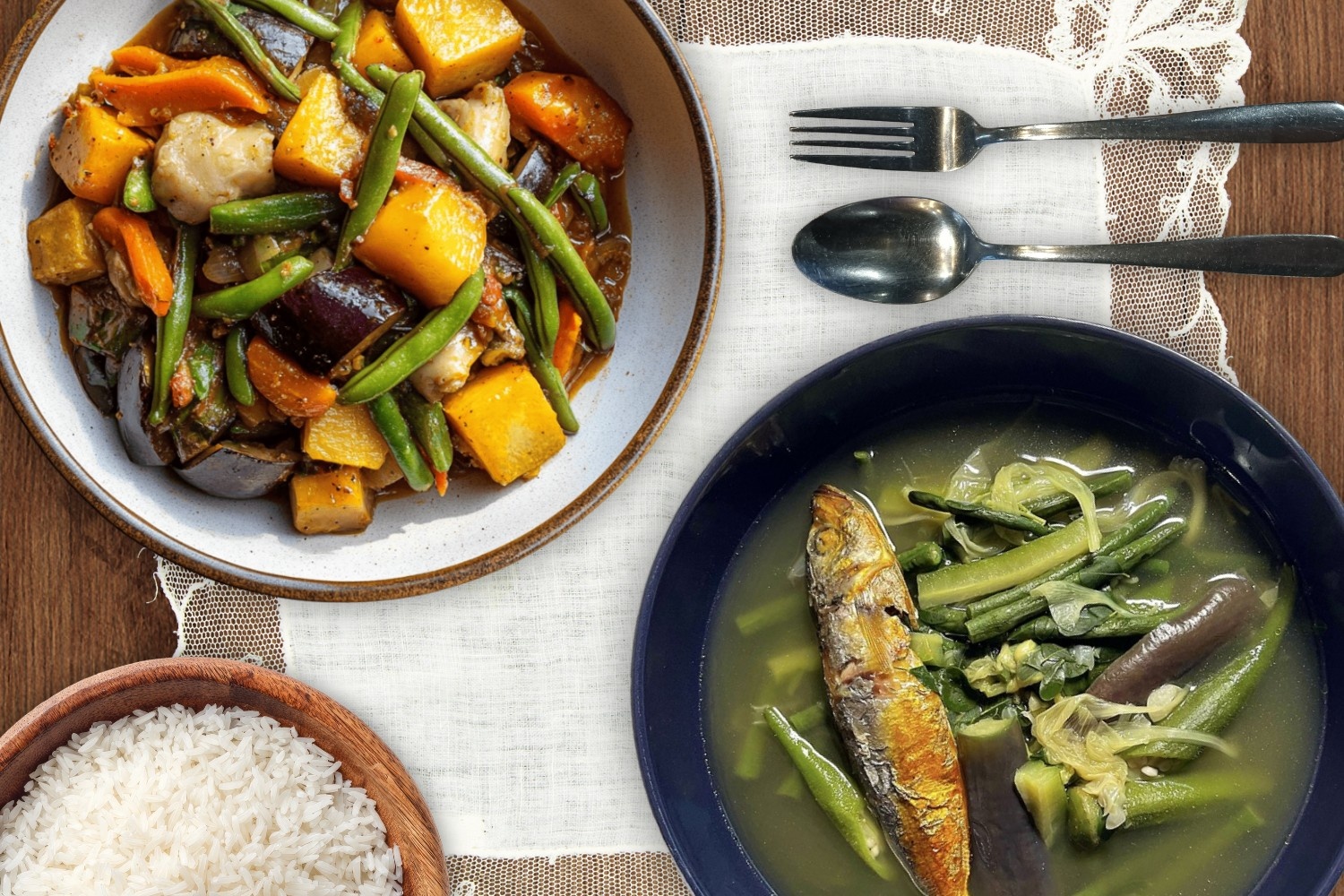
Pinakbet is the heavier, more intense of the two. Vegetables—bitter melon, eggplant, and okra—are slow-cooked until they lose their moisture and collapse into each other. While the popular Tagalog version uses squash to create a golden glaze, the authentic Ilocano version relies on bagoong isda (fermented fish) and often excludes squash to maintain a sharp, salty flavor profile.
And then there’s dinengdeng, its lighter sibling. If Pinakbet is a dense stew, dinengdeng is a clean, soul-warming broth. It’s less about the “shrivel” and more about the “simmer.” Here, the squash is often absent, replaced by a jungle of leafy greens like jute, moringa, and squash blossoms. The chef’s kiss? A piece of grilled or fried fish laid on top. As it sits, the smoky char of the fish seeps into the clear, salty broth, creating a flavor that feels like a rainy afternoon in the countryside.
The divide is simple: pinakbet is the hearty, shrunken centerpiece, while dinengdeng is the leafy, brothy comfort topped with the scent of a wood-fired grill. Both are triumphs of resourcefulness, proving that a handful of garden vegetables and a little fermented fish paste are all you really need to taste the heart of the North.